Women's Sweaters Guide
A sweater is a knitted or crocheted top that covers the upper body — a pullover or a cardigan — and its yarn, gauge and stitch decide its warmth and its life.
Shop Women's Sweaters Now
Shop Women's Sweaters on Amazon Shop Women's Sweaters on eBayThe Amazon and eBay links on this page are affiliate links. If you make a purchase through them, Apparel Search may earn a commission.
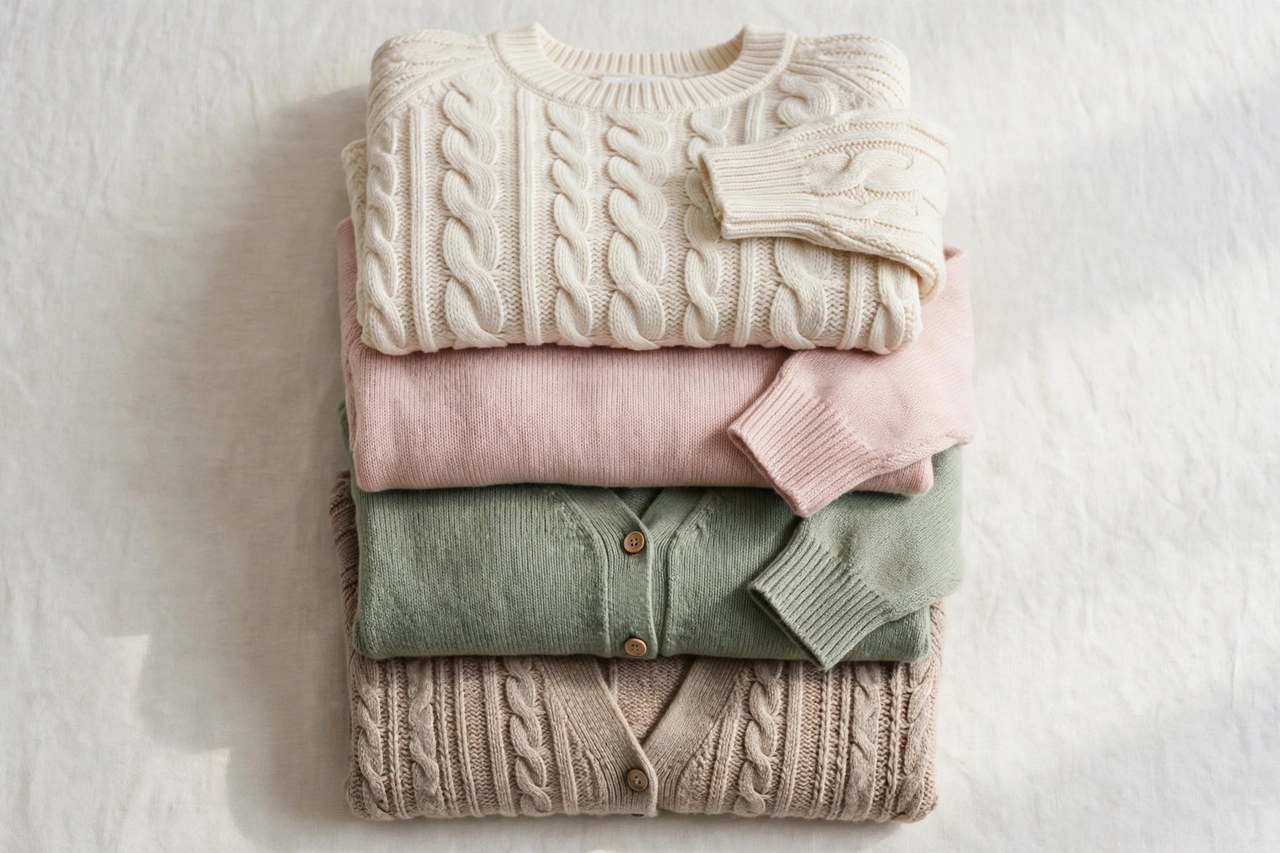
A sweater is a piece of clothing, typically with long sleeves, made of knitted or crocheted material that covers the upper part of the body — also called a pullover or, in British and Australian English, a jumper. The same page drew the category's hard border: a sweater is either a pullover or a cardigan, and no, a sweater cannot be made of woven fabric, though it can carry woven trim such as collars and cuffs. Knit construction is not a detail of a sweater; it is the sweater.
This page is the parent guide to the knit family in this section; the sweater dress and sweater vest have their own pages. The range spans oversized styles, date-night cardigans and tunic sweaters, in weights from a light cardigan for a chilly restaurant to a heavy wool sweater for deep cold. The sections below organize that range by construction, yarn, stitch and season.
Pullovers and Cardigans: The Two Forms
A pullover is a closed sweater drawn on over the head: crew necks, V-necks, turtlenecks, mock necks and boat necks are its neckline dialects, and its uninterrupted front is the natural home of pattern and texture — cables, colorwork and argyle all live most happily on a pullover. A cardigan opens down the front with buttons or a zip, which turns the sweater into both a top and a layer: worn closed it behaves like a pullover with a seam of hardware, and worn open it frames whatever is beneath it and adjusts to changing temperatures, which is why cardigans earn their keep in offices, travel and shoulder seasons.
Between the two sit tunic sweaters, wrap sweaters and cropped knits. When you shop, name the form first: most disappointing sweater purchases are not bad sweaters, but the wrong form for the wearer's habits — a beautiful pullover bought by someone who runs warm and needed a cardigan's escape hatch.
Yarns: Wool, Cotton, Silk and Blends
Yarn is destiny in a sweater. Wool is the classic fiber — warm, resilient, naturally elastic and resistant to odor — learn about the benefits of wool, because wool makes for a fabulous sweater. Merino is the fine, soft branch; lambswool and Shetland are hardier and more textured; cashmere trades durability for unmatched lightness and warmth and asks for gentler handling. Cotton sweaters breathe, feel cool, and suit transitional weather and wool-sensitive skin, but they are heavier for their warmth and slower to recover their shape.
Silk sweaters are their own category: fine-gauge, smooth and quietly luxurious, usually blended with cotton or wool for strength. Acrylic and other synthetics lower cost and ease washing, with widely varying quality — the best are respectable, the cheapest pill and go static-prone within a season. Blends are the pragmatic center: wool with nylon for strength, cotton with elastane for recovery. Read the fiber label like an ingredient list — in knitwear it predicts warmth, care, price and lifespan at a glance.
Stitch, Gauge and Weight by Season
Gauge — stitches per inch — sets a sweater's character. Fine-gauge sweaters are smooth, light and layerable under jackets. Chunky gauges are warm, textured and casual, and add visual weight. Between them sit the stitch patterns: cable knits, essential sweater vocabulary, plus rib, seed stitch, Fair Isle colorwork and the argyle diamond, each carrying its own tradition and level of formality.
Match weight to your real life: a lightweight cardigan covers air conditioning and cool evenings, a midweight pullover is the winter weekday standard, and a heavy wool sweater is outerwear-grade warmth. Browsing sweaters by color — black, blue, brown, green, orange, pink, purple, red, tan, white, yellow — is a reasonable way to fill a wardrobe gap, since a sweater in the color that completes three outfits you own will be worn more than a technically better one in a color that completes none.
Fit, Care and Storage
Fit a sweater by its shoulders and its recovery. The shoulder seam should sit at your shoulder, the body should skim without straining across the chest, and the knit should spring back when gently stretched — a sweater that stays stretched in the shop has told you its future. Sleeves should reach the wrist without swallowing the hand. Try knits sitting down and reaching forward: sweaters live in motion. Knits relax with wear, so a slightly snug fit in a resilient yarn often settles better than a loose one.
Care decides whether a sweater lasts two seasons or ten. Fold sweaters — hanging stretches them at the shoulders — and store them clean, since moths are drawn to soiled wool. Wash according to the fiber: many modern wools tolerate a gentle machine cycle in a mesh bag, while cashmere and fine silk blends prefer hand washing; dry every sweater flat, reshaped to size. Depill with a comb or electric shaver rather than pulling. At season's end, store woolens with cedar or in sealed containers. A sweater visibly rewards good treatment, growing softer with every careful year.
Two care skills keep sweaters looking new for years: storing sweaters folded and moth-safe rather than hung, and removing pilling early, before it has a chance to mat.
Related Women's Guides
Photos

More to Explore on Apparel Search
- Women's Sweater Stores
- Christmas Sweater Stores
- Women's Cotton Sweaters
- Women's Silk Sweaters
- Sweater Definition
- Argyle Sweaters for Women
- about sweaters
- black sweaters
- blue sweaters
- brown sweaters
- green sweaters
- orange sweaters
- pink sweaters
- purple sweaters
- red sweaters
- tan sweaters
- white sweaters
- yellow sweaters
- wool sweaters
- Lightweight sweaters
Women’s Clothes Guide by Letter: Fine Gauge Cotton Sweaters · Women's Apparel Directory N · Women's Clothes Directory O · Women's Clothing Directory P · Women's Apparel Directory Q · Women's Fashion Directory R · Women's Clothes Directory T
Looking for Women's Clothing Stores?
This guide helps you choose women's sweaters. To browse where to buy, visit our women's clothing store directory, where you can find retailers that carry them.