Sweater
Clothing Definitions — definitions of garments and clothing terms from Apparel Search
Search Apparel Search
At a Glance
Definition: A sweater, also called a pullover, jumper or jersey, is a relatively heavy knitted garment intended to cover the torso and arms, typically worn over a shirt, blouse, T-shirt or other top.
Also known as: Pullover; jumper; jersey
Category: Clothing Definitions
Word Origin
Sweater is the American name, from the garment's sporting associations — knitted tops worn in training, originally to induce sweating. Jersey preserves the name of the Channel Island whose knitted wool garments, worn by fishermen, set the pattern; jumper, the British and Australian favourite, comes from an older word for a loose jacket; pullover simply describes how the garment goes on.
A sweater, also called a pullover, jumper or jersey, is a relatively heavy garment intended to cover the torso and arms of the human body, and typically worn over a shirt, blouse, T-shirt or other top. Sweaters were in earlier times always made from wool, typically sheep's wool, though possibly alpaca or another fibre, and they can now be made of cotton, artificial fabrics or combinations. This page explains why knitting, not shape, is the real definition — and sorts out the sweater's pile of regional names.
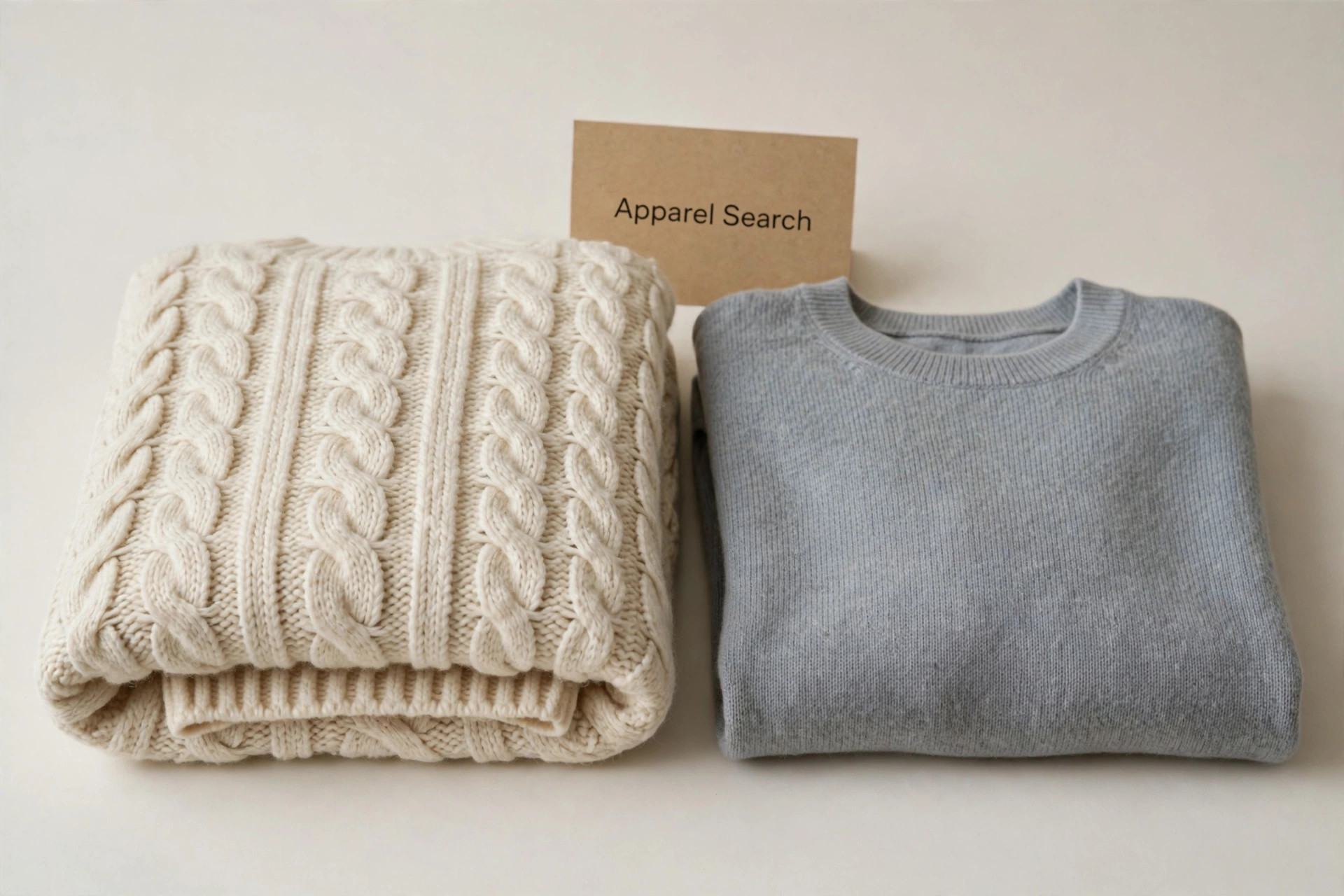
Knitting Is the Definition
A sweater is defined less by its shape than by its construction: it is knitted, and the knitting is what gives it warmth, stretch and its characteristic range of textures, from fine gauge that reads almost like a T-shirt to heavy cables and ribs that read as outerwear. The category is broad enough to include sweaters made for dogs and occasionally other animals, sized and cut against cold weather — a real branch of the category, and a reminder that the definition is about the knitted garment, not the wearer.
Fibre decides the character. Wool insulates even when damp and carries the classic sweater types — the argyle, the fisherman knit and the Fair Isle among them; cotton makes a cooler, heavier sweater for spring; acrylic and other artificial fibres lower the price and simplify care; blends try to combine the virtues. A thick cotton version is usually known as a sweatshirt. Stitch carries identity too: cable knits are the textured signature of the traditional sweater, worked with sleeves and body in the same knitted construction.
Gauge — the number of stitches to the inch — is the sweater's weight scale. Fine-gauge knits sit close and layer under jackets like a shirt; mid-gauge knits are the everyday pullover; heavy-gauge knits, worked in thick yarn with cables, ribs and textured stitches, function as outerwear in cold weather. Hand knitting and machine knitting produce the same structures at different speeds and price points, and the care a sweater needs follows its fibre and gauge: wool wants rest between wearings and protection from moths, cotton tolerates washing but dries heavy and slow, and fine knits of any fibre snag and pill sooner than heavy ones.
Names Around the World
The sweater's pile of names records its travels. Sweater itself is American, from the garment's sporting and sweating associations; pullover describes how it goes on; jumper in Britain and Australia comes from an older word for a loose jacket; jersey preserves the name of the Channel Island whose knitted wool garments, worn by fishermen, set the pattern. Sports kept the jersey name alive after everyday usage moved on — the early ice hockey sweater, recognisable as what we would now call a sweater, evolved into the modern hockey jersey, and cycling kept the word as well.
For shoppers and cataloguers the practical point is simple: sweater, pullover, jumper and jersey listings very often describe the same product. Background and shopping coverage are gathered in the Fashion Influence guide to sweaters, with dedicated guides to women's sweaters, sweaters for men and sweaters for children.
Types and Variations
The one true structural variant is the cardigan: a jumper with an open front fastened by buttons or a zipper, which makes it easier to put on, remove and wear partly open. Beyond it, the family is organised by fibre, pattern and occasion: women's argyle sweaters, women's cardigan sweaters, women's cotton sweaters and women's silk sweaters each have their own guide.
The novelty end of the family is seasonal: anyone invited to a holiday party in an ugly sweater is meeting the Christmas sweater tradition, covered under ugly Christmas sweaters. Novelty aside, the definition holds across the whole range — heavy or fine, wool or cotton, plain or cabled, a sweater is the knitted top that covers torso and arms, whatever the local name for it.
Neckline and fit organise the retail family further: crew necks and V-necks for layering over a shirt collar, turtlenecks and mock necks for cold weather, and sleeveless knitted vests at the family's edge. None of these changes the definition — each is the same knitted torso garment finished differently at the neck — which is why a single sweater definition can hold a category that fills whole shop departments.
Not to Be Confused With
Three knitted neighbours, told apart by construction. A sweater / pullover is closed at the front and goes on over the head. A cardigan is the open-front member of the family, fastened with buttons or a zipper and worn like a light jacket. A sweatshirt is the thick cotton version — the same torso-and-arms coverage, but in heavy cotton rather than a wool or fine knit. If it opens at the front it is a cardigan; if it is thick cotton it is usually sold as a sweatshirt; otherwise the regional names — sweater, pullover, jumper, jersey — all describe the same garment.
Common Questions
What is the difference between a sweater, a pullover and a jumper?
They are regional names for the same garment, a relatively heavy knitted top covering the torso and arms. Sweater is the American term; British English uses pullover, sweater, jersey or jumper, and jumper is the most common term in Australian English.
What is a cardigan?
A cardigan is a jumper with an open front fastened by buttons or a zipper. The open front is the defining feature: where a pullover goes on over the head, a cardigan opens like a jacket, which makes it easier to put on, remove and wear partly open.
What are sweaters made of?
Sweaters were traditionally made from wool, typically sheep's wool, though alpaca and other fibres were also used. Modern sweaters are also made of cotton and artificial fabrics and blends. A thick cotton version is usually known as a sweatshirt, and the early ice hockey sweater evolved into what is now called a jersey.