Children's Sweaters Guide
A children's sweater is the knitted warmth layer: a knitted garment typically with long sleeves, worn over the upper body — either a pullover or a cardigan, distinguished in that cardigans open at the front while pullovers do not. Sweaters are worn by children of all genders, often over a shirt, blouse, t-shirt or other top, but sometimes next to the skin, and while traditionally made from wool, they can also be made of cotton, synthetic fibres or any combination of textile fibres. This guide builds on that frame.
Shop Children's Sweaters Now
Shop Children's Sweaters on Amazon Shop Children's Sweaters on eBayThe Amazon and eBay links on this page are affiliate links. If you make a purchase through them, Apparel Search may earn a commission.
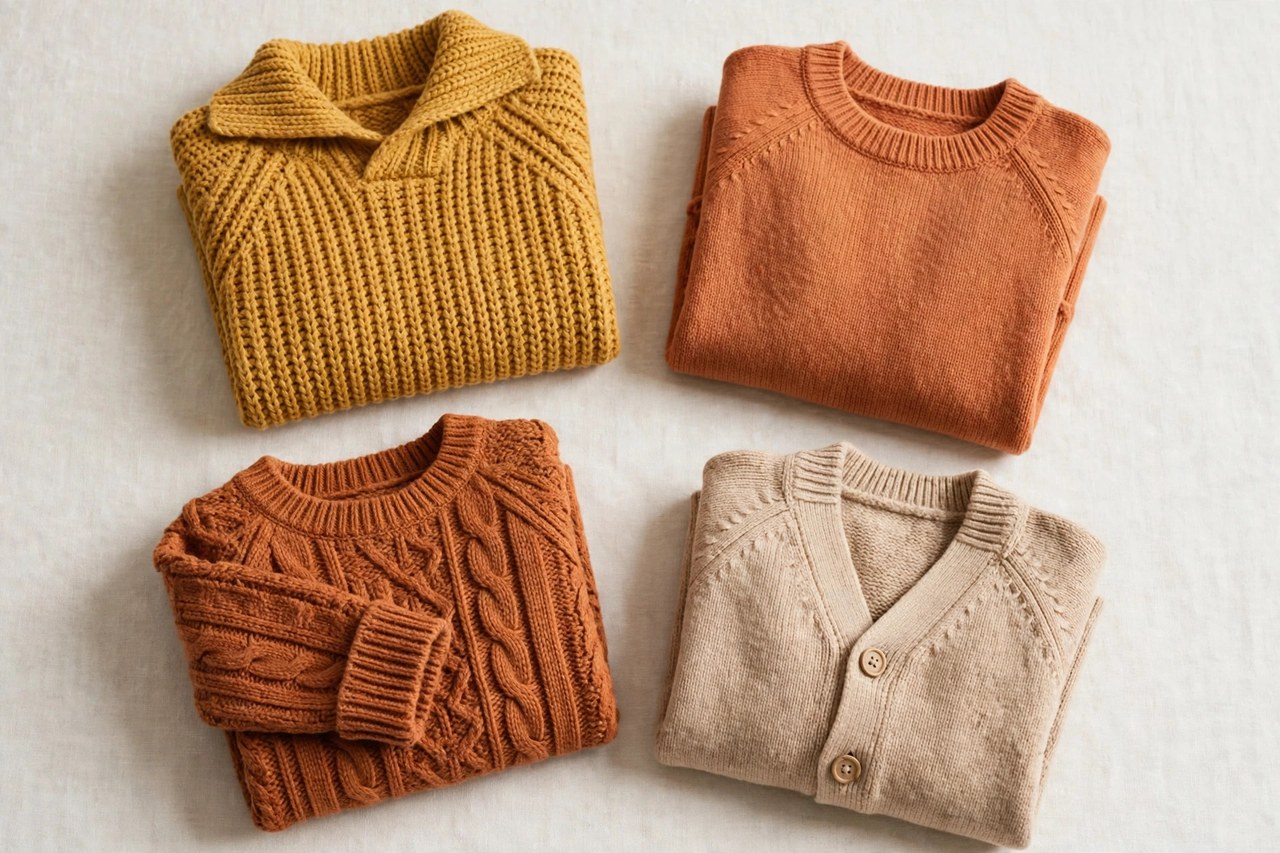
A children's sweater is the knitted warmth layer: a knitted garment typically with long sleeves, worn over the upper body — either a pullover or a cardigan, distinguished in that cardigans open at the front while pullovers do not. Sweaters are worn by children of all genders, often over a shirt, blouse, t-shirt or other top, but sometimes next to the skin, and while traditionally made from wool, they can also be made of cotton, synthetic fibres or any combination of textile fibres. This guide builds on that frame.
Sweaters sit at the centre of the layering system: over the shirts from this letter, under the coats from C and O, beside the scarves that seal the neck. The knit sibling guides — the Christmas sweaters and knit sweaters pages — take the seasonal and technique angles; this page covers the garment family whole.
Pullovers, Cardigans and the Knit Family
The pullover is the default: crew necks for everyday layering, V-necks over collared school shirts, and roll or polo necks for the coldest days where school rules allow. The cardigan opens at the front with buttons or a zip, which makes it the easiest layer for a child to put on, take off and regulate through a changeable day — and the layer teachers bless, because twenty children can shed cardigans without a single stuck-over-the-head incident. Zipped knits behave like light jackets and suit active children.
Knit structure decides warmth and weight. A fine-gauge knit layers smoothly under coats and suits school uniform rules. Chunky knits trap more air and more warmth but bulk under a coat and belong to the outer layer on dry cold days. Cables and textures add warmth with visual interest; smooth knits pill less visibly and look smarter longer. Check the inside as well as the outside: a sweater worn next to the skin must be soft inside, with no scratchy seam at the neck.
Fibres: Wool, Cotton, Synthetics and the Itch Test
Wool is the traditional fibre and still the warmest per weight, breathing and regulating temperature, but ordinary wool can itch young skin — soft merino and wool blends pass the neck test that coarse wool fails, and the test is literal: hold the sweater to the child's neck and cheek before buying, not the wrist, which tolerates everything. Cotton knits are soft, itch-free and washable, less warm and slower to dry, ideal for spring and autumn layers and for children who refuse wool entirely.
Acrylic and synthetic blends are the budget and school-uniform workhorses: easy washing, bright colours, warmth adequate for most school days, with some tendency to pill and to feel less breathable at full activity. Blends that add a little wool to synthetics often balance the family virtues. Whatever the fibre, look for reinforced elbows or generous ease on hard-worn school sweaters, a ribbed cuff and hem that still grip, and a spare button sewn in on cardigans. The fibre debate ends where it starts: the warmest sweater is the one the child will actually keep on.
Fit, Layering and Care That Keeps Knits Alive
Fit a sweater over the thickest top it will cover, with room to raise arms without the hem leaving the waistband and sleeves ending at the wrist. A sweater is the garment where a little growing room behaves best — knits forgive size in a way shirts do not — but sleeves past the hands and a body that swings will be rolled, pushed up and complained about daily. School uniform sweaters follow uniform rules on colour and logo; keep one in the bag rotation washed and ready, since sweaters are the most-lost uniform layer after hats.
Care is where sweaters live or die. Wash as the label directs — many modern school knits are machine-washable, wool often wants a wool cycle — reshape while damp, and dry flat or hung by the body, never by the shoulders on a thin hanger, which grows points. De-pill with a fabric comb rather than picking. Store clean at season's end, folded, since knits stretch on hangers in storage. Handed down with cuffs, hems and elbows checked, a good sweater serves three children; washed carelessly, a good sweater serves one term.
Common Questions
What is the difference between a pullover and a cardigan?
A sweater is either a pullover or a cardigan, distinguished in that cardigans open at the front while pullovers do not. Cardigans are the easiest layer for children to put on, remove and regulate through a changeable school day.
Which sweater fibre is best for children who find wool itchy?
Soft merino or wool blends often pass where coarse wool fails, and cotton knits are the itch-free alternative — softer and washable, though less warm. Test any sweater against the child's neck and cheek before buying, not the wrist, and remember a sweater may be worn next to the skin.
How do you stop sweaters stretching out of shape?
Wash as the label directs, reshape while damp, and dry flat or hung by the body — never by the shoulders on a thin hanger. Store sweaters folded and clean, since knits stretch on hangers in storage. De-pill with a fabric comb rather than picking at pills.
More in Children's Clothes Guide S
The S letter hub and related S guides:
Looking for Children's Clothing Stores?
This guide helps you choose children's sweaters. To browse where to buy, visit our children's clothing store directory, where you can find retailers that carry them.