Children's Snowpants Guide
Children's snowpants are the general snow-play trouser: waterproof, insulated pants — or bib overalls — built for sledding, snowmen, playgrounds in winter and the walk to school through snow. The boundary is simple: snowpants are for snow in general, while ski pants are cut and detailed for the sport of skiing. A child whose winter is sleds and snowball fights needs this page; a child in ski school needs both.
Shop Children's Snowpants Now
Shop Children's Snowpants on Amazon Shop Children's Snowpants on eBayThe Amazon and eBay links on this page are affiliate links. If you make a purchase through them, Apparel Search may earn a commission.
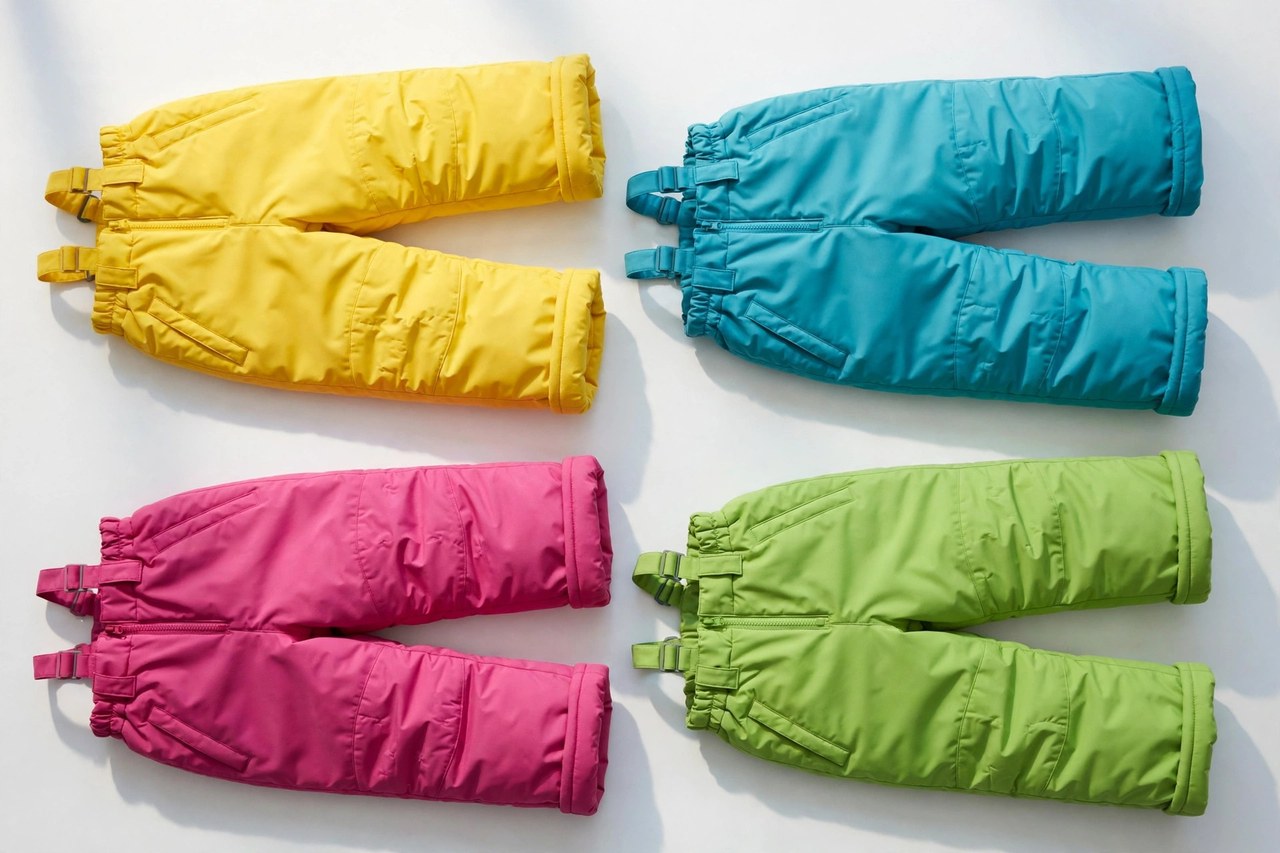
Children's snowpants are the general snow-play trouser: waterproof, insulated pants — or bib overalls — built for sledding, snowmen, playgrounds in winter and the walk to school through snow. The boundary is simple: snowpants are for snow in general, while ski pants are cut and detailed for the sport of skiing. A child whose winter is sleds and snowball fights needs this page; a child in ski school needs both.
Snowpants do more hours of ordinary winter than any other specialist garment in the wardrobe — school requires them on snowy days in many cold regions, and play requires them everywhere else. They are bought on warmth, waterproofing and whether a child can get them on over school clothes in a hallway full of other children doing the same.
Bib Versus Waist Pants, Insulation and Waterproofing
Bib snowpants, with a chest panel and shoulder straps, are the default for younger children: they stay up without adjustment, snow cannot reach the waist in a tumble, and a jacket over the top seals the whole torso. Waist-height snow pants suit older children who dress fast, layer under a long parka, and find bibs babyish — a stage that arrives and should be costed into buying. Either style needs an adjustable waist or straps, because snowpants go over ordinary trousers or leggings and the combined waist is thicker than the summer one.
Insulation is usually synthetic padding, warm when damp and easy to wash — the right choice for play clothing. The shell must be genuinely waterproof with sealed or well-constructed seams at the seat and knees, the places a child sits and kneels in snow for hours. Water-resistant play pants wet through at the seat within one good sledding session. Reinforced knees and seats, and tough fabric at the inner ankle, are the durability marks; snowpants fail at exactly those points when they fail.
Fit Over School Clothes, Gaiters and Getting Them On
Fit snowpants over the clothes they will actually cover, and run the play test: sit on the floor, kneel, climb, bend to scoop snow. The bib straps should adjust and stay on shoulders; the waist should close without a struggle over a jumper; the leg should cover the boot top with knees bent. Inner gaiters — elastic cuffs that pull over boots — matter here just as on ski pants, because playground snow finds boot tops as reliably as slope snow does.
Independence is a design feature. A child who can pull their own snowpants on and off, manage the straps and visit the bathroom without full undressing is a child whose school day works. Practise the routine at home before the first snow day, choose front closures small hands can work with cold fingers, and label everything — a classroom holds twenty near-identical black and navy snowpants, and bright colours or a coloured strap are claimed and found far faster. Whatever type of pants your kids are wearing is trendy this season; labelled and self-managed is trendier at school.
Care, Drying at School and Home, Handing Down
Snowpants come home wet more days than not in a snowy winter, and the drying routine decides whether they are ready tomorrow: shake snow off outside, hang them open — bibs by the straps — in moving air, and dry gaiters and waistbands fully. At school, a pair that hangs properly in the morning dries by home time; teach children to hang, not ball, their gear. Wash as labels direct, usually cool without fabric softener on coated fabrics, and re-proof when water stops beading.
Snowpants are champion hand-me-downs: worn for a season's snow days, outgrown before they wear out, and built with reinforcements that survive. Check handed-down pairs at seat, knees, gaiter elastic and strap adjusters, and size them by the play test, not the label. Keep one pair per child in the current size, because a second is a luxury but a missing pair on a snow morning is a crisis — and the snow day, when it comes, is the day this whole garment exists for.
Common Questions
What is the difference between snowpants and ski pants?
Snowpants are the general snow-play garment — sledding, snowmen, winter playgrounds — while ski pants are cut and detailed for the sport of skiing, with boot gaiters and reinforcements placed for lessons, lifts and falls. A ski-school child needs the ski page's details; a snow-play child is fully served here.
Bib or waist-height snowpants for a child?
Bibs for younger children: they stay up, keep snow from the waist in tumbles, and seal under a jacket. Waist-height pants suit older children who dress quickly and layer under a long parka. Either style needs an adjustable waist, since snowpants go over ordinary trousers.
How should snowpants be dried between school days?
Shake snow off outside, hang them open in moving air — bibs by the straps — and dry gaiters and waistbands fully. Teach children to hang rather than ball their gear at school so it dries by home time. Wash cool without softener on coated fabrics.
More in Children's Clothes Guide S
The S letter hub and related S guides:
Looking for Children's Clothing Stores?
This guide helps you choose children's snowpants. To browse where to buy, visit our children's clothing store directory, where you can find retailers that carry them.