Children's Scarves Guide
A children's scarf is the soft strip of fabric or knitting worn around the neck for warmth — and, in lighter versions, as an accessory. Knowing how to tie one matters, and children's scarves are judged on warmth without bulk, softness against young skin, safe lengths, and fastenings or styles a child can manage. This page covers the garment itself, from fleece tubes to knitted classics, and how to size and care for each.
Shop Children's Scarves Now
Shop Children's Scarves on Amazon Shop Children's Scarves on eBayThe Amazon and eBay links on this page are affiliate links. If you make a purchase through them, Apparel Search may earn a commission.
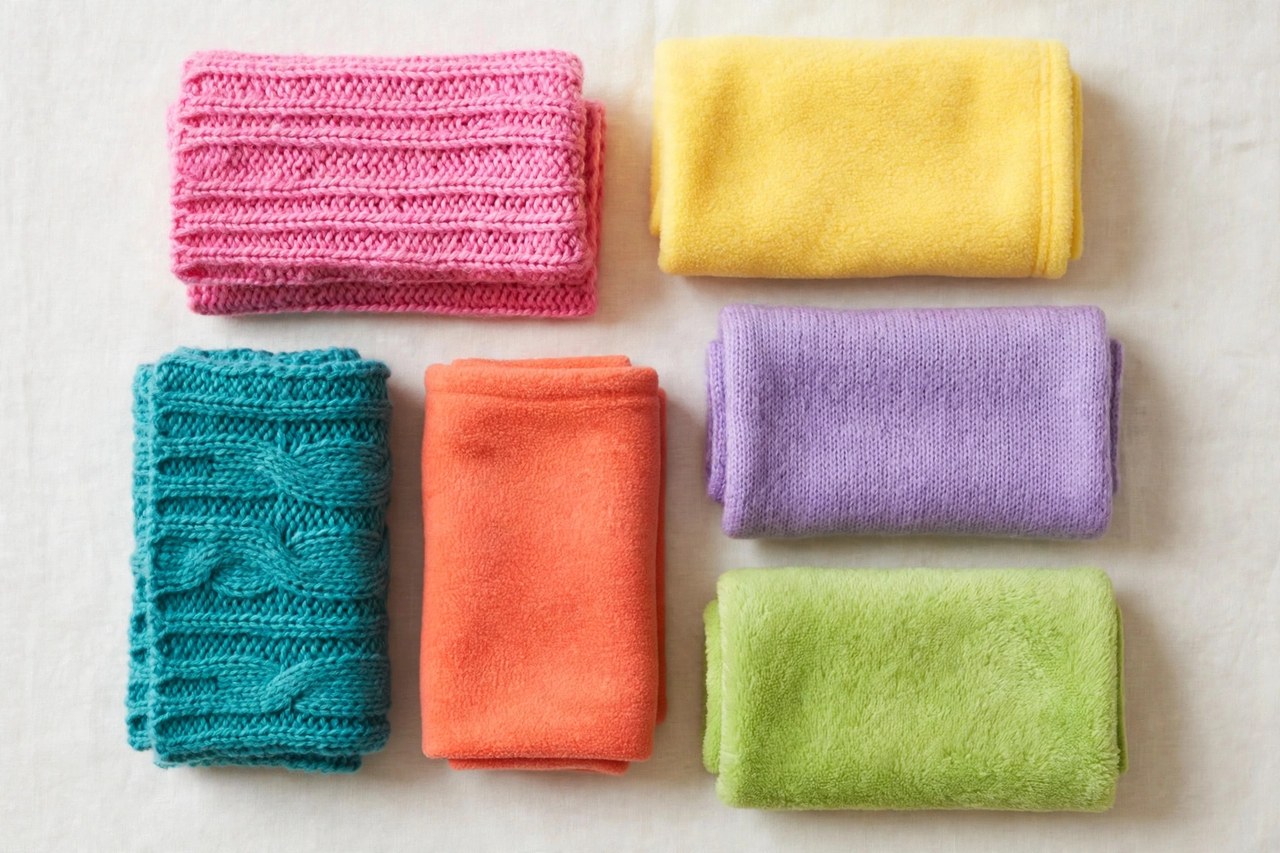
A children's scarf is the soft strip of fabric or knitting worn around the neck for warmth — and, in lighter versions, as an accessory. Knowing how to tie one matters, and children's scarves are judged on warmth without bulk, softness against young skin, safe lengths, and fastenings or styles a child can manage. This page covers the garment itself, from fleece tubes to knitted classics, and how to size and care for each.
A scarf is a small purchase that does daily work all winter, sealing the gap between coat collar and hat where cold air otherwise pours in. It is also the winter accessory most often lost, left on hooks and buried in school lost-property boxes, so this guide is as much about choosing scarves children keep as scarves that keep children warm.
Types: Knitted, Fleece, Tube and Snood Styles
The classic knitted scarf is a flat rectangle in wool, acrylic or a blend, warm and traditional, tied or wrapped by an adult for younger children. Fleece scarves are lighter, softer, wash without fuss and suit most school winters; they are the workhorse choice. Tube scarves, neck warmers and snoods are closed loops pulled over the head: nothing dangles, nothing trails, nothing unties, and for active children and school rules they are often the wisest design of all.
Length and width scale with the child. A scarf should wrap the neck once with short ends, or twice snugly in a tube style — never long trailing ends that catch in doors, playground equipment or bicycle wheels. For very young children, many nurseries prefer tube styles or no scarf at all under supervision rules, and their guidance wins. Fringes look charming and tangle, catch and fray; short or no fringe is the practical school choice. Whatever fashion accessories your kids are wearing is in fashion — safety and softness are the filters here.
Fabrics, Softness and Warmth
Skin at the neck is sensitive, and a scratchy scarf will be refused daily no matter how warm it is. Soft acrylic, brushed fleece, cotton knits and modern soft wool blends pass the chin test: rub the fabric against your own inner wrist or cheek before buying. Wool is warmest per weight and breathes well; quality soft wool suits cold climates. Fleece is warm, light and nearly indestructible in the wash. Cotton scarves are light layers for cool spring and autumn days rather than deep winter.
Check the edges and finish. Knitted scarves should have even tension without ladders or pulled threads at the corners where they will be grabbed. Fleece should be anti-pill or it will look tired within weeks. Colours matter practically: bright scarves are found faster in a pile of identical navy coats, show their owner across a playground, and are claimed from lost property far more often than black ones. A name label sewn or written inside is the cheapest insurance in the whole winter wardrobe.
Wearing, Tying and Care
The simplest wearing method for children is the loop: fold the scarf in half, wrap it around the neck, pull the ends through the fold and snug it gently. It stays put, keeps ends short and even, and older children can do it alone. Tube styles need no tying at all. Teach the rule that scarves come off for climbing frames, PE and any equipment with moving parts, and go back on for the walk home — most schools teach exactly the same rule.
Wash fleece and acrylic scarves with the ordinary cool wash; wash wool as its label directs, usually cool and gentle, drying flat. Scarves collect the winter's coughs and should be washed regularly through the season, not just stored in spring. Keep the scarf with the coat and gloves in one place by the door so the set leaves together. At season's end, wash, dry fully, check for holes at the grab corners, label the size for handing down, and store clean — a scarf put away dirty in April is nobody's favourite find in November.
Common Questions
What scarf style is safest for young children?
A tube scarf, neck warmer or snood — a closed loop with nothing dangling, trailing or untying. If a flat scarf is used, it should wrap once with short ends, never long trailing ends that catch in doors or equipment, and scarves come off for climbing and PE.
Which scarf fabric is best for children?
Softness decides, since a scratchy scarf is refused daily. Fleece is the school workhorse — warm, light and easy to wash. Soft wool or wool blends are warmest for cold climates, cotton suits milder days. Test the fabric against your inner wrist or cheek before buying.
How do you keep a child's scarf from being lost?
Choose a bright colour that stands out in a pile of coats, sew or write a name label inside, and keep scarf, coat and gloves together by the door so the set leaves and returns as one. Bright, labelled scarves are claimed from lost property far more often.
More in Children's Clothes Guide S
The S letter hub and related S guides:
Looking for Children's Clothing Stores?
This guide helps you choose children's scarves. To browse where to buy, visit our children's clothing store directory, where you can find retailers that carry them.