Children's Socks Guide
A children's sock is the fitted fabric covering for the foot: a sock is a type of apparel worn on the feet, often covering the ankle and some portion of the calf, typically worn under footwear such as a shoe, sneaker or boot. It is the smallest garment in this letter and the one bought most often, worn most hours, and blamed most unfairly — a sock is the layer that decides whether a good shoe feels good. This guide covers the types, the fibres and the fit.
Shop Children's Socks Now
Shop Children's Socks on Amazon Shop Children's Socks on eBayThe Amazon and eBay links on this page are affiliate links. If you make a purchase through them, Apparel Search may earn a commission.
A children's sock is the fitted fabric covering for the foot: a sock is a type of apparel worn on the feet, often covering the ankle and some portion of the calf, typically worn under footwear such as a shoe, sneaker or boot. It is the smallest garment in this letter and the one bought most often, worn most hours, and blamed most unfairly — a sock is the layer that decides whether a good shoe feels good. This guide covers the types, the fibres and the fit.
Socks are organised by their styles — ankle socks, crew socks, low cut socks and novelty socks each with its own product page linked from here — along with the buying substance: heights matched to shoes, cushioned soles for sport, seamless toes for sensitive feet, and the multipack economics of a garment that disappears one at a time into the wash.
Sock Heights and Styles: Ankle, Crew, Low Cut and Novelty
Crew socks, ending mid-calf, are the all-purpose height: they stay up, protect the ankle under boots and school shoes, and suit most of the year. Ankle socks end at the ankle bone and suit trainers and warm weather, provided the shoe's heel collar does not rub the exposed skin. Low cut and trainer socks hide inside the shoe for the no-show look older children want; they need a heel grip or they slide under the foot by midday, which is the commonest sock complaint of all.
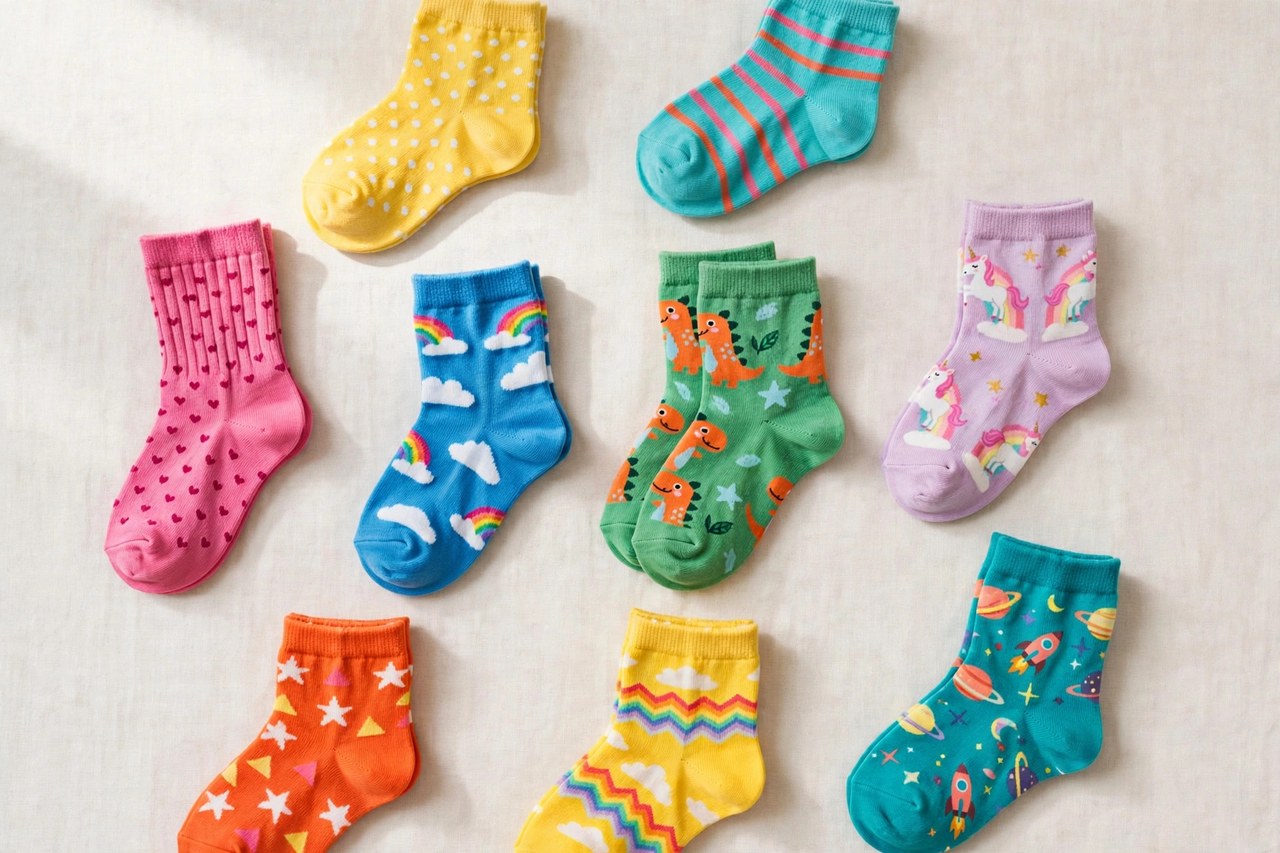
Novelty socks — the patterns, characters and bright designs covered in their own linked guide — are the joy of the category and follow the same rules as any sock: pattern is free, fit and fibre are not negotiable. Knee socks serve uniforms, kilts, winter under boots and costumes. Sports socks add cushioning at heel and ball, arch support bands, and moisture-wicking fibres, and are worth their premium for children in regular training. Whatever type of foot hosiery your kids are wearing is in fashion this season — provided it stays up and stays put.
Fibres, Cushioning, Seams and Staying Up
Fibre decides comfort. Cotton is soft and fine for ordinary days but holds sweat and goes clammy in sport; cotton-rich blends with nylon for strength and elastane for hold are the everyday standard. Wool and wool blends are the winter and hiking choice, warm even when damp. Synthetic wicking fibres own the sports drawer. For any fibre, look at the toe seam: a flat or hand-linked seamless toe prevents the rubbing that sensitive children feel in every shoe, and it is worth seeking out specifically if socks are regularly refused.
Staying up is engineering, not luck: a ribbed cuff with real elastane, a shaped heel pocket that cups the heel instead of a straight tube, and the right size. Socks sized by shoe size must match the child's current shoes — a sock two sizes small slides down, and one too big bunches under the toes and causes the blisters it is blamed for. Cushioned soles help growing feet in hard school shoes. Replace socks whose elastic has relaxed into anklets-by-lunchtime; no drawer trick fixes dead elastic.
Buying in Multipacks, the Wash and the Odd-Sock Problem
Buy socks the way they are used: multipacks of one style and colour family for school, so any two survivors make a pair; distinct patterns for weekends and sport, where matching is part of the fun. Standardising the school sock is the only proven cure for the odd-sock problem — that, and a wash bag for small socks, which keeps pairs together and out of the machine's filter. Buy the multipack when shoes are bought, in the size the shoes dictate, and the drawer stays honest.
Wash socks inside out, dry them fully, and retire them when heels thin, toes hole, or elastic dies — socks are consumables, and a holed sock inside a good shoe creates the blister that gets the shoe blamed. Check fortnightly in fast-growth phases: a sock that has become too small constricts toes all day. Small, cheap and constantly replaced, socks reward a system — one school style, one sports style, a wash bag, and no sentimentality about singles whose partners have gone to the great drawer in the sky.
Common Questions
What sock heights should children have?
Crew socks to mid-calf are the all-purpose height for school shoes and boots. Ankle socks suit trainers and warm weather, low cut styles hide inside shoes but need a heel grip to stay in place, and knee socks serve uniforms and winter. Separate linked guides cover the ankle, low cut and novelty styles individually.
Why do a child's socks keep sliding down?
Usually size or dead elastic: a sock too small slides down, one too big bunches under the toes. Look for a ribbed cuff with elastane, a shaped heel pocket instead of a straight tube, and sizing matched to the child's current shoe size. Replace socks whose elastic has relaxed — it cannot be revived.
How do you stop losing children's socks in the wash?
Standardise the school sock — multipacks of one style and colour, so any two survivors make a pair — and wash small socks in a mesh wash bag. Retire holed, thinned or elastic-dead socks promptly, since a holed sock inside a good shoe causes blisters.
More in Children's Clothes Guide S
The S letter hub and related S guides:
Looking for Children's Clothing Stores?
This guide helps you choose children's socks. To browse where to buy, visit our children's clothing store directory, where you can find retailers that carry them.