Children's Sneakers Guide
Children's sneakers are the athletic shoe of the wardrobe: sneakers are shoes essentially designed for sports or other forms of physical exercise — but worn for far more than athletic activities, they are a primary aspect in nearly every child's wardrobe. That double life, sport and everything else, makes the sneaker the most-bought and most-worn shoe of childhood. This guide covers the sneaker as its own garment: cushioning, support, closures and fit.
Shop Children's Sneakers Now
Shop Children's Sneakers on Amazon Shop Children's Sneakers on eBayThe Amazon and eBay links on this page are affiliate links. If you make a purchase through them, Apparel Search may earn a commission.
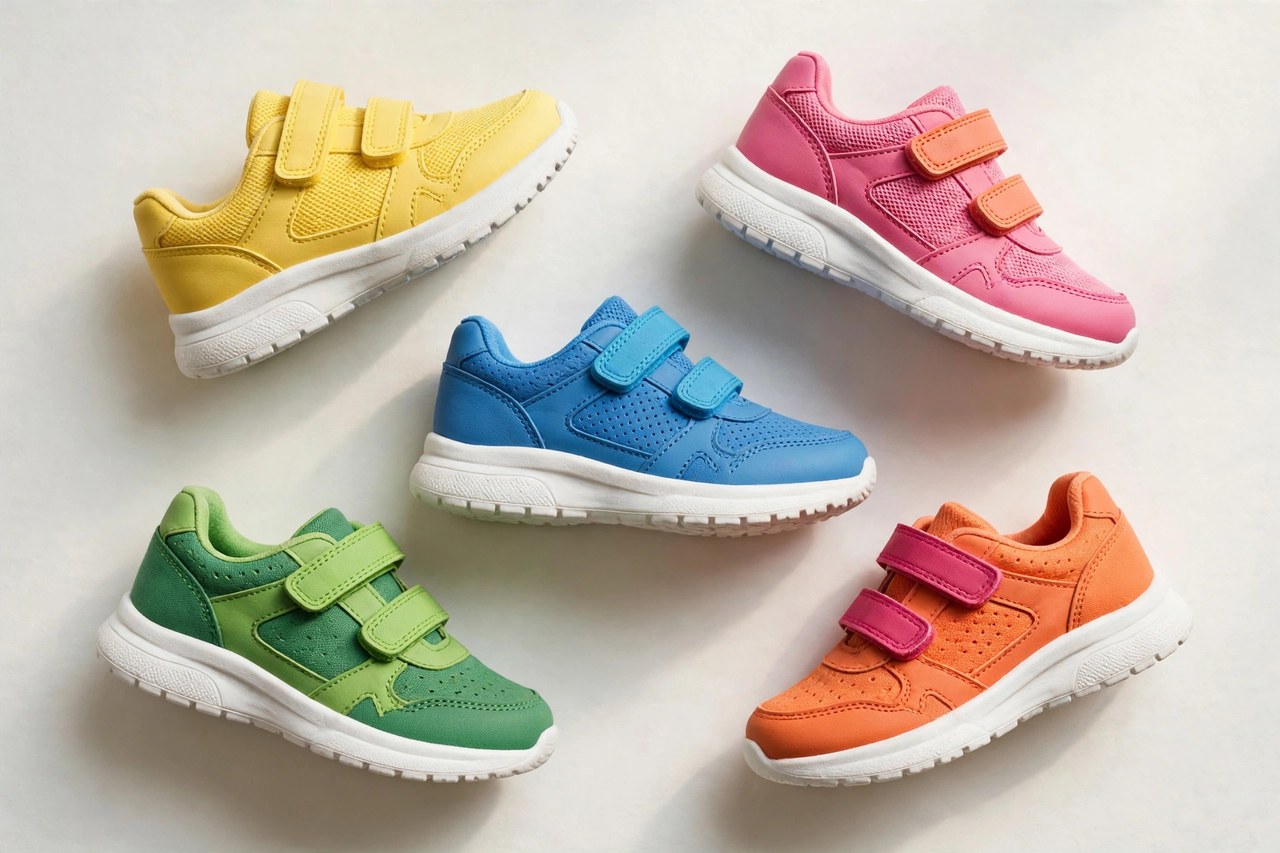
Children's sneakers are the athletic shoe of the wardrobe: sneakers are shoes essentially designed for sports or other forms of physical exercise — but worn for far more than athletic activities, they are a primary aspect in nearly every child's wardrobe. That double life, sport and everything else, makes the sneaker the most-bought and most-worn shoe of childhood. This guide covers the sneaker as its own garment: cushioning, support, closures and fit.
That standard outranks every other consideration on this page: more important than brand name, colour or trendy styling is comfort — make sure children are wearing comfortable shoes. Any pair of sneakers your kids are wearing is cool; they do not have to be expensive. This guide is built on exactly that order of priorities.
Anatomy of a Good Children's Sneaker
A sound sneaker has four working parts. The sole combines grip — a tread pattern suited to playgrounds and sports halls — with cushioning that absorbs running and jumping impact without feeling unstable. The midsole does the cushioning; the upper holds the foot, in mesh for breathability, leather or synthetics for durability, or a mix. The heel counter, the stiffened cup at the back, steadies the heel; a counter that crushes flat under thumb pressure is not doing its job.
Flex is the shop test anyone can do: the shoe should bend at the ball of the foot, where the foot bends, and resist twisting through the middle. A shoe that folds in half like a wallet supports nothing; one that will not bend at the ball fights every step. Weight matters more than brands admit — heavy sneakers tire small legs on long days — and internal seams should be smooth, because the sneaker is worn for hours at full activity, which is when a rough seam becomes a blister.
Closures, Fit and the Comfort Rule in Practice
Closures scale with the child. Hook-and-loop straps let the youngest children fasten their own sport shoes and let parents adjust fit across the day. Elastic laces with a toggle bridge the gap. Tied laces belong to children who can tie them securely and re-tie them mid-game without thinking — untied laces on a running child are a genuine hazard, and PE teachers' preference for straps on young classes is practical, not fussy. Double up: many good children's sneakers combine straps with elastic, which is the best of both.
Fit sneakers by the shoes guide's standard — standing, late in the day, in sports socks, about a centimetre beyond the longest toe, heel held, width free of bulging — then add the activity test: the child should run, jump and stop in them before you commit, because a sneaker's faults only show at speed. Comfort on that test is the purchase decision. Colour, character and brand are the child's joy and a legitimate tiebreaker between two pairs that both fit — never a reason to accept the pair that pinches.
Sport-Specific Pairs, Care and Replacement
One good general sneaker covers most childhoods. Specific sports add specific shoes as children specialise: court sports want lateral support and non-marking soles for halls, running wants lighter cushioning, football and baseball want cleats that must never double as everyday shoes. The kids' sneaker guide takes the category further. Buy the specialist pair when the sport becomes regular, not for the first taster session, and keep school PE requirements — often simply clean non-marking soles — in view.
Care is airing and cleaning: loosen the shoes after wear, air them overnight, rotate two pairs if sport is daily, brush dried mud off, and wash only as the maker allows, never baking them dry on heat, which warps cushioning. Replace sneakers when tread smooths at the ball, the midsole creases deeply and stays compressed, the heel counter collapses, or the fit check fails — cushioning dies before uppers do, so a good-looking pair can already be a finished pair. Comfort first, as this page began: it is the whole rule.
Common Questions
What matters most when buying children's sneakers?
Comfort, ahead of brand name, colour or trendy styling: make sure children are wearing comfortable shoes, and they do not have to be expensive. Test any pair with running, jumping and stopping, because a sneaker's faults only show at speed.
How do you test a children's sneaker in the shop?
Bend it: it should flex at the ball of the foot and resist twisting through the middle. Squeeze the heel counter — it should steady the heel, not crush flat. Then fit it standing, late in the day, in sports socks, with about a centimetre beyond the longest toe, and have the child run and jump in it.
When should children's sneakers be replaced?
When the tread smooths at the ball, the midsole stays deeply creased and compressed, the heel counter collapses, or the fit check fails. Cushioning dies before uppers do, so a good-looking pair can already be finished. Air sneakers after wear and never bake them dry on heat.
More in Children's Clothes Guide S
The S letter hub and related S guides:
More to Explore on Apparel Search
Looking for Children's Clothing Stores?
This guide helps you choose children's sneakers. To browse where to buy, visit our children's clothing store directory, where you can find retailers that carry them.