Children's Sandals Guide
Children's sandals are the open summer shoe: a light shoe with either an openwork upper or straps attaching the sole to the foot. That openness is the whole design — air circulates, wet feet dry, and growing toes are not cramped — and it is also the limit of the design, because an open shoe protects less than a closed one. This guide covers the sandal on its own terms: strap systems, closed-toe versus open-toe, sizing, and where sandals should and should not be worn.
Shop Children's Sandals Now
Shop Children's Sandals on Amazon Shop Children's Sandals on eBayThe Amazon and eBay links on this page are affiliate links. If you make a purchase through them, Apparel Search may earn a commission.
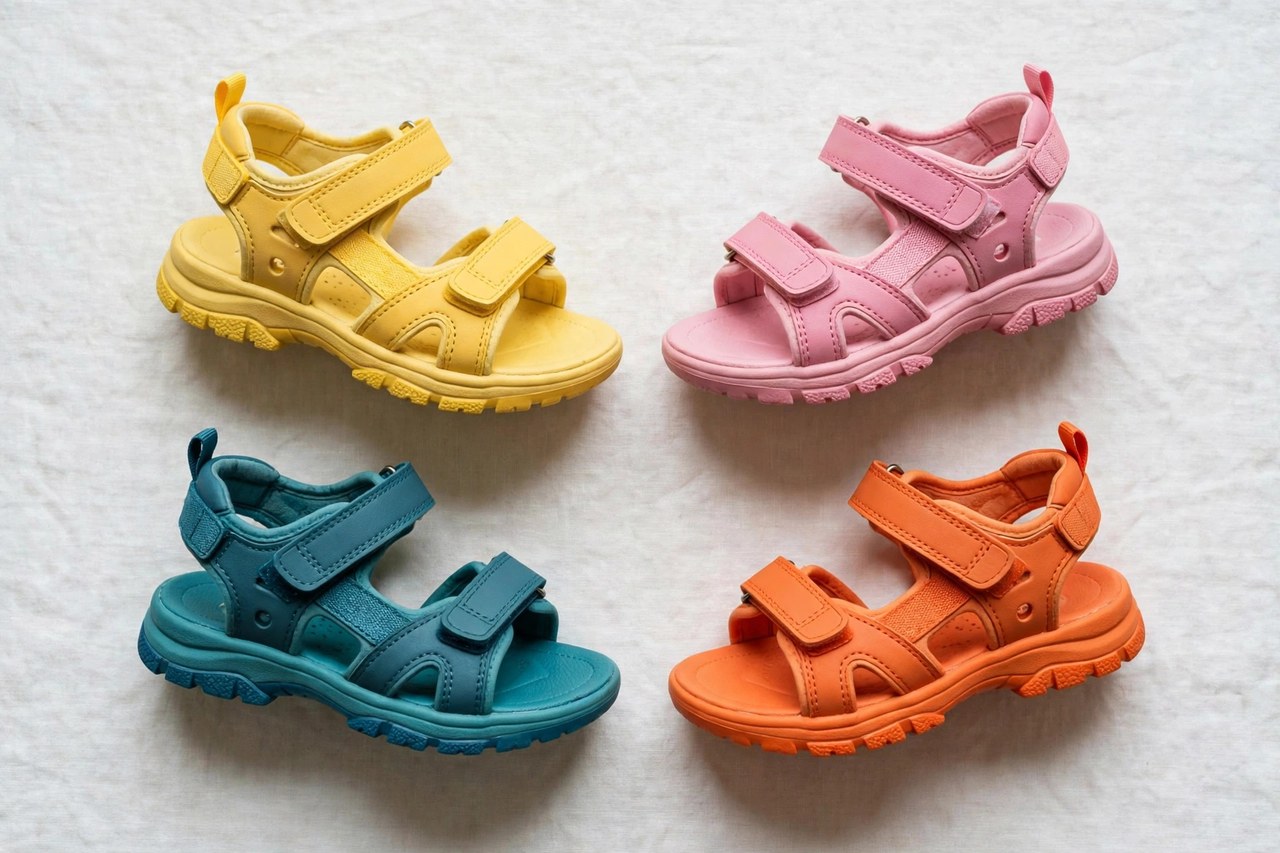
Children's sandals are the open summer shoe: a light shoe with either an openwork upper or straps attaching the sole to the foot. That openness is the whole design — air circulates, wet feet dry, and growing toes are not cramped — and it is also the limit of the design, because an open shoe protects less than a closed one. This guide covers the sandal on its own terms: strap systems, closed-toe versus open-toe, sizing, and where sandals should and should not be worn.
Keep the footwear jobs in this letter separate. The shoes guide covers the whole footwear system, sneakers cover the athletic shoe, and slippers cover indoor wear. Sandals own one season and one job: cool, light, secure warm-weather walking. Judge every pair by secure fit first, because a sandal that slips is worse than the closed shoe it replaced.
Strap Systems, Closed Toes and Soles
The strap system decides whether a sandal stays on an active child. Adjustable hook-and-loop straps at the toes and ankle are the practical standard for younger children, because the fit can be tuned as feet swell in heat and the child can fasten them alone. A heel strap is essential for running and playground wear; backless slides and flip-flop styles are pool and beach shoes only, with no place in climbing or cycling. Buckles look smart and adjust less easily, suiting older children.
Closed-toe sandals protect toes against stubs, playground edges and bicycle pedals while keeping the open, airy sides, and are the school and nursery choice in many places. Open-toe styles are cooler and show fit more clearly. The sole should flex at the ball of the foot, carry real tread — wet pool tiles and pavements are slippery — and be thick enough that sharp gravel is not felt through it. Cushioned footbeds help on long walking days; completely flat, thin soles do not.
Sizing, Fit Checks and Growing Feet
Fit sandals at the end of the day, when feet are at their largest, with the child standing so weight spreads the foot. Leave roughly a thumb's width — about a centimetre — beyond the longest toe, and check that no toe hangs over the front edge and the heel sits inside the back edge: a foot that fills the footbed exactly today outgrows it within weeks in summer growth season. Straps should hold the foot without marking the skin after ten minutes of walking around the shop or house.
Children's feet grow fast and, as the shoes guide in this letter notes, kids grow out of shoes rather quickly — sandals bought in May may be tight by August. Check the fit monthly through summer, loosen straps as feet swell, and never hand down a sandal whose footbed has moulded deeply to another child's foot or whose tread has worn smooth. Between the pair that fits and the pair on sale in the next size up, choose the fit: summer is short and sore feet spoil all of it.
Where Sandals Work, Care and Storage
Sandals work for pavements, parks, beaches, pools and holidays. They do not work for cycling without a heel strap and closed toe, for scooters, for climbing frames in many school rules, or for any setting where things get dropped on feet. Many schools set their own sandal rules — closed toe, heel strap, no flip-flops — so check before the first hot day rather than at the gate. Water-friendly synthetic sandals earn their place on beach holidays because they rinse and dry in minutes.
Care is rinsing, air-drying and checking straps. Wash mud and sand out, dry away from direct heat, and inspect hook-and-loop for the fluff and grit that stop it gripping. Leather sandals need drying slowly if soaked and an occasional feed to stop cracking. At summer's end, clean the pair, check tread and straps honestly, and store only what would still be chosen next year in the next size — which, with growing feet, is usually nothing, and that is normal for this category.
Common Questions
What is a sandal?
A light shoe with either an openwork upper or straps attaching the sole to the foot. The openness keeps feet cool and lets wet feet dry, but protects less than a closed shoe, so strap security and sole tread decide whether a pair suits active wear.
Do children's sandals need a heel strap?
For running, playgrounds and everyday summer wear, yes — a heel strap keeps the shoe on an active foot. Backless slides and flip-flops are beach and pool shoes only, with no place in climbing or cycling. Closed-toe styles with a heel strap are the common school choice.
How much growing room should children's sandals have?
About a centimetre — a thumb's width — beyond the longest toe with the child standing, fitted at the end of the day when feet are largest. Check the fit monthly through summer, since children's feet grow quickly and a May fit can be tight by August.
More in Children's Clothes Guide S
The S letter hub and related S guides:
Looking for Children's Clothing Stores?
This guide helps you choose children's sandals. To browse where to buy, visit our children's clothing store directory, where you can find retailers that carry them.