Children's Knit Sweaters Guide
Children's knit sweaters are the warm core of knitwear: knitted pullovers and cardigans in cotton, wool and blends, from school-uniform V-necks to chunky winter crews. A sweater is a warmth system a child can adjust - on for the playground, off in a warm classroom - and it is often the layer that decides whether the coat choice works, so it deserves buying attention beyond color and pattern.
Shop Children's Knit Sweaters Now
Shop Children's Knit Sweaters on Amazon Shop Children's Knit Sweaters on eBayThe Amazon and eBay links on this page are affiliate links. If you make a purchase through them, Apparel Search may earn a commission.
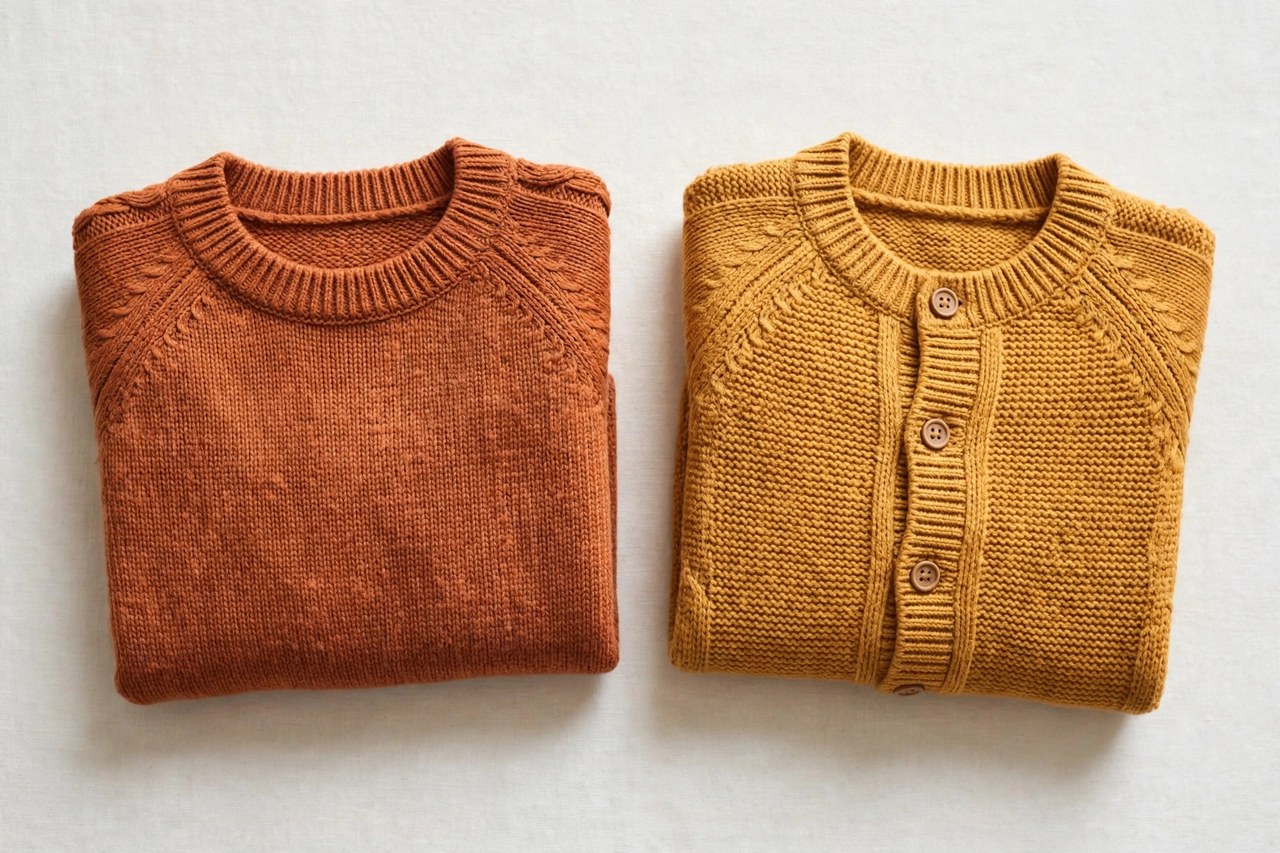
Children's knit sweaters are the warm core of knitwear: knitted pullovers and cardigans in cotton, wool and blends, from school-uniform V-necks to chunky winter crews. See the main children's sweater guide in the S letter and the knitwear overview in this letter for more detail. A sweater is a warmth system a child can adjust - on for the playground, off in a warm classroom - and it is often the layer that decides whether the coat choice works, so it deserves buying attention beyond color and pattern.
The sweater decision tree is short: fibre for warmth and washing, style for the job - uniform, everyday or occasion - and fit with room for the shirt beneath. Every complaint children have about sweaters - itchy, hot, tight at the neck, sleeves in the dinner - maps to one of those three decisions made carelessly, and all three are testable before purchase.
Fibres: Warmth vs Washing
Wool is the warmest fibre per gram, breathes and regulates temperature across a school day of indoor-outdoor swings; modern machine-washable wools and soft merino solve much of the itch and care objection, though a cotton layer beneath remains the sensitive child's answer. Cotton sweaters are soft, non-itchy and washable but heavier for the same warmth and slow to dry - the school-uniform standard in milder climates. Acrylic is light, cheap and colorful, warm enough for mid-season, and the most variable in pilling and longevity.
Blends are usually the family answer: wool-acrylic or cotton-acrylic mixes that balance warmth, washing and price. Whatever the fibre, judge the knit itself: a firm, even knit with recovery when stretched will outlast a loose, airy knit in the same fibre, because sweaters die by stretching and abrasion as much as by fibre failure.
Styles and School Reality
Crew necks are the all-rounders; V-necks exist to show a shirt collar and tie and are the uniform default; cardigans button or zip for the easiest on-off temperature control and suit children who cannot pull garments over their heads comfortably. Zipped sweaters and fleece-adjacent knits bridge toward jackets. Patterns - Fair Isle yokes, stripes, cables - are at their best in this category, where the knitted structure itself makes the decoration and nothing is printed on to crack.
For school sweaters bought in twos and threes, consistency is a feature: same fibre and color across the set means one washing routine and invisible rotation. Buy the fit that accommodates the uniform shirt beneath with the sleeves reaching the wrist - sweater sleeves worn pushed up all day signal a body bought too big or cuffs too loose.
Care and Longevity
Fold sweaters, never hang them; wash according to fibre - most modern children's sweaters take a cool gentle machine cycle in a mesh bag - and dry flat. De-pill early with a shaver, especially blends, and store clean in summer with any moth precautions your household uses for wool. Elbow wear is the sweater's signature failure; some school sweaters come with or accept elbow patches that turn the failure point into a feature children actually enjoy.
A good children's sweater is one of the best hand-me-downs in the wardrobe, because fit is forgiving and style is stable. Bought in a sound fibre, a firm knit and a fit that layers, it will warm two or three children across its life - the knit family's whole argument in a single garment.
Common Questions
Which sweater fibre is best for children?
Blends, for most families: wool blends for real warmth with manageable washing, cotton blends for non-itchy school wear in milder weather. Pure wool is warmest but can itch; a shirt beneath solves that for sensitive children. Judge the knit's firmness and recovery as well as the fibre label.
Crew neck, V-neck or cardigan for school?
V-neck where a shirt and tie show, crew for general wear, and cardigans or zips for children who need easy on-off temperature control or dislike pullovers over the head. All three are uniform-acceptable in most schools - choose by the child's routine.
Why must sweaters be folded, not hung?
Knitted fabric stretches under its own weight on a hanger, permanently distorting the shoulders and length. Fold sweaters for storage and dry them flat after washing to keep their shape.
More in Children's Clothes Guide K
The K letter hub and the guides closest to this one:
More to Explore on Apparel Search
Looking for Children's Clothing Stores?
This guide helps you choose children's knit sweaters. To browse where to buy, visit our children's clothing store directory, where you can find retailers that carry them.