Children's Knitwear Guide
Children's knitwear is the whole knitted family - sweaters, cardigans, knit tops, knit hats and knitted accessories - and this guide is its K-letter overview, the page the original built by linking to its own knit hats, knit tops and knit sweaters guides, all carried and expanded in this letter. Knitwear is the wardrobe's adjustable warmth system: pieces that stretch, breathe, layer and forgive growth better than any woven garment, which is why knits dominate children's cold-weather clothing across every price level.
Shop Children's Knitwear Now
Shop Children's Knitwear on Amazon Shop Children's Knitwear on eBayThe Amazon and eBay links on this page are affiliate links. If you make a purchase through them, Apparel Search may earn a commission.
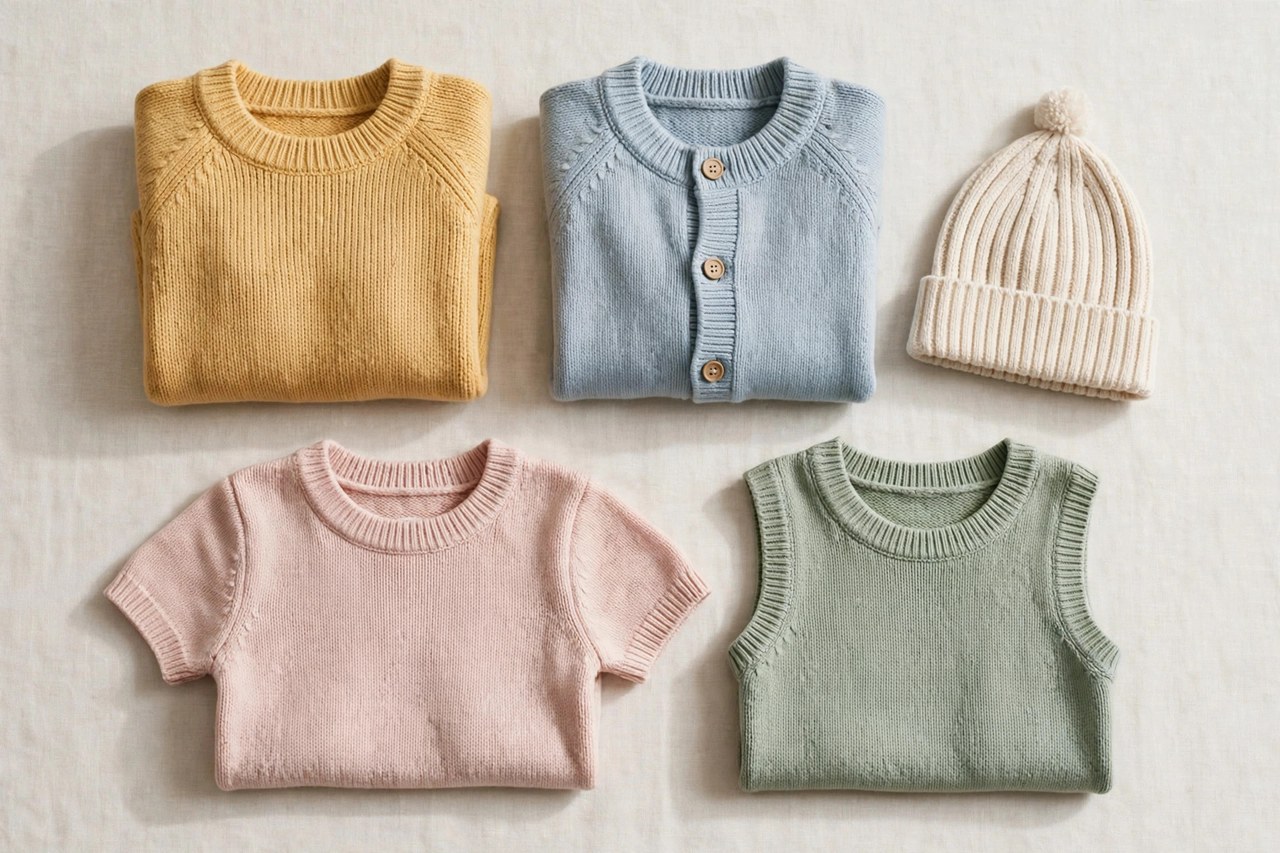
Children's knitwear is the whole knitted family - sweaters, cardigans, knit tops, knit hats and knitted accessories - and this guide is its K-letter overview, the page the original built by linking to its own knit hats, knit tops and knit sweaters guides, all carried and expanded in this letter. Knitwear is the wardrobe's adjustable warmth system: pieces that stretch, breathe, layer and forgive growth better than any woven garment, which is why knits dominate children's cold-weather clothing across every price level.
Understanding knitwear means understanding two things: loops and fibres. Knitted fabric is a single yarn looped through itself, which is why it stretches in all directions, recovers, and drapes softly - and why it can snag, pill and stretch out in ways woven fabric never does. Every buying and care rule in this guide and its three specialist companions flows from those loop properties.
The Knitwear Family and Its Jobs
Sweaters and cardigans are the insulation core, detailed in the knit sweaters guide. Knit tops are the fine-gauge layering athletes between t-shirt and sweater, detailed in their own guide. Knit hats are the cheapest warmth in the wardrobe, with their own guide in this letter. Around those sit knitted scarves, gloves and mittens - the gloves guide covers the hand division - plus knitted dresses, leggings and vests in many ranges.
Bought as a family, knitwear should be planned in layers that work together: a fine knit top under a sweater under a coat gives a child three adjustable warmth settings, which across a school day of cold playgrounds and warm classrooms is worth more than any single very-warm garment. Color-planning the knit layers to interchange - rather than buying one fixed outfit - multiplies every piece's use.
Fibres Across the Family
Wool leads on warmth and temperature regulation, with machine-washable treatments and merino softness answering the traditional itch objection; cotton leads on softness, non-itch and washing ease, at the cost of weight and slow drying; acrylic leads on price and color, with the widest quality range; and blends - the majority of children's knitwear - combine the virtues in proportions the label discloses. Read labels across the family with the same rule: fibre sets the ceiling, knit quality - firmness, evenness, recovery - decides how close the garment gets to it.
Elasticity is a knitwear specification, not a surprise: a small elastane or nylon content at cuffs, hems and throughout fine knits keeps the garment's shape through growth spurts and wash cycles. Pure natural knits are lovely and need the gentlest handling; family knitwear with a little reinforcement fibre in it quietly outlasts it in real children's service.
Care: The Knit Rules
Four rules cover the family: wash gentle, inside out, ideally in a mesh bag for finer pieces; dry flat, because water weight stretches loops; store folded, never hung; and de-pill early, because pills are broken surface fibres that a shaver removes in minutes and neglect turns into thin patches. Wool pieces need the household's moth routine in summer storage; all knits store best clean, since food marks are what moths and mildew actually come for.
Snags are knitwear's accident: a loop pulled long by a catch. Draw the loop back through to the inside rather than cutting it, and the fabric closes again; cut it and you may start a run. Taught these small skills, a child can keep knitwear in service for years - and the family system of sweaters, tops and hats in this letter will pass between siblings as the most-handed-down category in the wardrobe.
Common Questions
Why does knitwear stretch more than other children's clothes?
Because knitted fabric is loops of yarn rather than a woven grid: the loops themselves flex and open, giving stretch in all directions, softness and drape. The same structure explains knitwear's weaknesses - snagging, pilling and stretching out - which good fibre blends and care habits control.
What is the best knitwear fibre for children?
Blends lead for family use: wool blends for warmth with manageable care, cotton blends for soft, non-itchy everyday wear. Pure wool is warmest, pure cotton softest and easiest to wash; a little nylon or elastane in any blend extends shape life significantly.
How should children's knitwear be stored?
Clean and folded - never on hangers, which stretch the shoulders permanently. Dry knits flat after washing for the same reason, and give wool pieces your household's moth protection during summer storage.
More in Children's Clothes Guide K
The K letter hub and the guides closest to this one:
Looking for Children's Clothing Stores?
This guide helps you choose children's knitwear. To browse where to buy, visit our children's clothing store directory, where you can find retailers that carry them.