Children's Gloves Guide
Children's gloves cover the whole hand-protection family: knitted gloves and mittens for cold, fleece gloves for cool active days, waterproof ski and snow gloves for winter play, and light dress or costume gloves for occasions. The K page is the kids-focused companion to the site's main children's glove guide in the G letter, which is carried in this page's links along with the mittens guide - because the first decision in this category is the oldest one in it: gloves give each finger its own stall, mittens keep the fingers together, and for young children that difference decides warmth and usability.
Shop Children's Gloves Now
Shop Children's Gloves on Amazon Shop Children's Gloves on eBayThe Amazon and eBay links on this page are affiliate links. If you make a purchase through them, Apparel Search may earn a commission.
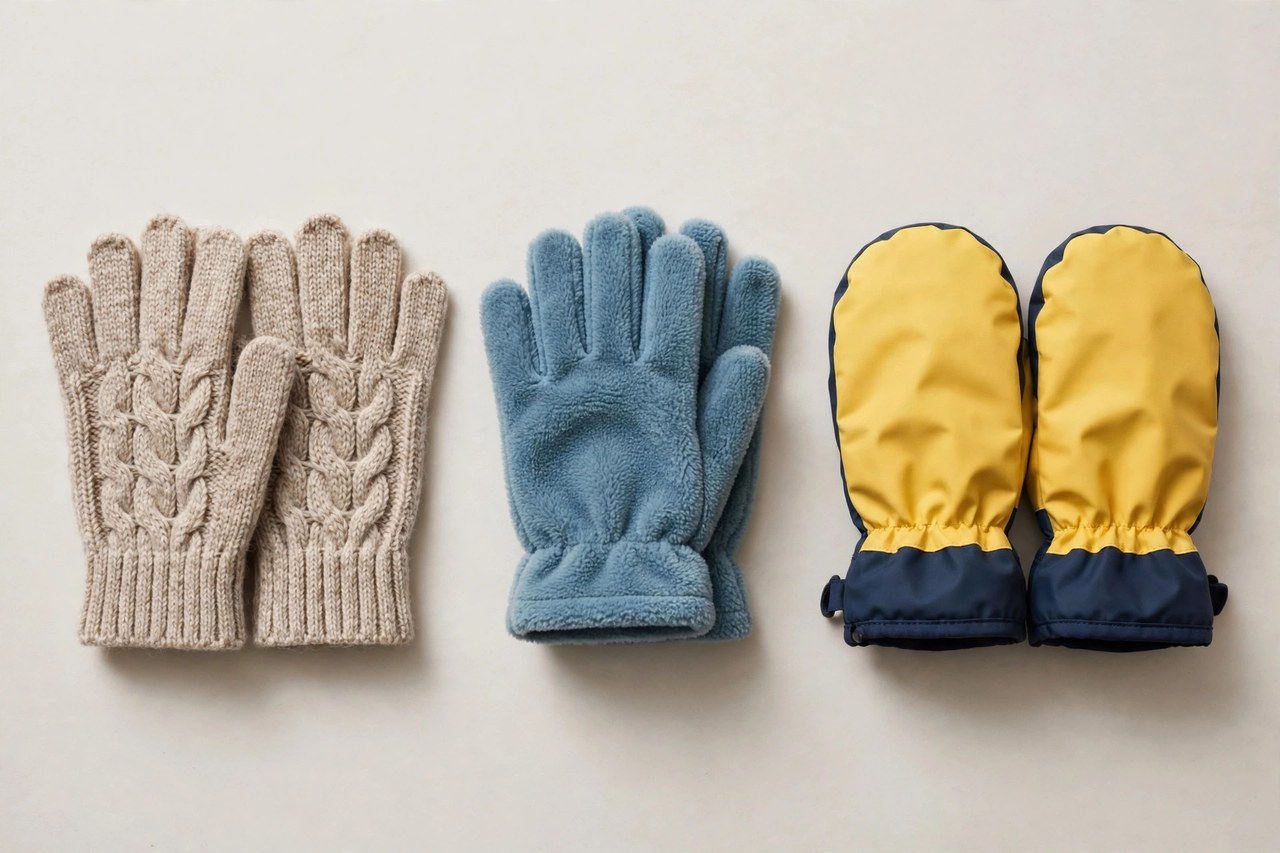
Children's gloves cover the whole hand-protection family: knitted gloves and mittens for cold, fleece gloves for cool active days, waterproof ski and snow gloves for winter play, and light dress or costume gloves for occasions. The K page is the kids-focused companion to the site's main children's glove guide in the G letter, which is carried in this page's links along with the mittens guide - because the first decision in this category is the oldest one in it: gloves give each finger its own stall, mittens keep the fingers together, and for young children that difference decides warmth and usability.
Mittens are warmer - shared air around the fingers loses less heat - and far easier for toddlers and preschoolers to put on, which is why they dominate the smallest sizes. Gloves win once a child needs grip and dexterity: climbing, cycling, holding a ski pole or a book bag handle. Most families end up owning both, and this guide's job is to help you buy each kind once, well.
Types and Materials
Everyday knitted gloves in acrylic or wool blends are the school-run standard: cheap, stretchy, quick to replace when - not if - one is lost. Fleece gloves add wind resistance and dry fast, suiting active children in cool rather than freezing weather. Waterproof insulated gloves and mittens, with a sealed membrane and synthetic fill, are the snow-play category; look for long cuffs that go over the coat sleeve, because the gap at the wrist is where snow and cold get in.
Details separate the good pairs: a grippy palm patch for playground bars and bike handles, a soft nose-wipe panel on the thumb of ski gloves, adjustable wrist straps that keep the glove on and the snow out, and - for the youngest children - pairs joined by a string or clips that thread through the coat sleeves, which remains the most effective anti-loss system ever designed.
Fit and Sizing
Gloves and mittens are sized by age or by hand length - measure from wrist to the tip of the middle finger and use the maker's chart, because age sizing varies wildly. A correct fit leaves a small air space at the fingertips: skin-tight gloves feel colder because they compress both the hand and the insulation, while a glove a full size too big destroys grip and gets pulled off. Mittens forgive fit more than gloves, one of their quiet advantages for fast-growing hands.
Test independence in the shop or at home: can the child get the pair on, adjust the strap and get them off again without help? School and nursery days involve several glove cycles a day, and a pair the child cannot manage becomes a pair carried in a pocket. Touchscreen fingertips, now common even in children's gloves, matter for older children using devices on winter journeys.
Care and the Lost-Glove Problem
Most children's gloves and mittens machine wash on a gentle cycle - clip pairs together before washing so they exit together - and dry flat or on low heat away from direct radiators, which stiffen waterproof membranes. Waterproof pairs benefit from an occasional re-proofing spray once water stops beading on the shell. Store pairs clipped together in the coat's own storage or the child's drawer, never loose in a communal basket.
Plan for loss as a design feature of childhood: buy two identical pairs of the everyday knitted kind when you find a fit that works, so a single loss does not orphan a glove. Name-label or mark the inside cuff of school pairs. Bought with wrist seals that work, straps a child can manage and a spare pair in reserve, gloves stop being a daily winter argument.
Common Questions
Are mittens warmer than gloves for children?
Yes. Mittens keep the fingers together in one shared air space, which loses less heat than four separate stalls, and they are much easier for toddlers to put on. Gloves are the better choice once a child needs grip and finger dexterity for climbing, cycling or winter sports.
How should children's gloves fit?
Snug at the wrist with a small air space at the fingertips. Skin-tight gloves feel colder because they compress the insulation; oversized gloves ruin grip and get taken off. Measure hand length from wrist to middle fingertip and use the maker's chart rather than age alone.
How do I stop my child losing gloves?
Use the systems that work: pairs threaded on a string through the coat sleeves or attached with clips for young children, pairs clipped together in storage, names marked inside the cuff, and two identical everyday pairs bought at once so one loss does not orphan the other glove.
More in Children's Clothes Guide K
The K letter hub and the guides closest to this one:
Looking for Children's Clothing Stores?
This guide helps you choose children's gloves. To browse where to buy, visit our children's clothing store directory, where you can find retailers that carry them.