Children's Gloves Guide
Children's gloves span a wider range than the single word suggests, from thin knit pairs that take the edge off a chilly school run to insulated, waterproof ski gloves built for a full day in falling snow. The buying decision starts with the job: everyday warmth, wet-weather protection, or grip and dexterity for cycling, skiing and playground climbing. Once the job is clear, the choice narrows quickly, because a glove that excels at one of those tasks usually compromises on the others, especially on warmth.
Shop Children's Gloves Now
Shop Children's Gloves on Amazon Shop Children's Gloves on eBayThe Amazon and eBay links on this page are affiliate links. If you make a purchase through them, Apparel Search may earn a commission.
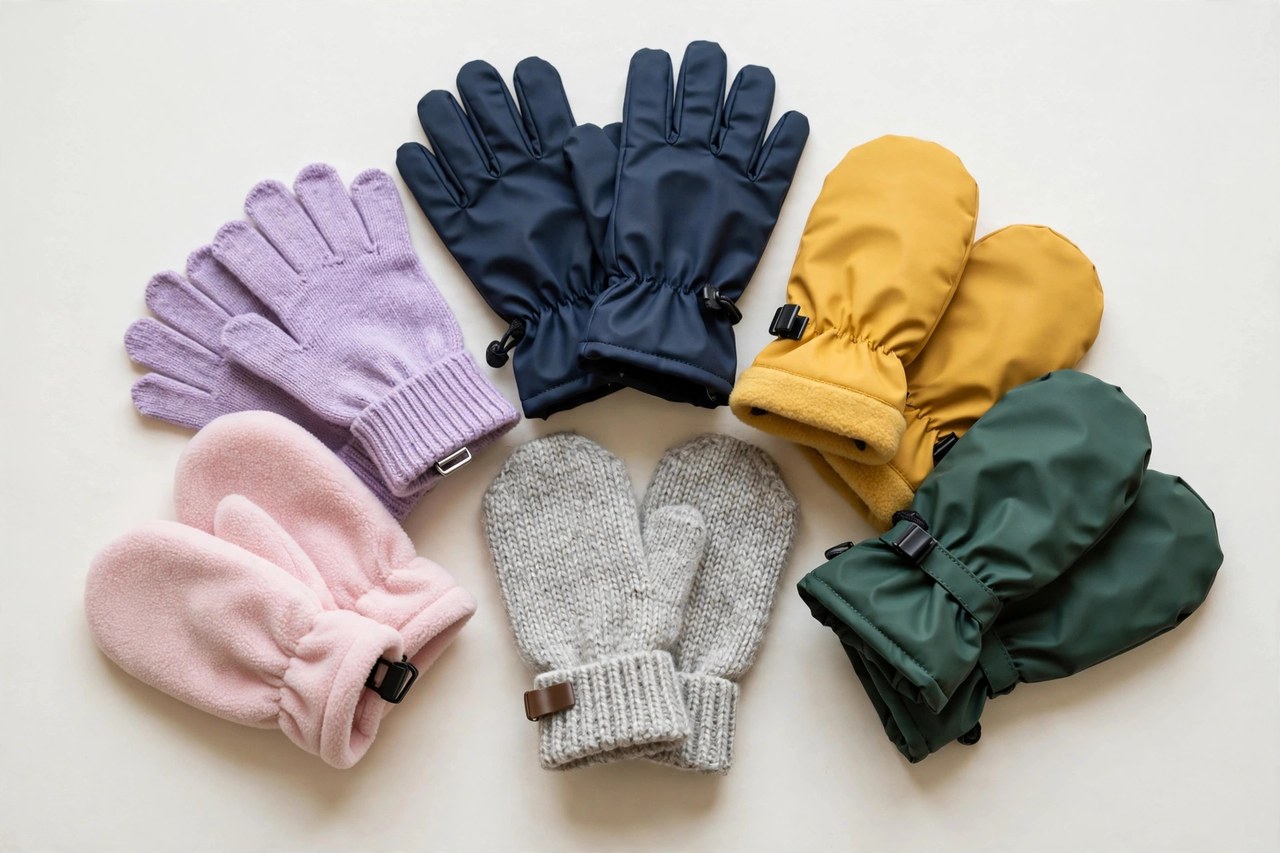
Children's gloves span a wider range than the single word suggests, from thin knit pairs that take the edge off a chilly school run to insulated, waterproof ski gloves built for a full day in falling snow. The buying decision starts with the job: everyday warmth, wet-weather protection, or grip and dexterity for cycling, skiing and playground climbing. Once the job is clear, the choice narrows quickly, because a glove that excels at one of those tasks usually compromises on the others, especially on warmth.
The first split is gloves versus mittens. Individual fingers make gloves better for zips, buckles, bike brakes and anything else that needs a working grip, and older children almost always prefer them for that reason. Mittens keep shared fingers together in one warm compartment, which makes them noticeably warmer at the same insulation weight, and they are far easier to pull onto a younger child's hand. Many families run both: mittens for genuinely cold days and sledging, gloves for milder weather and for any activity where fingers have to work independently.
Styles and Construction
Everyday knit gloves are usually acrylic or a wool blend, stretch to fit, and come in one-size bands that cover two or three years of growth; they are cheap, dry slowly and offer modest warmth. Fleece gloves step up the insulation without adding bulk, wick a little moisture, and dry fast after a soaking, which makes them a sensible school-bag spare. At the protective end sit shell gloves: a waterproof, windproof outer layer, often nylon with a coated palm, over a layer of synthetic insulation, finished with a long gauntlet cuff that pulls over a coat sleeve to seal out snow.
Construction details decide how a pair performs in practice. Pre-curved fingers stop the fabric bunching across the knuckles when a hand closes. A textured or synthetic-leather palm panel adds grip on wet metal and plastic, while a soft nose-wipe patch on the thumb is a small feature children genuinely use. Cuffs matter as much as shells: a simple elasticated wrist leaks heat and admits snow, a Velcro wrist strap holds the glove on during a fall, and an internal drawcord at the gauntlet keeps powder out on ski days.
Sizing, Fit and Keeping Them On
Children's glove sizes are usually sold by age band, but hand length is the measurement that counts: measure from the tip of the middle finger to the base of the palm and compare it with the maker's chart, because age bands vary widely between brands. A good fit leaves a small pocket of air at the fingertips, since compressed insulation loses warmth, but fingers should still reach close enough to the ends to pick things up. If a child is between sizes and the gloves are for skiing, choose the larger pair and add a thin liner glove underneath.
Losing one glove is the most predictable event in children's winter dressing, so plan for it at purchase. Glove clips that fasten pairs to coat cuffs, elastic connector strings threaded through sleeves, and name labels inside the cuff all cut the loss rate dramatically. Buying two identical pairs of an everyday style is a dull but effective strategy for school gloves, since a single survivor can be re-paired later. Bright colours help at the lost-property box, where a row of near-identical black gloves makes reclaiming the right pair a matter of luck.
Care and Storage
Knit and fleece gloves wash well in a mesh bag on a gentle cycle, which stops them tangling around other laundry or losing their partner inside a duvet cover. Shell gloves need more restraint: surface dirt brushes off when dry, waterproof coatings degrade in harsh detergents, and tumble drying can damage membranes, so follow the label and air-dry away from radiators, which stiffen both leather palms and synthetic shells. Always dry gloves fully before storing them, since a damp pair put away in spring comes out in November smelling musty and with its insulation clumped.
Store pairs clipped together, ideally in the pocket of the coat they belong with, and check fit in early autumn rather than on the first freezing morning, when shops have sold through the common sizes. A pair that still fits can serve a second season as the spare set kept in a school bag. Pass sound gloves down by size order if you have them written inside the cuff in marker; that small habit turns a drawer of mixed pairs into a usable stock instead of an annual puzzle.
Common Questions
Are mittens warmer than gloves for children?
Yes, at the same insulation weight. Shared fingers warm each other inside one compartment, so mittens lose less heat than gloves, which is why they suit younger children and the coldest days.
How should children's gloves fit at the fingertips?
Leave a small air pocket at the ends rather than a tight press against the insulation. Fingers should still reach near the tips so grips work, but squashed filling loses most of its warming power.
What stops children's gloves getting lost?
Cuff clips, elastic strings threaded through coat sleeves and name labels inside the cuff are the three measures that work. Buying two identical everyday pairs also means one lost glove does not end the set.
More in Children's Clothes Guide G
The G letter hub and the guides closest to this one:
More to Explore on Apparel Search
Looking for Children's Clothing Stores?
This guide helps you choose children's gloves. To browse where to buy, visit our children's clothing store directory, where you can find retailers that carry them.