Children's Girls Coats Guide
A child's coat is the hardest-working single purchase in the wardrobe: it is worn twice a day through the coldest months, seen by everyone, expected to survive playgrounds, school hooks and being sat on in assembly, and priced higher than any other everyday garment. Children's coats divide by the weather they answer: waterproof raincoats, insulated winter coats, lighter in-between jackets and dress coats for occasions. Most children need two of those four at any one time, a genuine weather coat and something lighter, and this guide explains how to choose each type well.
Shop Children's Girls Coats Now
Shop Children's Girls Coats on Amazon Shop Children's Girls Coats on eBayThe Amazon and eBay links on this page are affiliate links. If you make a purchase through them, Apparel Search may earn a commission.
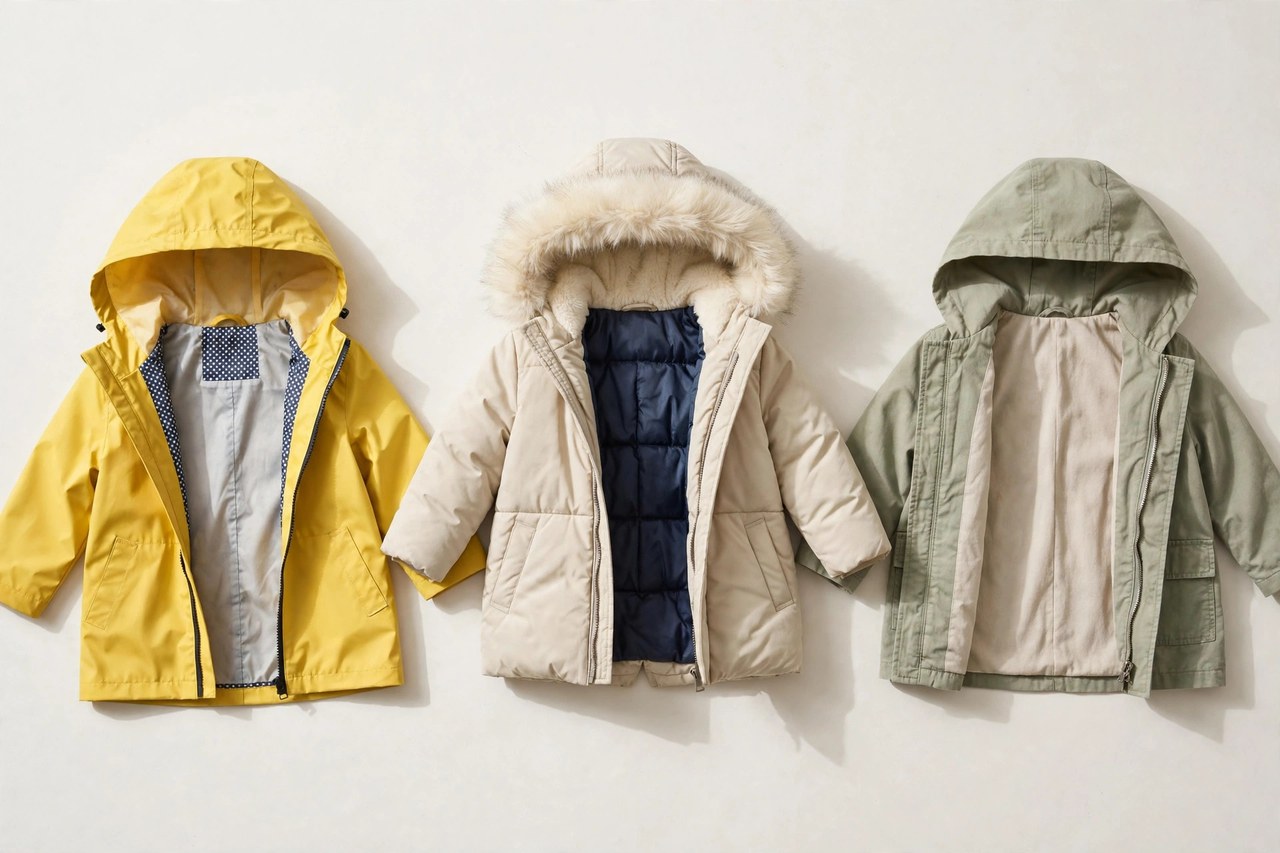
A child's coat is the hardest-working single purchase in the wardrobe: it is worn twice a day through the coldest months, seen by everyone, expected to survive playgrounds, school hooks and being sat on in assembly, and priced higher than any other everyday garment. Children's coats divide by the weather they answer: waterproof raincoats, insulated winter coats, lighter in-between jackets and dress coats for occasions. Most children need two of those four at any one time, a genuine weather coat and something lighter, and this guide explains how to choose each type well.
The central buying trap is the single coat asked to do everything: warm enough for January, light enough for April, smart enough for a family event and tough enough for the climbing frame. Coats built to that brief do each job adequately and none of them well, and cost more than the two simpler coats that would have shared the work. Decide first whether the purchase in front of you is the weather coat or the light layer, and judge it only against that role's requirements, from waterproofing and insulation down to the weight a small child must carry all day.
Waterproofs and Winter Insulation
A waterproof coat is defined by its seams as much as its fabric: taped or welded seams, a storm flap over the zip and a hood that stays up in wind are what keep rain out over an hour, where a water-resistant coating alone manages a short shower. Breathable membranes at higher prices reduce the clammy build-up inside during active play. Length matters in wet weather: a coat that covers the tops of trousers or a skirt keeps a child drier on the walk to school than a hip-length jacket, and reflective details earn their place on dark winter afternoons.
Winter coats insulate with either down or synthetic fill. Down gives the most warmth for the least weight and compresses small, but loses insulation when soaked and dries slowly, so it suits cold, dry climates and older children who avoid puddles professionally. Synthetic fill costs less, keeps working when damp, washes at home and dominates children's ranges for those reasons. Look for a two-way zip or a zip with poppers that lets the coat open from the bottom for sitting and cycling, cuffs that close over glove tops, and a hanging loop strong enough for a school peg.
Dress Coats and In-Between Layers
The dress coat is the formal member of the family, traditionally in wool or a wool blend, cut longer, with proper buttons, a smooth lining and sometimes a velvet collar or other period detail inherited from classic children's tailoring. It is worn over party clothes and to events, photographed often and played in rarely, which is why dress coats hand down in near-new condition. Fit one over the bulkiest dress it must cover, and check that buttoned cuffs and collar sit comfortably without pulling when arms lift.
Between the raincoat and the winter coat sits the layer most families use hardest: the unlined or lightly lined jacket-coat for autumn and spring, cool summer evenings and car journeys where a padded coat is simply too hot. Fleece-lined softshell styles have taken much of this ground, offering wind resistance, light shower protection and easy washing in one garment. Because this layer is worn across the two changeable seasons, it gets more total days of wear than the winter coat in many climates, which argues for spending on its zip quality and washability rather than treating it as an afterthought purchase.
Fit, Growth and Care
Fit a coat over a sweater, not a shirt, and check the working points: sleeves that reach the wrist with arms down and do not expose a wide gap with arms forward, shoulders free enough for climbing, and a hem that does not tangle in bicycle wheels or trip on stairs. One size of growing room is realistic in a coat, bought in autumn to last one winter and perhaps the start of the next; two sizes makes a garment that hangs, leaks heat at every opening and annoys its wearer daily, which is false economy in the most visible garment a child owns.
Wash coats before faults set: mud brushed off when dry, waterproofs washed with a technical cleaner that does not clog the membrane, and padded coats dried thoroughly, with a tumble cycle where the label allows, to lift the fill back into even loft. Reproof a raincoat when water stops beading on its surface. Mend the hanging loop and the pocket corners at the first tear, and store the winter coat clean, uncompressed and hanging, never vacuum-packed, since crushed fill recovers slowly. A coat bought, fitted and kept this way commonly serves a sibling next, which is where its higher price is properly repaid.
Common Questions
Is down or synthetic fill better for a child's winter coat?
Synthetic fill suits most children: it insulates when damp, costs less and washes at home. Down is warmer for its weight but loses insulation when wet and dries slowly, so it fits cold, dry conditions best.
How much growing room should a child's coat have?
About one size, fitted over a sweater in autumn. Two sizes of slack hangs open, leaks warmth at the cuffs and hem, and makes the coat a daily annoyance rather than a saving.
When does a waterproof coat need reproofing?
When rain stops beading on the surface and starts soaking into the fabric instead. Wash first with a technical cleaner, then apply a reproofing treatment following the garment label.
More in Children's Clothes Guide G
The G letter hub and the guides closest to this one:
More to Explore on Apparel Search
Looking for Children's Clothing Stores?
This guide helps you choose children's girls coats. To browse where to buy, visit our children's clothing store directory, where you can find retailers that carry them.