Children's Girls Jackets Guide
In girls clothing, the word jacket describes the lighter half of outerwear: the layer worn on mild days, in changeable spring and autumn weather, and as a finishing piece over outfits, rather than the heavy insulation reserved for deep winter. That distinction is the key to buying well. A jacket is expected to handle a cool breeze, a light shower and an air-conditioned room, to layer comfortably over knitwear, and to be carried or tied around the waist without complaint when the sun comes out.
Shop Children's Girls Jackets Now
Shop Children's Girls Jackets on Amazon Shop Children's Girls Jackets on eBayThe Amazon and eBay links on this page are affiliate links. If you make a purchase through them, Apparel Search may earn a commission.
In girls clothing, the word jacket describes the lighter half of outerwear: the layer worn on mild days, in changeable spring and autumn weather, and as a finishing piece over outfits, rather than the heavy insulation reserved for deep winter. That distinction is the key to buying well. A jacket is expected to handle a cool breeze, a light shower and an air-conditioned room, to layer comfortably over knitwear, and to be carried or tied around the waist without complaint when the sun comes out.
Because jackets work so many months of the year, this is the outerwear category where style variety is widest. Denim jackets, bombers, light puffers, rain jackets, utility styles and dressy cropped jackets all sit under the same heading while doing different jobs. This guide sorts those styles by weight and purpose, explains where the jacket category ends and coats begin, and covers the fit points that decide whether a jacket layers properly or fights with everything worn underneath it during the long in-between seasons.
Lightweight Styles for Mild and Changeable Days
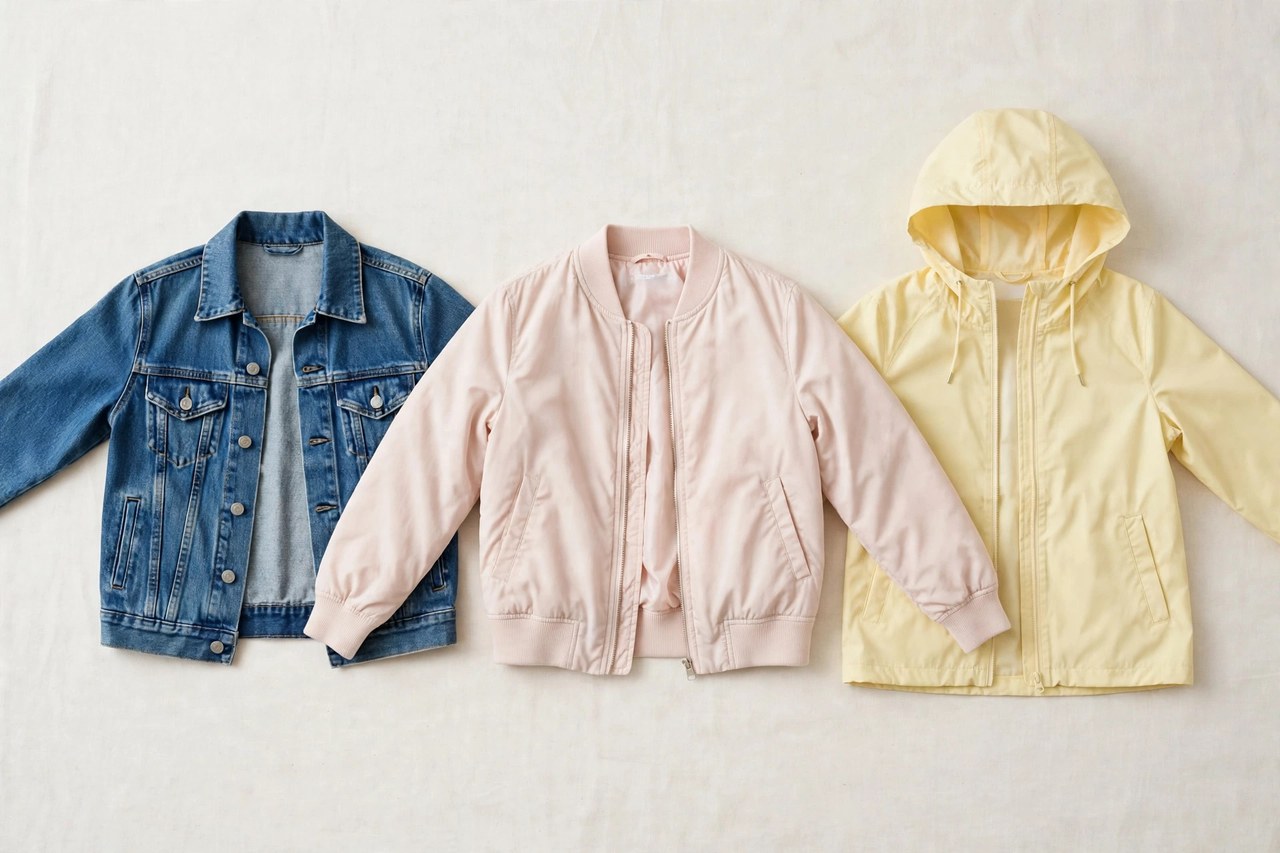
The packable rain jacket is the most useful single piece in the category: a hooded, water-resistant shell, sometimes with taped seams, that folds into a bag or its own pocket and answers the unpredictable days that dominate spring and autumn. Windbreakers serve the same slot in dry climates and at sport. Lightweight quilted jackets with a thin layer of synthetic fill cover cooler mornings without winter bulk, and they compress well for school lockers, which is where a surprising amount of outerwear life is actually lived.
Fleece jackets and zip-through softshells blur the line between mid-layer and jacket, and they earn that place in cool, dry weather and as the layer worn under a shell on colder days. A softshell with a water-resistant face handles drizzle and wind together better than fleece alone. When choosing among these practical styles, weigh the hood carefully: a detachable or stuff-away hood suits school rules and looks neater for smarter wear, while a fixed, well-shaped hood is what actually gets used when rain starts mid-journey.
Denim, Bomber and Fashion Jackets
The denim jacket is the enduring fashion piece of the category, worn over dresses and tees from spring to autumn and rarely truly out of style. A mid-weight denim with a touch of elastane moves far better at the shoulders than rigid denim, and a classic trucker cut that ends at the waist layers over dresses without swamping them. Lighter washes read as summer pieces, darker washes dress up more easily, and embroidery, patches or colored denim should be weighed against how many outfits the jacket must match.
Bomber jackets, with their ribbed cuffs and hem, suit girls who prefer a sportier line, and satin or lightly padded versions work as party cover-ups over dresses. Cropped blazers and bolero-style jackets exist purely to finish occasion outfits, adding coverage for photographs and places of worship without hiding the dress. Utility and cargo jackets in cotton twill bring pockets and durability for everyday wear. For all fashion styles, check that armholes are cut high enough to lift the arms comfortably; a jacket that cannot reach up is a jacket that will be left behind.
Where a Jacket Ends and a Coat Begins
Length and insulation draw the boundary. Jackets generally end at the waist or hip and carry little or no fill, while coats extend to mid-thigh or below and are built, through wool, padding or lining, to be the main defense against sustained cold. A useful test is the weather question: if the garment is meant for the coldest fortnight of the year, it is functioning as a coat whatever the label says, and it should be fitted with room for full winter knitwear underneath rather than bought slim like a spring jacket.
Fit a jacket over the thickest top it will realistically cover, checking that the zip closes without pulling, that the shoulders allow a full reach, and that sleeves still cover the wrist with arms raised. Adjustable cuffs, a two-way zip on longer styles and an inner drawcord all extend comfort across the season. Store jackets hung by their loops rather than crushed in a hall cupboard pile, wash shells according to their waterproof care instructions, and reproof a rain jacket when water stops beading on its surface.
Common Questions
What is the difference between a girls jacket and a coat?
Jackets end at the waist or hip with little or no fill for mild weather, while coats are longer and insulated for cold.
Which jacket style is most useful overall?
A hooded packable rain jacket, since it handles the unpredictable spring and autumn weather when coats are too warm and sweaters are not enough.
How should a jacket be fitted?
Over the thickest top it will cover, with the zip closing smoothly, reach at the shoulders and sleeves covering the wrist when arms are raised.
More in Children's Clothes Guide G
The G letter hub and the guides closest to this one:
Looking for Children's Clothing Stores?
This guide helps you choose children's girls jackets. To browse where to buy, visit our children's clothing store directory, where you can find retailers that carry them.