Children's Girls Clothing Guide
Girls clothing is the broadest label in children's apparel, covering everything from nursery basics to the party dress kept for photographs, and this page does two jobs at once. It is a fashion and style overview, explaining how the main looks in girls clothing are put together and how they change with age and season. It is also the sub-index for the girls collection inside the Children's Clothes Guide G letter: twenty-six individual guides, one for each garment, outfit or footwear type, gathered in a grid so the whole collection can be browsed from a single page.
Shop Children's Girls Clothing Now
Shop Children's Girls Clothing on Amazon Shop Children's Girls Clothing on eBayThe Amazon and eBay links on this page are affiliate links. If you make a purchase through them, Apparel Search may earn a commission.
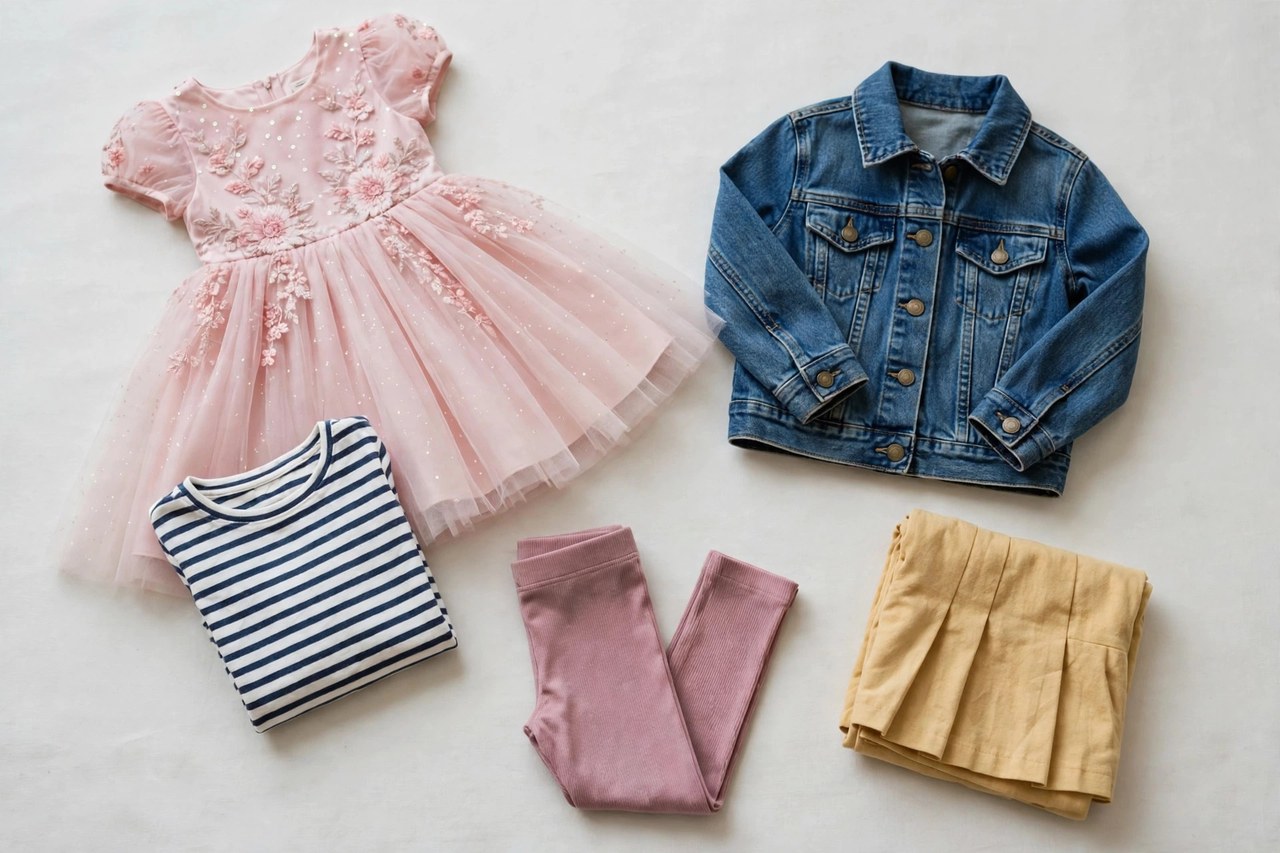
Girls clothing is the broadest label in children's apparel, covering everything from nursery basics to the party dress kept for photographs, and this page does two jobs at once. It is a fashion and style overview, explaining how the main looks in girls clothing are put together and how they change with age and season. It is also the sub-index for the girls collection inside the Children's Clothes Guide G letter: twenty-six individual guides, one for each garment, outfit or footwear type, gathered in a grid so the whole collection can be browsed from a single page.
The style story and the directory belong together, because fashion in children's clothing is mostly a matter of combinations rather than individual showpiece garments. A denim jacket changes a summer dress into a spring outfit; boots shift a skirt from party to everyday; a gymnastics leotard, a pair of dance shoes and a ballet skirt all belong to the activity wardrobe that sits alongside school clothes. Reading the overview first gives the grid below a logic: each guide in it is one building block of the looks described here, covered in its own depth.
How Girls Styles Are Put Together
Most girls outfits are built in one of three layers of intention. Everyday style is about durable fabrics in colours that survive mixed washing loads, with interest carried by prints, stripes and small details rather than delicate construction. Occasion style concentrates effort into one garment, usually a dress, and keeps everything worn with it plain. Activity style is dictated by the sport or class, dance, gymnastics and swimming each having functional clothes that fashion touches only lightly, in colour and print, because the cut is set by the movement involved.
Season turns those three layers over twice a year. Spring and summer bring jersey dresses, shorts, bathing suits and sandals to the front of the rail, with a light jacket for evenings. Autumn and winter reverse the order: coats, boots, sweaters and layering pieces carry the wardrobe, and dresses survive by pairing with tights and cardigans. Colours cycle faster than cuts do, which is why a classic shape in a current colour looks up to date while a fashionable shape from three seasons ago in a classic colour still reads as dated to children themselves.
Ages, Taste and Practical Limits
Clothing taste arrives early and strengthens quickly, and the girls market is organised around it: toddler ranges led by parents' choices, middle childhood where comfort and favourite colours rule, and older children's ranges where fit, brands and what friends wear all carry weight. The practical response is to involve the wearer in choices inside boundaries set by budget, school rules and weather, because a garment chosen together gets worn, and the most economical clothes are always the ones that actually leave the drawer.
Practical limits shape style more than catalogues admit. School uniform policies fix five days of the week for many families, playground rules rule out certain shoes and dangling details, and growing feet and frames retire favourite pieces on a schedule no one controls. Modesty and coverage preferences also vary by family and are met through construction choices that every range now offers: longer-line tops, shorts beneath skirts, layered looks and sleeved versions of sleeveless styles. Treating those as ordinary design options, mixed freely with everything else in the collection, is how the guides in this section approach them.
Browsing the Girls Collection From Here
The twenty-six guides gathered under this page follow the same pattern as the rest of the Children's Clothes Guide: one garment or outfit per page, covering its styles, construction, fabrics, sizing and care in buying-guide depth. The collection opens with the ballet outfit and ballet shoes, runs through bathing suits, boots, coats, dance clothes and dance shoes, and continues with dresses, footwear, gloves, gymnastics clothes, hats, jackets, outerwear, pajamas, pants, robes, shirts, shoes, slippers, sneakers, socks and sweaters, plus the wardrobe and fashion overviews you are reading now.
Use the grid as a contents page for the whole collection. If you are dressing for an activity, start with its outfit guide and follow the related links to its footwear, as ballet leads to dance and gymnastics. If you are restocking a season, work down the categories in wardrobe order, coats and outerwear first because sizes sell out earliest, then knitwear, then basics. Two pages in the wider G letter sit outside the grid: the main gloves and gowns guides, filed at the top level of the letter, and the G hub itself, which lists every page in the letter including this collection.
Girls Clothes Guides A-Z
Every other girls guide in the G letter, in A-Z order:
- Children's Girls Ballet Outfit
- Children's Girls Ballet Shoes
- Children's Girls Bathing Suits
- Children's Girls Boots
- Children's Girls Clothes
- Children's Girls Coats
- Children's Girls Dance Clothes
- Children's Girls Dance Shoes
- Children's Girls Dresses
- Children's Girls Footwear
- Children's Girls Gloves
- Children's Girls Gymnastics Clothes
- Children's Girls Hannah Montana T-Shirts
- Children's Girls Hats
- Children's Girls Jackets
- Children's Girls Outerwear
- Children's Girls Pajamas
- Children's Girls Pants
- Children's Girls Robes
- Children's Girls Shirts
- Children's Girls Shoes
- Children's Girls Slippers
- Children's Girls Sneakers
- Children's Girls Socks
- Children's Girls Sweaters
This girls directory is one part of the full G letter. The letter hub gathers the flat G topics, every girls guide and the grls-folder shoes guide in one place.
Children's Clothes Guide G - See All G TopicsMore to Explore on Apparel Search
Looking for Children's Clothing Stores?
This guide helps you choose children's girls clothing. To browse where to buy, visit our children's clothing store directory, where you can find retailers that carry them.