Children's Girls Shoes (Grls Folder) Guide
This page is the companion girls shoes guide kept in the grls folder alongside the main girls shoes guide in the girls folder, and it takes the practical side of the subject further: measuring feet accurately at home, choosing school shoes that survive a full term, and running the buying checks that decide whether a new pair should be kept or returned. Read the main guide for the wardrobe overview; stay here for fit depth. Retailers return policies differ on worn shoes, which is another reason the at-home carpet test matters, because many shops accept returns only when soles show no outdoor wear at all.
Shop Children's Girls Shoes (Grls Folder) Now
Shop Children's Girls Shoes (Grls Folder) on Amazon Shop Children's Girls Shoes (Grls Folder) on eBayThe Amazon and eBay links on this page are affiliate links. If you make a purchase through them, Apparel Search may earn a commission.
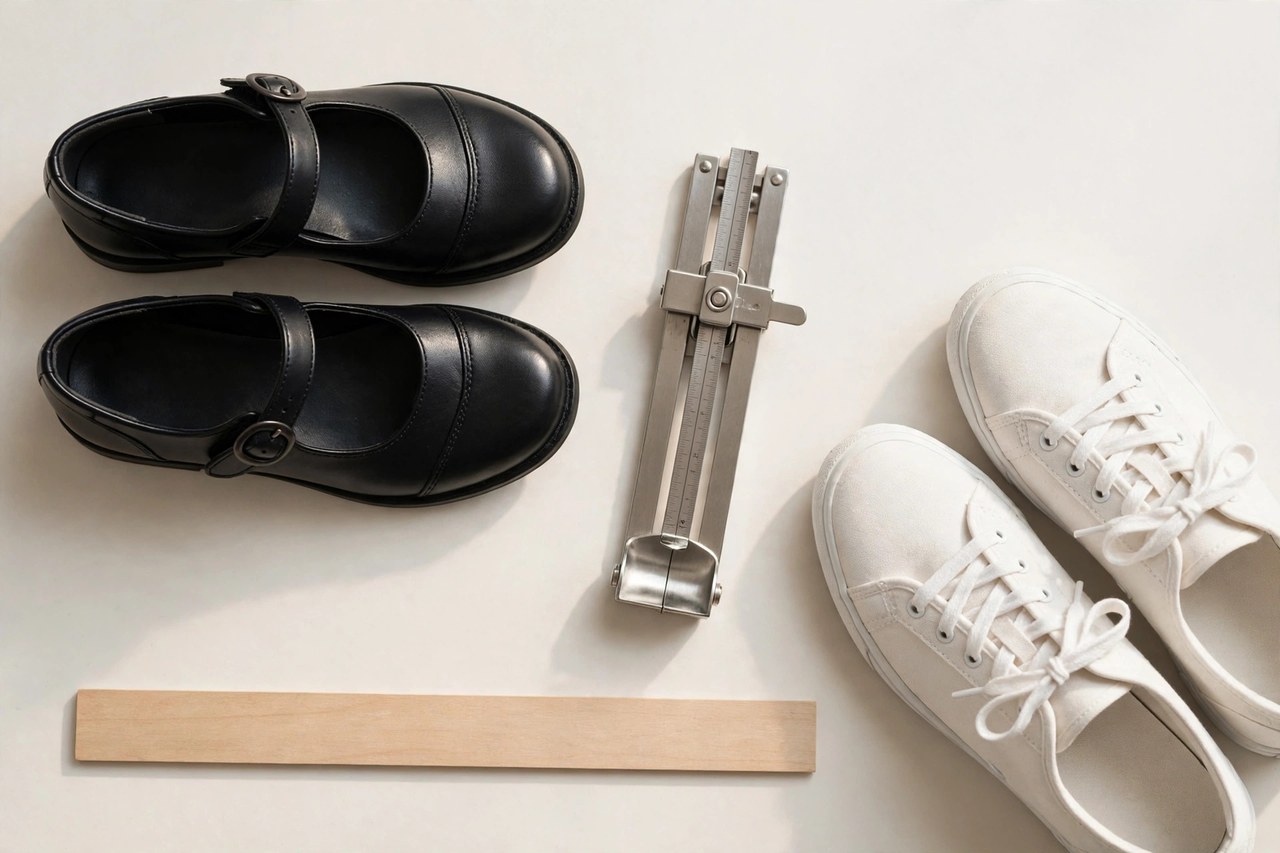
This page is the companion girls shoes guide kept in the grls folder alongside the main girls shoes guide in the girls folder, and it takes the practical side of the subject further: measuring feet accurately at home, choosing school shoes that survive a full term, and running the buying checks that decide whether a new pair should be kept or returned. Read the main guide for the wardrobe overview; stay here for fit depth. Retailers return policies differ on worn shoes, which is another reason the at-home carpet test matters, because many shops accept returns only when soles show no outdoor wear at all.
Good fit is not a single number but a set of small observations made while the shoes are on and moving. Length, width, heel hold, and flex point all reveal themselves in a short hallway walk, and each one can fail independently of the others. Working through those checks in a fixed order takes only a few minutes and prevents most of the blisters, tripping, and early replacements that follow rushed purchases. A simple outline traced on paper and kept in a wallet or phone case lets a parent check a sale pair against current foot length without bringing the child along.
Measuring Feet at Home, Step by Step
Measure in the late afternoon, when feet are at their largest, with the socks the shoes will be worn with already on. Place a sheet of paper against a wall, set the heel flush to the wall edge, and mark the longest toe, which is not always the big toe. Repeat for the other foot, because differences of several millimeters between feet are normal, and always buy for the longer measurement. Orthotic inserts, when prescribed, should travel to the fitting, since they change the volume inside the shoe and can turn an otherwise correct size into a tight instep fit quickly.
Convert the longer length using the brand own size chart rather than a generic table, since lasts and grading vary between makers. Add growing room of roughly a centimeter for everyday shoes, but resist adding much more for school pairs that must stay secure on stairs and in crowded corridors. Remeasure every two to three months during rapid growth, and write the date beside the measurement so an old number is never mistaken for a current one. Wet-weather school days reward a second check on sole material, because hard smooth soles that behave indoors can turn surprisingly slick on wet tile at school entrances and cafeteria floors.
School Shoes and Daily-Wear Checks
School shoes face the harshest schedule in the wardrobe: hours of sitting, sudden playground running, scuffs from scooter foot-braking, and rain on the walk home. Prioritize a reinforced toe, a sole with real tread at the heel strike zone, and an upper that can be wiped or polished back to presentable. A padded collar reduces ankle rubbing during the first weeks, when new leather or synthetics are stiffest. Also note the date of purchase on the box, a small record that later reveals honestly how long a hard-worn pair actually lasted compared with how long it felt like lasting.
Daily-wear checks take seconds once they become habit. Press inside the toe each morning during growth spurts to feel how much room remains, glance at the heel tread weekly for uneven wear, and notice whether the upper has begun leaning inward or outward off the sole. Leaning uppers and a collapsed heel counter mean support has gone, even if the shoes still look clean enough for one more month.
Buying Checks Before You Keep a Pair
In the store or at home on clean flooring, run the full sequence: stand and confirm a thumb-width of space at the longest toe, walk briskly and watch whether the heel lifts out, then ask for a few steps on tiptoe to confirm the sole bends at the ball rather than the midfoot. Twist the shoe gently; a pair that wrings like a cloth through the middle lacks the stability daily wear demands.
Check the inside with a hand before the first outing, feeling for rough seams, glue ridges, or a insole edge that curls at the toes. Confirm closures under real tension: laces long enough to double-knot, straps that reach their pads without straining, and buckles that stay closed while walking.
Common Questions
How often should feet be remeasured?
Every two to three months during rapid growth, always in the afternoon and wearing the intended socks.
Which foot decides the shoe size?
The longer foot does; small differences between feet are normal, and sizing to the shorter one causes pinching.
What is the quickest in-store fit check?
Thumb-width at the longest toe, a brisk walk to test heel lift, and a tiptoe step for flex point.
More in Children's Clothes Guide G
The G letter hub and the guides closest to this one:
Looking for Children's Clothing Stores?
This guide helps you choose children's girls shoes (grls folder). To browse where to buy, visit our children's clothing store directory, where you can find retailers that carry them.