Children's Girls Footwear Guide
Footwear is the whole system of shoes, boots, sandals and slippers a girl rotates through the year, and thinking of it as a system prevents the two common mistakes: buying five pairs that all do the same job, and discovering in November that nothing in the cupboard is waterproof. A practical rotation covers school days, active play, wet weather, warm weather and dress occasions, with most families finding that four to six well-chosen pairs handle nearly everything without waste.
Shop Children's Girls Footwear Now
Shop Children's Girls Footwear on Amazon Shop Children's Girls Footwear on eBayThe Amazon and eBay links on this page are affiliate links. If you make a purchase through them, Apparel Search may earn a commission.
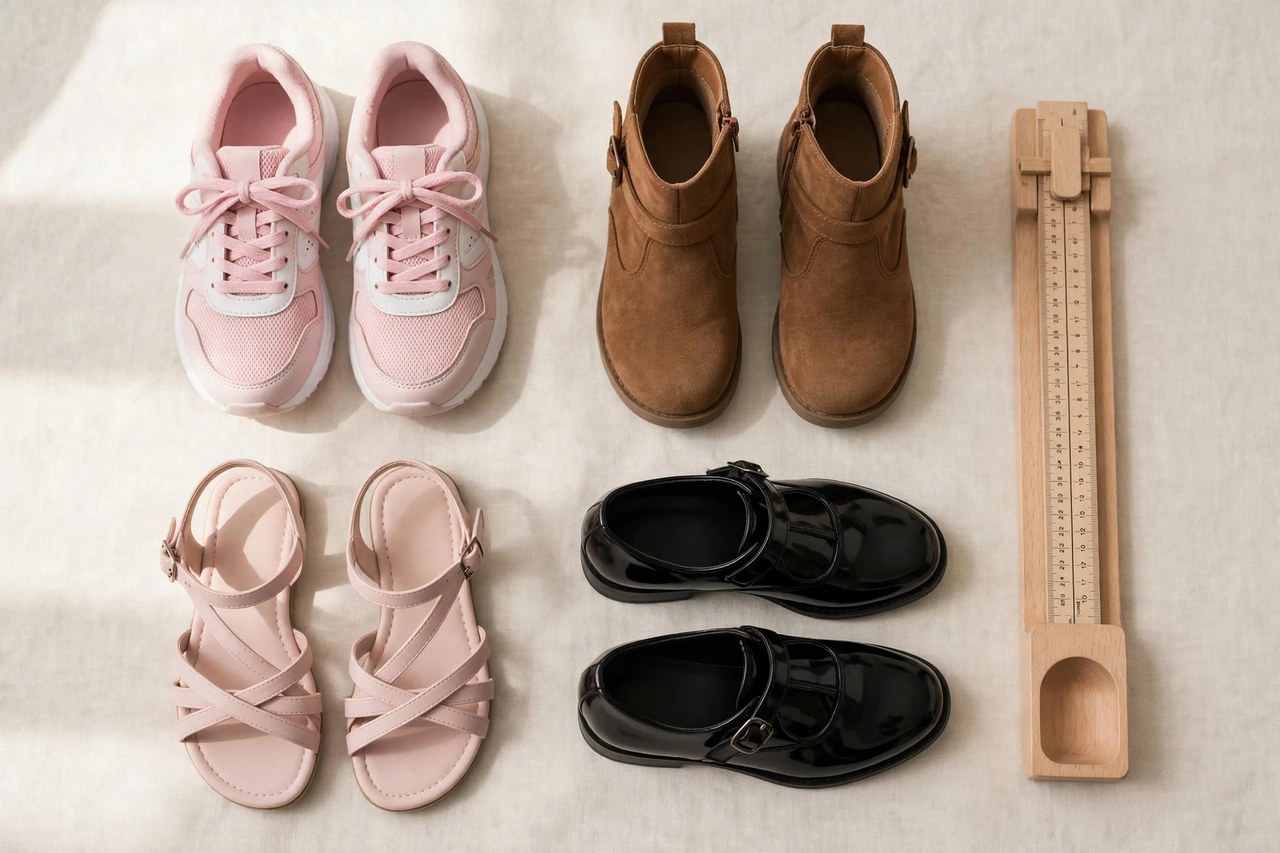
Footwear is the whole system of shoes, boots, sandals and slippers a girl rotates through the year, and thinking of it as a system prevents the two common mistakes: buying five pairs that all do the same job, and discovering in November that nothing in the cupboard is waterproof. A practical rotation covers school days, active play, wet weather, warm weather and dress occasions, with most families finding that four to six well-chosen pairs handle nearly everything without waste.
Because feet grow quickly and unevenly, footwear is also the category where fit checks matter most. A shoe that was perfect in September can be cramping toes by spring, and the damage shows up as complaints, tripping or worn-down heels rather than an obvious announcement. This guide therefore treats measuring and sizing as part of the category itself: learn the measuring routine once, and every later purchase, from first sneakers to party shoes, becomes faster, cheaper and far more likely to fit first time.
Measuring Feet and Reading Girls Shoe Sizes
Measure both feet at the end of the day, when they are at their largest, with the child standing and weight evenly spread. Trace each foot on paper, then measure from heel to longest toe, which is not always the big toe. Add roughly a centimeter of growing and wriggle room for closed shoes, less for sandals where toes should never hang over the front edge. Width matters as much as length: a foot that spills over the sole edges needs a wide fitting, whatever the length says.
Girls sizes run from infant and toddler sizes through the small kids range and into the big kids range, after which they meet the smallest adult sizes, and the numbering restarts along the way, which confuses many buyers. Always compare the centimeter or inch measurement on a brand size chart instead of converting by memory, because charts differ between makers. Keep a note of the most recent measurement and date; growth spurts of a full size in a few months are common, and last season measurement is not a safe basis for ordering.
The Categories That Make Up a Footwear Rotation
Sneakers carry the heaviest workload and should be chosen for cushioning, a flexible forefoot and a heel counter firm enough to hold the foot steady at sport and play. School shoes in leather or leather-look finishes trade some softness for polish and scuff resistance. Rain boots and insulated winter boots handle the wet and cold categories, and a waterproof rating is worth more than decorative styling when puddles and slush are the real conditions. Sandals split into sturdy closed-toe walking styles and lighter open styles for holidays and dress wear.
Dress shoes, typically Mary Janes or ballet flats with a small heel or strap, are worn least and outgrown fastest, so this is the category to buy last and spend least on. House slippers with nonslip soles protect feet and floors indoors, and specialty footwear such as dance shoes, riding boots or hiking boots should only join the rotation when a regular activity demands them. Listing the categories a term actually requires, then checking what still fits, turns footwear shopping into a short gap-filling exercise instead of a full restart twice a year.
Materials, Support and When to Replace
Leather uppers mold to the foot, breathe and polish up well, which is why they still dominate school and dress categories, while mesh and knit uppers keep athletic styles light and washable. Rubber soles grip best on wet ground; foam soles are lighter but wear smooth sooner. For everyday support, look for a cushioned insole, a sole that bends at the ball of the foot rather than the middle, and enough torsional firmness that the shoe cannot be wrung out like a cloth without resistance.
Replace footwear when toes press the end, when the tread is smooth where it once had pattern, or when the heel counter collapses and the shoe leans to one side. Handing shoes down between siblings works for barely worn dress pairs but poorly for molded everyday shoes, which keep the shape of the first wearer. Clean and dry pairs thoroughly before storing them out of season, stuff boots upright so they keep their shape, and a rotation that is aired between wears will smell better and last measurably longer.
Common Questions
How much growing room should girls shoes have?
About a centimeter beyond the longest toe for closed shoes, checked standing at the end of the day; sandals need less, with toes never overhanging the edge.
How often should feet be re-measured?
Every few months during growth years, and always before a new purchase, because a full size can be gained in a single season.
Which footwear category should be bought last?
Dress shoes, since they are worn least and outgrown fastest; cover school, play, wet and warm weather first, then fill the occasion gap.
More in Children's Clothes Guide G
The G letter hub and the guides closest to this one:
More to Explore on Apparel Search
Looking for Children's Clothing Stores?
This guide helps you choose children's girls footwear. To browse where to buy, visit our children's clothing store directory, where you can find retailers that carry them.