Children's Girls Ballet Shoes Guide
The ballet shoe is a soft, close-fitting slipper built to let a dancer feel the floor through the sole while protecting the foot from friction, and it is a very different product from a fashion ballet flat despite the family resemblance. Children's ballet shoes come in leather, canvas and satin, with a choice between a full sole and a split sole, and they are sized on their own scale that rarely matches street-shoe sizing. Getting those three decisions right matters more than colour or brand, because the shoe is a working tool of class, used for every step, jump and turn.
Shop Children's Girls Ballet Shoes Now
Shop Children's Girls Ballet Shoes on Amazon Shop Children's Girls Ballet Shoes on eBayThe Amazon and eBay links on this page are affiliate links. If you make a purchase through them, Apparel Search may earn a commission.
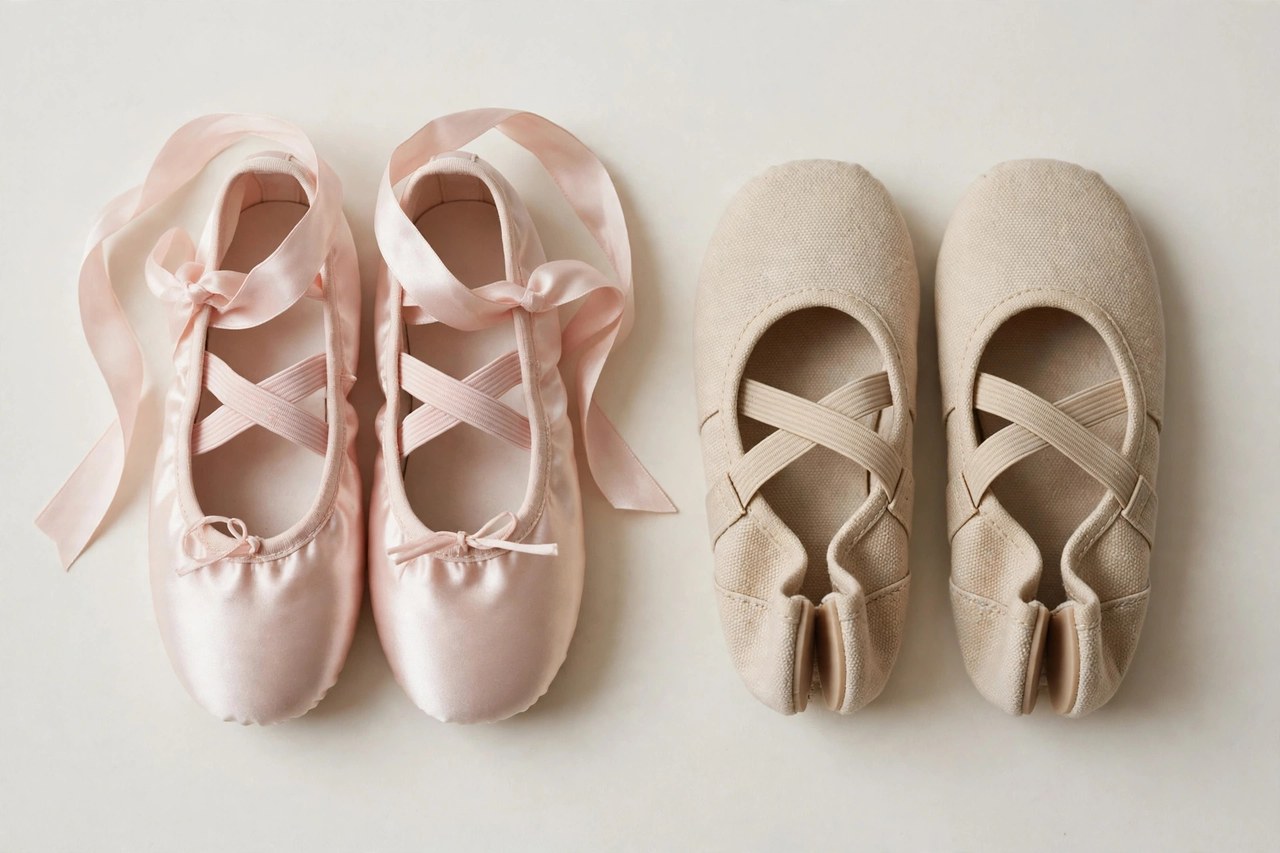
The ballet shoe is a soft, close-fitting slipper built to let a dancer feel the floor through the sole while protecting the foot from friction, and it is a very different product from a fashion ballet flat despite the family resemblance. Children's ballet shoes come in leather, canvas and satin, with a choice between a full sole and a split sole, and they are sized on their own scale that rarely matches street-shoe sizing. Getting those three decisions right matters more than colour or brand, because the shoe is a working tool of class, used for every step, jump and turn.
This guide covers the shoe itself: its materials, sole constructions, fastenings and fitting. The rest of the class kit, from leotards and wrap skirts to tights and warm-up knitwear, is covered in the ballet outfit guide, and teachers usually want shoes fitted before the first class rather than after it. A shoe bought in a hurry the night before, in a street size, with the elastics still unsewn in the packet, is the classic first-week problem, and it is entirely avoidable with a fitting and ten minutes of sewing at home.
Leather, Canvas and Satin Compared
Leather is the durable choice for children's classes: it moulds gradually to the foot, resists the scuffing of studio floors, and usually outlasts a size, which makes it the economical option for younger children who attend once a week. Canvas shoes are lighter, cheaper and machine-washable, breathe better in warm studios, and wear through at the toes faster, particularly for dancers who drag a foot in exercises. Canvas also suits dancers whose feet change quickly, since replacing a worn pair hurts the budget less.
Satin shoes are the prettiest and the least practical: the fabric marks, frays at the toes and cannot be cleaned back to new, so satin is normally kept for examinations, photographs and performances, with a sturdier material doing the weekly work. Whichever material you choose, look at the inner finish: a smooth lining, no rough seam ridge across the toes, and a drawstring or elastic binding around the opening that sits flat. Some modern shoes replace the drawstring with plain elastic binding, which suits younger children who cannot retie a bow mid-class.
Full Sole, Split Sole and What Changes
A full sole runs the length of the shoe in one piece of suede leather. It gives a beginner's foot something to push against, builds strength in the arch and toes, and provides a little more protection on hard floors, which is why most teachers start young children in full soles. The trade-off is stiffness: the shoe resists the full pointing of the foot, and older or more advanced dancers find that resistance gets in the way of the line they are trying to make and the floor contact they need for turns.
A split sole divides the suede into a forefoot pad and a small heel pad, leaving the arch covered only by the upper material. The foot can point completely, the arch is visible to the teacher, and the shoe hugs the midfoot closely, which is why split soles dominate from about the middle grades upward. The move between the two is a teacher's call, not a fashion upgrade: ask before switching, because some studios specify full soles for examinations at certain levels regardless of what a dancer wears in ordinary class.
Fitting, Elastics and Care
Ballet shoes should fit like a sock with a sole: toes lying flat and just reaching the end when standing, no spare length to curl into, and no gaping at the heel. Children's sizes step in small increments and differ by maker, so a fitting in a dance shop, standing on a hard floor and rising and pointing, beats an online guess. Resist buying growing room; a long shoe trips its wearer, blisters the heel as the foot slides, and hides the toes a teacher needs to see working.
Most children's shoes arrive with one elastic across the instep, either sewn or to be sewn by the buyer, and exam styles may need the elastic positioned precisely or replaced with ribbons at higher levels. Sew elastics at a slight angle, following the marks inside the binding, and check the tension standing rather than sitting. Care is minimal but specific: air the shoes after class instead of sealing them in a bag, brush suede soles with a wire brush to restore grip, never wash leather or satin, and retire a pair when the sole wears smooth or the toes break through the upper.
Common Questions
When should a child move from full-sole to split-sole ballet shoes?
When the teacher advises it, usually in the middle grades. Split soles allow a fuller point and show the arch, but some studios require full soles for examinations at set levels.
Do ballet shoe sizes match normal shoe sizes?
Rarely. Ballet sizing runs on its own scale and differs by maker, so fit in person where possible, with toes flat and just reaching the end of the shoe when standing.
Which material lasts longest for weekly classes?
Leather. It moulds to the foot, resists studio-floor scuffing and usually outlasts the size, while canvas wears at the toes faster and satin is best kept for exams and performances.
More in Children's Clothes Guide G
The G letter hub and the guides closest to this one:
More to Explore on Apparel Search
Looking for Children's Clothing Stores?
This guide helps you choose children's girls ballet shoes. To browse where to buy, visit our children's clothing store directory, where you can find retailers that carry them.