Children's Girls Ballet Outfit Guide
A ballet outfit is a small system of garments that work together in class, and it helps to think of it that way rather than as a costume bought in one piece. At its centre sits the leotard, which provides the base layer a teacher can see clearly enough to correct posture and alignment. Around it go tights, an optional skirt or shorts layer, warm-up knitwear for the start of class, and hair and shoe items covered in the companion ballet shoes guide. Each part has a practical reason for existing, which is why studios specify the outfit so precisely.
Shop Children's Girls Ballet Outfit Now
Shop Children's Girls Ballet Outfit on Amazon Shop Children's Girls Ballet Outfit on eBayThe Amazon and eBay links on this page are affiliate links. If you make a purchase through them, Apparel Search may earn a commission.
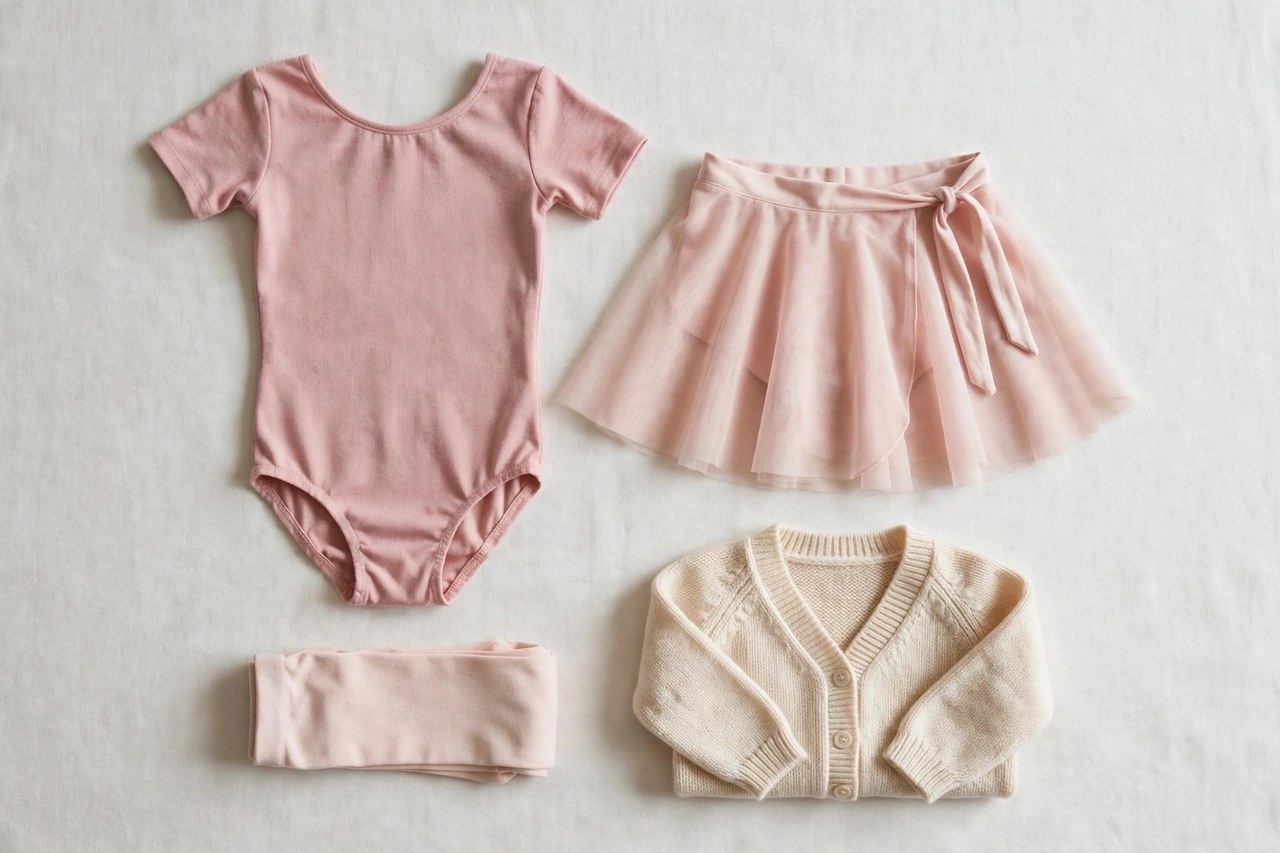
A ballet outfit is a small system of garments that work together in class, and it helps to think of it that way rather than as a costume bought in one piece. At its centre sits the leotard, which provides the base layer a teacher can see clearly enough to correct posture and alignment. Around it go tights, an optional skirt or shorts layer, warm-up knitwear for the start of class, and hair and shoe items covered in the companion ballet shoes guide. Each part has a practical reason for existing, which is why studios specify the outfit so precisely.
Many schools publish a uniform list naming a leotard colour and style by class level, sometimes with the studio logo, and that list overrides general advice. Where no uniform is required, a plain leotard in a dark, practical colour, convertible tights and a short wrap skirt form the standard starter outfit for most children's classes. Buying the studio's exact specification first, and treats such as a decorative tutu later, keeps spending pointed at what will actually be worn every week rather than what looks best in the shop.
Leotards: Cut, Fabric and Fit
Leotards come in camisole, short-sleeve, cap-sleeve and long-sleeve cuts, plus tank styles with wider straps that stay put on smaller shoulders. Neckline and back depth are often set by exam boards, with modest scoops for younger classes. Most children's leotards are cotton with elastane or a nylon microfibre: cotton feels soft and suits sensitive skin but holds sweat and fades faster, while microfibre keeps its shape and colour through weekly washing and dries overnight. A front lining in larger sizes and a properly finished leg elastic that does not ride up are the two quality marks worth checking in hand.
Fit is judged by length before width. A leotard that is too short in the body pulls at the shoulders and leg line all through class, whereas a slightly roomy one still works. Measure girth, from one shoulder down through the body and back up, and size to that figure rather than to age or a dress size, since brands cut very differently. Growing room is a false economy here: excess fabric bunches at the back and hides the line a teacher is trying to see, so buy the size that fits now and expect a class outfit to be replaced as a child grows.
Skirts, Tights and Warm-Up Layers
Class skirts are short, sheer and functional: wrap skirts in georgette or chiffon that tie at the waist, or pull-on skirts with an elastic waistband, cut high enough at the front for leg movement to be visible. A full practice tutu belongs to a different job, rehearsal and performance rather than weekly class, and most teachers exclude decorative skirts from ordinary lessons because they hide hip position. Keep the tutu for shows and photographs, and the plain wrap skirt for class, and both will be used without argument.
Ballet tights are a specific product, not ordinary hosiery: footed or convertible styles in a pale pink or a shade matched to the dancer, made from a strong knit that survives barre work and floor stretches. Convertible tights, with a small opening under the foot, let older children roll the foot out for pointe preparation, foot care or a quick change into bare feet for contemporary work. Warm-up layers complete the system: a crossover cardigan that ties at the waist, legwarmers for the first exercises, and sometimes a thin all-in-one, all designed to come off as muscles warm, layer by layer, without interrupting the class.
Care and Kit-Bag Habits
Leotards and tights live a hard laundry life, washed after every class, so care habits decide how long they last. Wash inside out, in cool water, in a mesh bag that keeps straps and tights from winding around other garments, and skip fabric softener, which coats the elastane and shortens its working life. Air-dry flat or over a rail; tumble heat is the fastest route to a leotard that has lost its recovery and starts to sag at the seat and leg line mid-term.
A simple kit-bag routine keeps the outfit complete: shoes in a small ventilated bag, a spare pair of tights rolled in a side pocket, hair ties and pins in a zipped pouch, and the crossover cardigan folded on top. Empties from the bag get washed the same evening rather than discovered, damp, the morning of the next class. Naming every item matters in a shared changing room where six identical leotards come off at once; a small stitched label or laundry-marker initial inside the neckline brings the right outfit home far more reliably than memory does.
Common Questions
What does a beginner's ballet outfit actually need?
A plain leotard in the studio's specified colour if there is one, footed or convertible ballet tights, and a short wrap skirt. Shoes are bought separately, and a crossover cardigan is the most useful extra.
Should a ballet leotard be sized by age or by measurement?
By girth measurement: shoulder, down through the body and back up. Brands cut leotards very differently, so age labels mislead, and a too-short body pulls at the shoulders throughout class.
Why do ballet tights have a hole under the foot?
Convertible tights let the foot be rolled out without removing the tights entirely, which helps with foot care, pointe preparation and switching to bare feet for other dance styles.
More in Children's Clothes Guide G
The G letter hub and the guides closest to this one:
Looking for Children's Clothing Stores?
This guide helps you choose children's girls ballet outfit. To browse where to buy, visit our children's clothing store directory, where you can find retailers that carry them.