Children's Ballet Shoes Guide
Ballet shoes - slippers, in the studio's own word - are the soft, close-fitting shoes children wear for ballet class: a flexible upper in leather or canvas, a split or full sole in suede or leather, and elastic that holds the shoe to the foot without a lace in sight. They are the first specialist footwear most children ever own, and the only item in this guide bought to a teacher's specification before the parent's preference gets a say.
Shop Children's Ballet Shoes Now
Shop Children's Ballet Shoes on Amazon Shop Children's Ballet Shoes on eBayThe Amazon and eBay links on this page are affiliate links. If you make a purchase through them, Apparel Search may earn a commission.
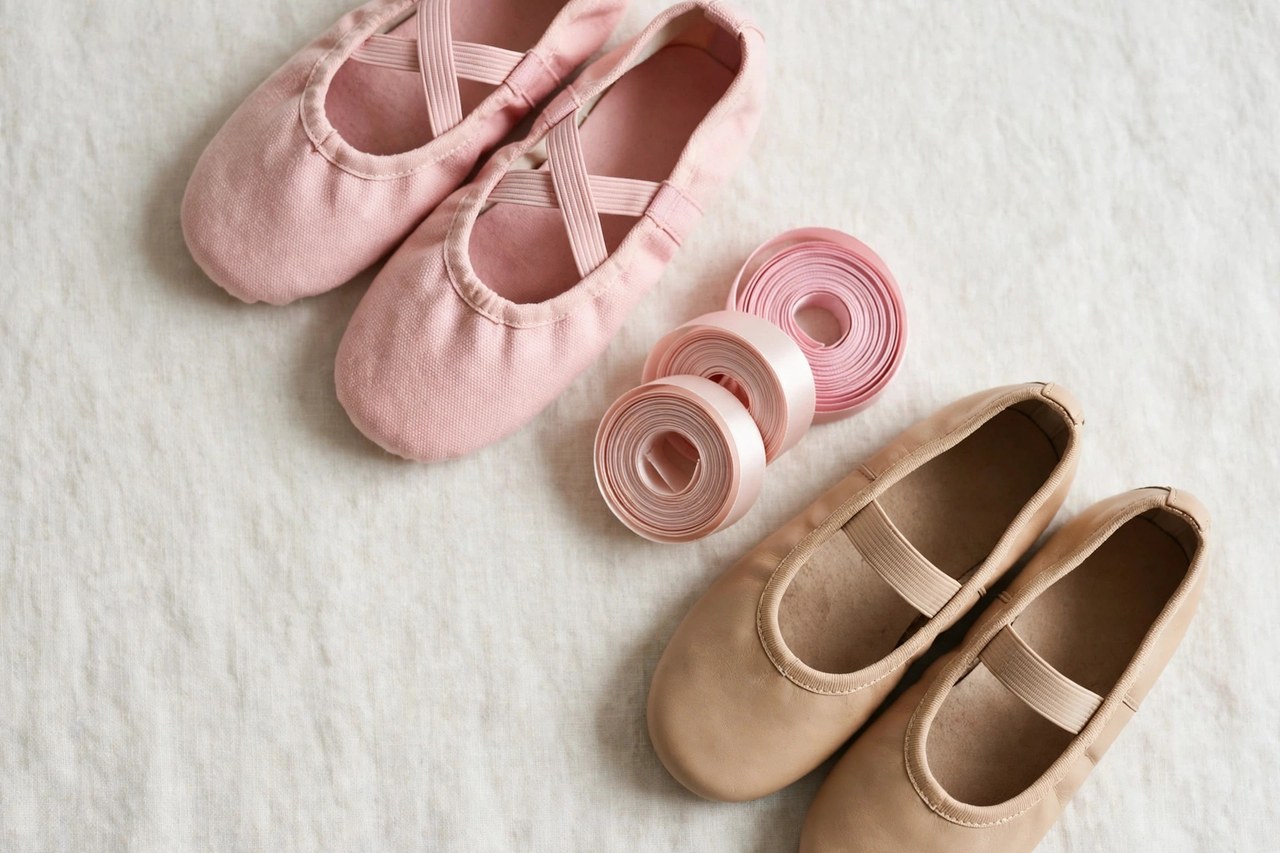
Ballet shoes - slippers, in the studio's own word - are the soft, close-fitting shoes children wear for ballet class: a flexible upper in leather or canvas, a split or full sole in suede or leather, and elastic that holds the shoe to the foot without a lace in sight. They are the first specialist footwear most children ever own, and the only item in this guide bought to a teacher's specification before the parent's preference gets a say. This guide explains what to look for, how the sizing actually works, which fabrics and constructions earn their price, and how to care for the garment so it keeps doing its job all season.
Styles and Construction
The choices are material and sole. Full-grain leather slippers mold to the foot, last the longest and cost the most; canvas is cooler, cheaper, machine-washable in many cases and kinder to a first term that may not be repeated. A split sole shows the arch and suits experienced young dancers; a full sole supports beginners and strengthens the foot. Drawstrings at the throat should be tied in a bow, tucked in, and never used to force a fit - the shoe should hold by its cut, with elastic sewn in a cross or single strap as the studio requires.
Judge children's footwear by closure and sole before color: hook-and-loop straps and elastic laces let a child dress independently, while stiff lace-only designs frustrate small hands. The sole should flex at the ball of the foot, not in the middle, and the toe box should be wide enough for toes to spread. A firm heel counter steadies new walkers and hard players alike, and a removable insole makes checking the fit as simple as standing the child on it.
Fit and Sizing
Studios usually specify color - pink, tan or the skin-tone shades now widely available, or black for boys - so confirm the dress code before buying. This is a product where the shop fitting matters: specialist dance retailers measure, watch the child stand and plié, and mark the difference between growing room and a shoe that slips at the heel, which for slippers is a much smaller allowance than for school shoes.
Fit children's shoes at the end of the day, in the socks they will be worn with, allowing about a thumb's width - roughly a centimeter to a centimeter and a half - beyond the longest toe. The heel should hold without slipping, the widest part of the foot should meet the widest part of the shoe, and the child should walk, run and jump in the shop: children's shoes are fitted by watching them move, not by how they look standing still. Recheck the fit every few months; young feet grow in spurts.
Wearing and Care
Slippers live in the dance bag, not the shoe rack, and they never go outdoors - suede soles are ruined by pavement and grit in a single walk to the car. Brush soles clean, air the shoes after class, and wash canvas pairs as the maker allows. Ribbons belong to pointe shoes and later grades, not beginners, however strong the request; elastics are the correct fastening until a teacher says otherwise.
Children's footwear lasts longer on rotation: a rest day lets linings dry fully, which is what keeps shoes smelling like shoes. Brush off mud when dry, stuff wet shoes with paper and dry them at room temperature - never on a radiator, which cracks leather and warps soles. Machine-washable styles should still be air-dried, and hook-and-loop straps should be closed before washing so they do not fill with lint and lose their grip.
Common Questions
Should children's ballet shoes be leather or canvas?
Canvas for a first term - it is cheaper, cooler and often washable - and leather once a child is committed, because it molds to the foot and outlasts canvas. Either is correct for class; the studio's dress code and the child's level decide. Avoid satin slippers for ordinary lessons: they are for examinations and performances and wear out quickly on studio floors.
How should ballet slippers fit a child?
Closely, with toes flat and just reaching the end standing - ballet slippers fit far closer than school shoes, with only a few millimeters of growing room. The heel must not slip when the child rises on demi-pointe, and the drawstring should never be pulled tight to make a long shoe fit. A specialist fitting is worth it for the first pair.
When does a child need pointe shoes?
Not in this guide's age range for beginners: pointe work begins only when a teacher judges the feet, ankles and technique ready, usually after several years of training and never before about age eleven. Until then the correct shoes are soft slippers, and any shop selling pointe shoes to a beginner without a teacher's instruction should be avoided.
More in Children's Clothes Guide B
The B letter hub and the guides closest to this one:
More to Explore on Apparel Search
Looking for Children's Clothing Stores?
This guide helps you choose children's ballet shoes. To browse where to buy, visit our children's clothing store directory, where you can find retailers that carry them.