Children's Boots Guide
Children's boots are the footwear that covers the ankle and keeps going: rain boots that make puddles a destination, winter boots rated for snow days, leather boots for occasions and hard wear, hiking boots for trails, and the cowboy boots covered in their own guide within the boys range. The original boot guide linked outward to girls' boots, boys' boots, rain boots and shoe stores - a reminder that 'boots' is not one purchase but a small footwear wardrobe divided by weather and job.
Shop Children's Boots Now
Shop Children's Boots on Amazon Shop Children's Boots on eBayThe Amazon and eBay links on this page are affiliate links. If you make a purchase through them, Apparel Search may earn a commission.
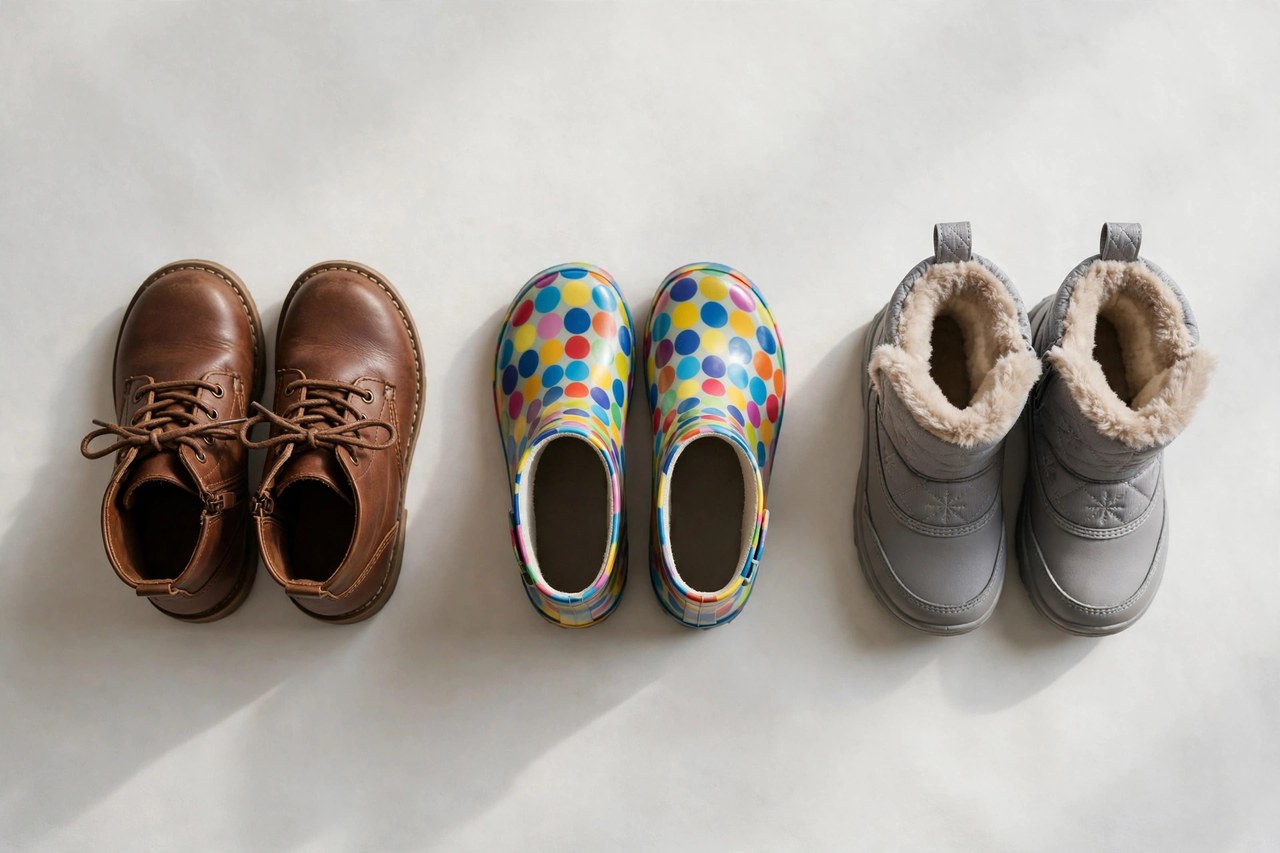
Children's boots are the footwear that covers the ankle and keeps going: rain boots that make puddles a destination, winter boots rated for snow days, leather boots for occasions and hard wear, hiking boots for trails, and the cowboy boots covered in their own guide within the boys range. The original boot guide linked outward to girls' boots, boys' boots, rain boots and shoe stores - a reminder that 'boots' is not one purchase but a small footwear wardrobe divided by weather and job. This guide explains what to look for, how the sizing actually works, which fabrics and constructions earn their price, and how to care for the garment so it keeps doing its job all season.
Styles and Construction
Construction follows the job. Rain boots are molded rubber or PVC with a sealed shaft - there are no seams to leak, and quality shows in the handle loops a child can pull and a lining that does not bunch. Winter boots layer insulation under a waterproof shell with a deep-lugged sole, and their temperature ratings assume activity, not standing at a bus stop. Leather boots live or die by their sole attachment and whether the leather is full-grain enough to condition and keep. In every family, a gusseted tongue and a heel pull loop are worth real money at 7 a.m.
Judge children's footwear by closure and sole before color: hook-and-loop straps and elastic laces let a child dress independently, while stiff lace-only designs frustrate small hands. The sole should flex at the ball of the foot, not in the middle, and the toe box should be wide enough for toes to spread. A firm heel counter steadies new walkers and hard players alike, and a removable insole makes checking the fit as simple as standing the child on it.
Fit and Sizing
Height is a fit decision as much as style: the shaft should clear the calf without rubbing, and a boot a child cannot pull on alone will be a boot avoided. Younger children do best with wide openings, handles and hook-and-loop or zip closures; older children graduate to laces and the responsibility that comes with them. This letter's boys' boot and cowboy boot guides take the boys' side of the category deeper, from boot styles and brands to western construction.
Fit children's shoes at the end of the day, in the socks they will be worn with, allowing about a thumb's width - roughly a centimeter to a centimeter and a half - beyond the longest toe. The heel should hold without slipping, the widest part of the foot should meet the widest part of the shoe, and the child should walk, run and jump in the shop: children's shoes are fitted by watching them move, not by how they look standing still. Recheck the fit every few months; young feet grow in spurts.
Wearing and Care
Boots earn their storage space by being maintained between seasons: cleaned, dried, conditioned or reproofed as the material demands, and stored upright with the shafts supported so they do not crease and crack at the ankle fold. Check the fit before the season, not during the first storm - a boot bought in the September check is a choice, while a boot bought in the first snowfall is a compromise at full price.
Children's footwear lasts longer on rotation: a rest day lets linings dry fully, which is what keeps shoes smelling like shoes. Brush off mud when dry, stuff wet shoes with paper and dry them at room temperature - never on a radiator, which cracks leather and warps soles. Machine-washable styles should still be air-dried, and hook-and-loop straps should be closed before washing so they do not fill with lint and lose their grip.
Common Questions
What types of boots do children need?
Most children cycle through three: rain boots for wet weather, insulated winter boots where snow is real, and one leather or fashion boot for occasions and hard wear - with hiking boots added where the family's life includes trails. Not every child needs every type; climate decides. What every boot must do is fit now, close securely and be pull-on-able by the child who wears it.
How much growing room should children's boots have?
About a thumb's width beyond the longest toe, as with shoes - but check it with the child standing and in the socks the boots will be worn with, since winter socks change the fit materially. Boots that are too large are worse than snug ones in winter: feet slide, friction blisters form, and insulation works poorly around a foot rattling in air space.
Are expensive winter boots worth it for children?
Warmth and waterproofing are worth paying for where winters are genuinely cold, because a miserable child outdoors is a short outing. The rating to trust is construction - sealed seams, real insulation, a lugged sole - over a headline temperature number, which assumes constant activity. In mild climates, a good rain boot plus warm socks covers most of what a winter boot would do, at half the price.
More in Children's Clothes Guide B
The B letter hub and the guides closest to this one:
More to Explore on Apparel Search
Looking for Children's Clothing Stores?
This guide helps you choose children's boots. To browse where to buy, visit our children's clothing store directory, where you can find retailers that carry them.