Children's Boys Boots Guide
Boys' boots are the ankle-and-above footwear of the boys' wardrobe: leather boots for school and occasions, waterproof boots for wet seasons, hiking boots for trails and the work-boot styles boys borrow from the adult world. Boys' boots are versatile footwear blending style and function - support, durability and protection across activities - organized here by popular styles and buying tips, with the fit and construction detail a boot purchase deserves.
Shop Children's Boys Boots Now
Shop Children's Boys Boots on Amazon Shop Children's Boys Boots on eBayThe Amazon and eBay links on this page are affiliate links. If you make a purchase through them, Apparel Search may earn a commission.
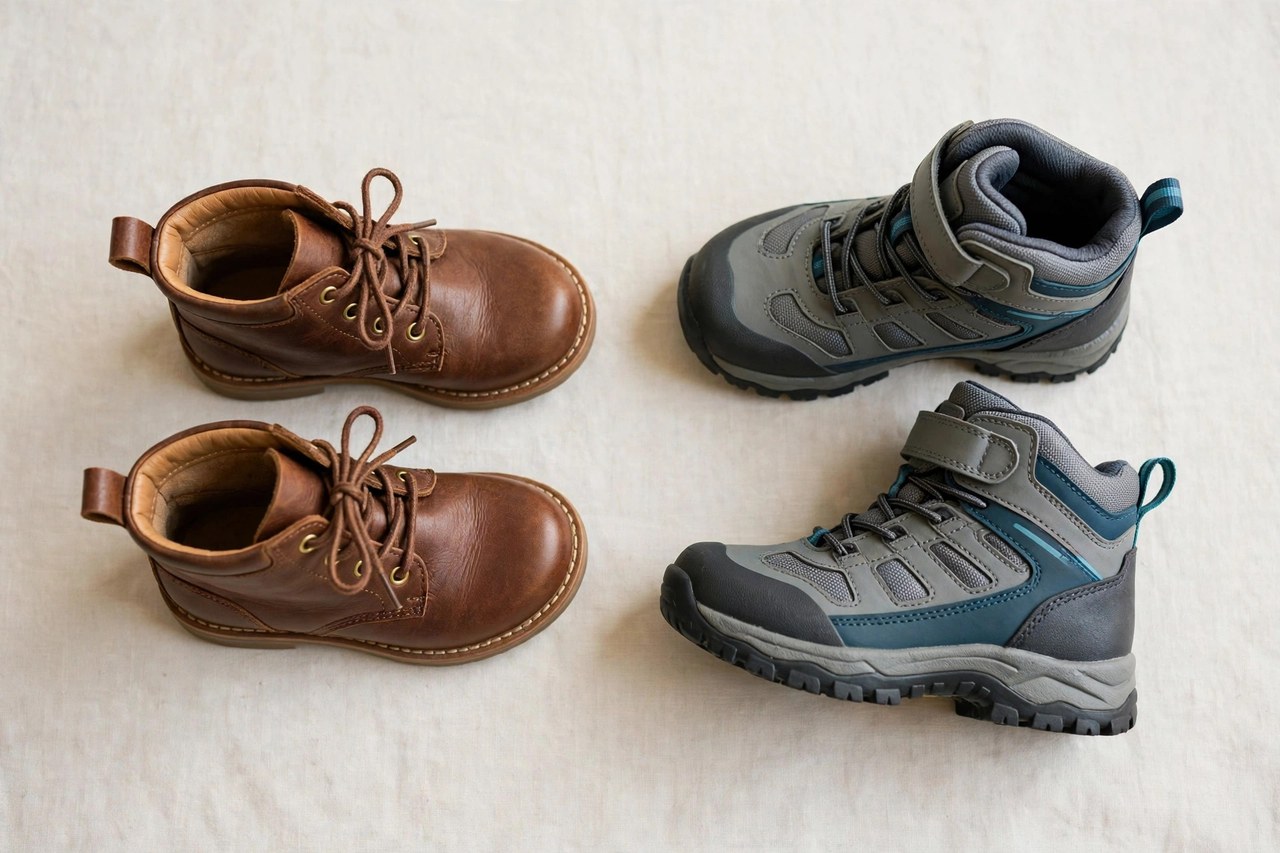
Boys' boots are the ankle-and-above footwear of the boys' wardrobe: leather boots for school and occasions, waterproof boots for wet seasons, hiking boots for trails and the work-boot styles boys borrow from the adult world. Boys' boots are versatile footwear blending style and function - support, durability and protection across activities - organized here by popular styles and buying tips, with the fit and construction detail a boot purchase deserves. This guide covers the styles worth knowing, the fit points that decide comfort, the fabrics and construction that separate a good buy from a regret, and the simple care that makes the garment last.
Styles and Construction
The styles divide by job. Chelsea and lace-up leather boots are the dressed end, pairing with school trousers and suits. Hiking boots bring ankle support, lugged soles and waterproof membranes to trails and rough ground. Rain and snow boots - covered for the whole children's range in this letter's boots guide - handle weather as specialists. Western boots have their own guide here, because their construction is a world apart. In every style, the sole attachment and the upper material decide the price that is justified: stitched soles and full leather uppers serve for years and pass down; cemented synthetics serve a season.
Judge children's footwear by closure and sole before color: hook-and-loop straps and elastic laces let a child dress independently, while stiff lace-only designs frustrate small hands. The sole should flex at the ball of the foot, not in the middle, and the toe box should be wide enough for toes to spread. A firm heel counter steadies new walkers and hard players alike, and a removable insole makes checking the fit as simple as standing the child on it.
Fit and Sizing
Fit a boot by its working test: standing in the socks of the season, a thumb's width at the toe, the heel held when walking, and the ankle clearing the shaft without rubbing through a flight of stairs. Boys' feet grow through boot sizes fast enough that a mid-season fit check belongs on the calendar wherever boots are daily wear. A boot that passes in September and is never rechecked is a blister story waiting for March.
Fit children's shoes at the end of the day, in the socks they will be worn with, allowing about a thumb's width - roughly a centimeter to a centimeter and a half - beyond the longest toe. The heel should hold without slipping, the widest part of the foot should meet the widest part of the shoe, and the child should walk, run and jump in the shop: children's shoes are fitted by watching them move, not by how they look standing still. Recheck the fit every few months; young feet grow in spurts.
Wearing and Care
Boots justify care like no other boys' footwear, because their service life can span siblings: clean and dry after wet wear, condition leather on schedule, reproof waterproofing when beading fails, and store upright. Resole or repair a well-made leather boot once and it usually out-earns its replacement; let a cheap boot go without regret when the season ends. That judgment - which boots are worth keeping - is the real skill this purchase teaches.
Children's footwear lasts longer on rotation: a rest day lets linings dry fully, which is what keeps shoes smelling like shoes. Brush off mud when dry, stuff wet shoes with paper and dry them at room temperature - never on a radiator, which cracks leather and warps soles. Machine-washable styles should still be air-dried, and hook-and-loop straps should be closed before washing so they do not fill with lint and lose their grip.
Common Questions
What are the main styles of boys' boots?
Leather lace-up and Chelsea boots for school and dressed occasions, hiking boots for trails and rough ground, rain and snow boots as weather specialists, and western cowboy boots with their own construction and guide in this letter. They are grouped by the activity they serve, because a boy's boot is chosen by its job first and its look second.
How should boys' boots fit?
With about a thumb's width beyond the longest toe, measured standing in the socks they will be worn with, the heel held without lift in walking, and the shaft clearing the ankle and calf without rubbing. Test stairs and a slope if the shop allows. Recheck mid-season: boots are worn long hours, and a size outgrown inside a stiff boot does more harm than the same growth inside a flexible shoe.
Are boys' boots worth buying in leather?
For a boot worn weekly - school, occasions, regular wear - yes: full leather conditions, repairs and passes down, and costs less per wear than repeated synthetic replacements. For a single-season specialist - one winter's snow boot in a fast-growing year - a sound synthetic is the rational buy. Match the material to the hours the boot will actually work.
More in Children's Clothes Guide B
The B letter hub and the guides closest to this one:
More to Explore on Apparel Search
Looking for Children's Clothing Stores?
This guide helps you choose children's boys boots. To browse where to buy, visit our children's clothing store directory, where you can find retailers that carry them.