Children's Boys Cowboy Boots Guide
Boys' cowboy boots are the western boot scaled for young riders and young enthusiasts: a tall stitched shaft, an angled heel, a pointed or rounded toe and the pull straps that get them on. They trace back to the iconic boots of working cowboys - a blend of rugged style and American heritage, similar to the men's boot but built for boys - and that lineage is the product: every feature on the boot began as ranch equipment before it became style.
Shop Children's Boys Cowboy Boots Now
Shop Children's Boys Cowboy Boots on Amazon Shop Children's Boys Cowboy Boots on eBayThe Amazon and eBay links on this page are affiliate links. If you make a purchase through them, Apparel Search may earn a commission.
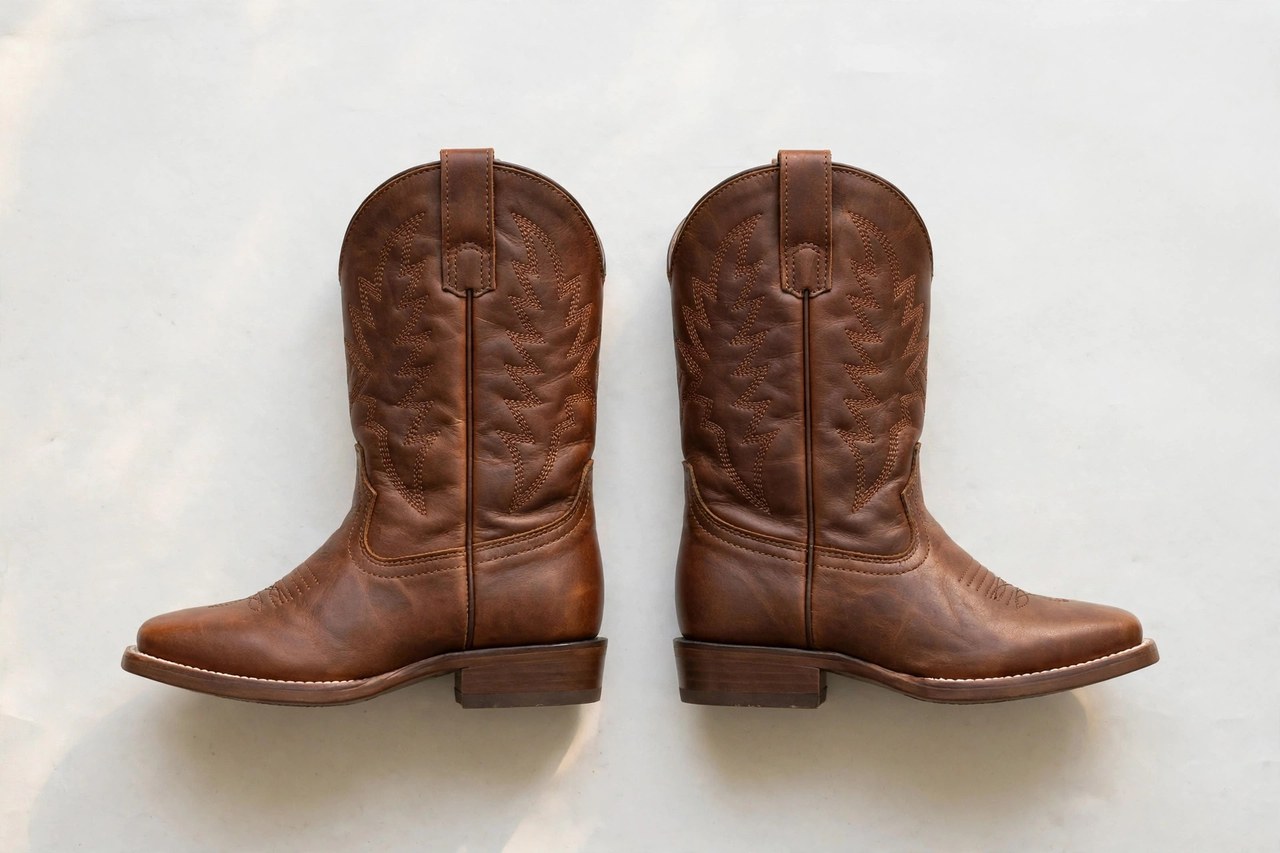
Boys' cowboy boots are the western boot scaled for young riders and young enthusiasts: a tall stitched shaft, an angled heel, a pointed or rounded toe and the pull straps that get them on. They trace back to the iconic boots of working cowboys - a blend of rugged style and American heritage, similar to the men's boot but built for boys - and that lineage is the product: every feature on the boot began as ranch equipment before it became style. This guide covers the styles worth knowing, the fit points that decide comfort, the fabrics and construction that separate a good buy from a regret, and the simple care that makes the garment last.
Styles and Construction
Anatomy decides quality. The shaft carries the stitching that is the style's signature and protects the leg; the vamp takes the wear; the heel - a proper angled cowboy heel, lower for children than adults - keeps a stirrup foot honest and gives the stance its look. Leather uppers, even at boys' prices, outlast synthetics and take the polishing that keeps the pair presentable; the toe shape runs from classic pointed through the rounder, roomier toes younger boys do better in. A cushioned insole and a roper-style lower heel make the everyday-wear version most boys actually need.
Judge children's footwear by closure and sole before color: hook-and-loop straps and elastic laces let a child dress independently, while stiff lace-only designs frustrate small hands. The sole should flex at the ball of the foot, not in the middle, and the toe box should be wide enough for toes to spread. A firm heel counter steadies new walkers and hard players alike, and a removable insole makes checking the fit as simple as standing the child on it.
Fit and Sizing
Fit differs from every other boot in this letter: a cowboy boot should slip slightly at the heel when new - that slip disappears as the sole flexes and the leather molds - while the instep must hold snugly, because the instep, not laces, is what keeps this boot on. Toes need length without the foot sliding forward into the point. A boy should walk a full circuit of the shop; a boot that grips the instep and whispers at the heel is right, and one that does neither will not improve.
Fit children's shoes at the end of the day, in the socks they will be worn with, allowing about a thumb's width - roughly a centimeter to a centimeter and a half - beyond the longest toe. The heel should hold without slipping, the widest part of the foot should meet the widest part of the shoe, and the child should walk, run and jump in the shop: children's shoes are fitted by watching them move, not by how they look standing still. Recheck the fit every few months; young feet grow in spurts.
Wearing and Care
Care is leather care with dust added: brush off, condition before the leather asks, keep the shafts upright so the stitching stands straight, and use the pull straps rather than the shaft tops, which stretch. Paired in this letter with the cowboy hat and western shirt guides, the boots complete the western outfit - and worn with ordinary jeans and a tee, they remain the most durable statement in the boys' footwear range.
Children's footwear lasts longer on rotation: a rest day lets linings dry fully, which is what keeps shoes smelling like shoes. Brush off mud when dry, stuff wet shoes with paper and dry them at room temperature - never on a radiator, which cracks leather and warps soles. Machine-washable styles should still be air-dried, and hook-and-loop straps should be closed before washing so they do not fill with lint and lose their grip.
Common Questions
Why do cowboy boots slip at the heel when new?
By design: a new cowboy boot's stiff sole does not yet flex with the foot, so the heel lifts slightly with each step. As the sole breaks in and the leather molds to the instep - the fit point that actually holds the boot on - the slip largely disappears. What matters at purchase is a snug instep and enough toe length; pronounced slipping plus a loose instep means a wrong size, not a break-in question.
What is the difference between classic and roper cowboy boots for boys?
Classic cowboy boots have the taller angled heel, higher shaft and traditional silhouette made for riding. Ropers lower the heel, widen it for walking stability and often add laces or a cushioned sole - the working, walking version most boys wear daily. For a boy whose boots are everyday footwear rather than riding kit, the roper pattern is usually the honest choice.
How long should boys' cowboy boots last?
A leather pair in regular wear should outlast the size - boys typically outgrow them before wearing them out, which is why the style passes down so successfully. Synthetic pairs serve a season. Conditioned, brushed and stored upright, a good leather pair can serve two or three boys in sequence, making it one of the better value purchases in the whole footwear range.
More in Children's Clothes Guide B
The B letter hub and the guides closest to this one:
Looking for Children's Clothing Stores?
This guide helps you choose children's boys cowboy boots. To browse where to buy, visit our children's clothing store directory, where you can find retailers that carry them.