Children's Boys Cowboy Hats Guide
Boys' cowboy hats are the western hat in young sizes: a wide brim that shades the whole face, a shaped crown - cattleman crease above all - and the spirit of the American West they embody. They are at once serious sun protection, riding equipment and the finishing piece of the western outfit this letter builds with its cowboy boot and western shirt guides. Few accessories change how a boy feels about an outfit as completely as the right hat.
Shop Children's Boys Cowboy Hats Now
Shop Children's Boys Cowboy Hats on Amazon Shop Children's Boys Cowboy Hats on eBayThe Amazon and eBay links on this page are affiliate links. If you make a purchase through them, Apparel Search may earn a commission.
Boys' cowboy hats are the western hat in young sizes: a wide brim that shades the whole face, a shaped crown - cattleman crease above all - and the spirit of the American West they embody. They are at once serious sun protection, riding equipment and the finishing piece of the western outfit this letter builds with its cowboy boot and western shirt guides. Few accessories change how a boy feels about an outfit as completely as the right hat. This guide walks through the choices that matter - style, fit, fabric and finish - with the practical detail a product listing rarely gives, and closes with the care habits that keep the garment in service.
Styles and Construction
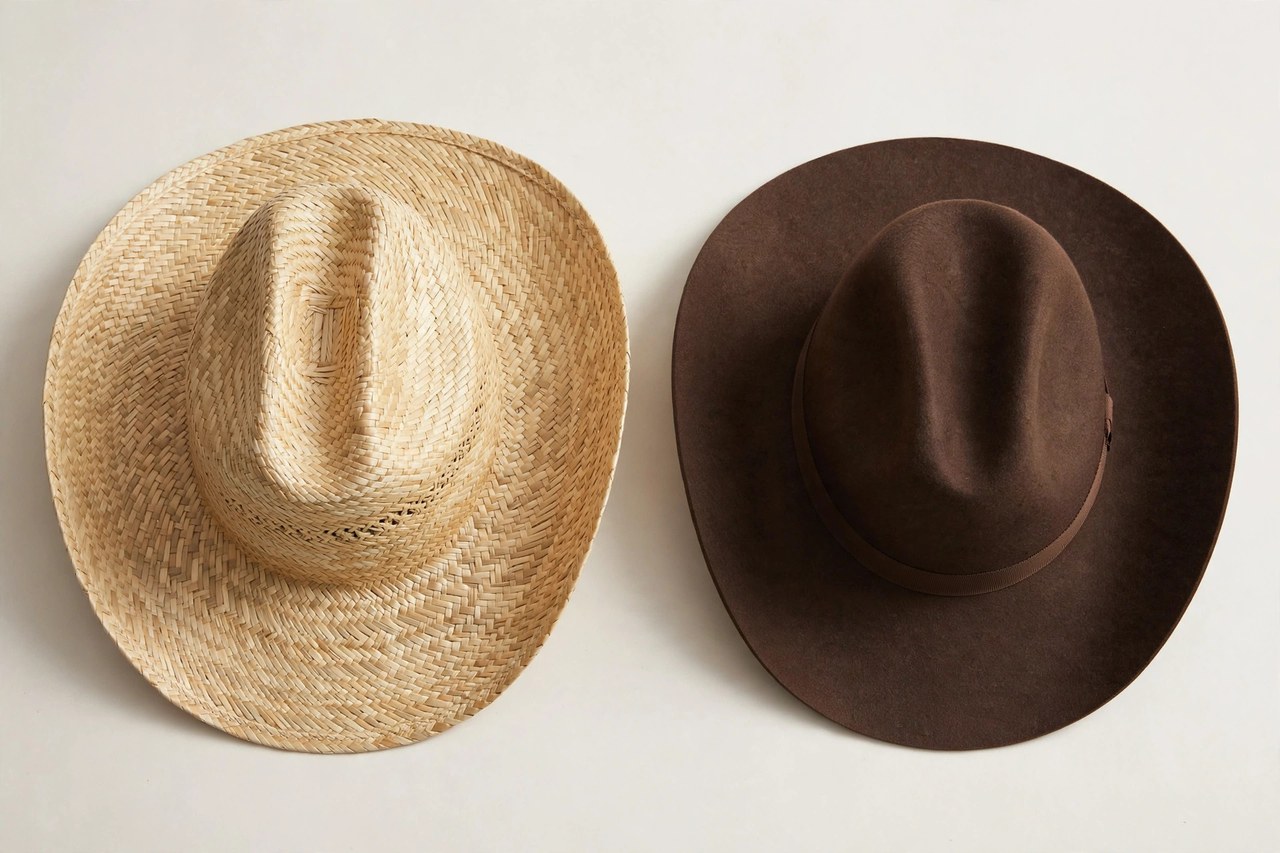
Materials divide by season and seriousness. Straw - palm leaf above all for durability, also paper and woven straws for price - is the summer and working hat: light, ventilated, tolerant of being sat on, and water-friendly in palm's case. Wool felt is the dressed and cooler-weather hat, holding a crisp shape and a clean crease; fur felt is the heirloom end, rarely bought for fast-growing heads. A leather or fabric sweatband and, for the youngest, an elastic inner band decide whether the hat stays on through a day of movement.
Children's accessories succeed on safety and simplicity: no small detachable parts for the youngest children, no long cords or ties that can catch on playground equipment, and closures a child can work alone. Materials should tolerate the child's real life - washable, chew-resistant for toddlers, and free of rough edges against skin. An accessory that needs adult help every time it is worn will simply stop being worn, however handsome it looks in the shop.
Fit and Sizing
Fit is circumference, measured where the hat sits, matched to the chart: cowboy hats fit slightly higher and looser than caps, settling on the sweatband. A hat that must be jammed down is too small; one that rides the ears is too large and will live in the wind. Shape is maintained by handling the brim at front and back, never by the crown's pinch - the crease is the hat's structure as well as its style.
Accessories fit by measurement, not by age label: head circumference for hats, waist for belts measured over the trousers the belt will hold up, and hand length for gloves. Makers' charts vary more for accessories than for clothing, so measure and read the chart every time. Anything worn at the neck or head must fit close enough to stay put in play and loose enough to pull off easily - if a child cannot remove it alone, it does not fit yet.
Wearing and Care
Storage makes or breaks a felt hat: rest it upside down on its crown or on a rack, never flat on its brim, and brush with the nap. Straw forgives more and asks only to dry in shape after wet wear. Between the two, most boys are best served by a good palm or straw hat for real wear and the felt kept for occasions - the same two-register system the belt and boot guides in this section recommend for every western piece.
Store children's accessories where the child can reach them - a low basket for hats and gloves, a hook for the belt - because an accessory with a home is an accessory that gets worn and does not get lost. Wash hats and soft accessories on the gentle cycle inside a mesh bag, reshape while damp, and check straps, buckles and fasteners monthly for cracks or looseness. Keep a spare pair of gloves and a spare hat from the start; winter loses them on schedule.
Common Questions
Should a boy's cowboy hat be straw or felt?
Straw - especially palm leaf - for everyday and summer wear: it is light, ventilated, durable and shrugs off water and rough handling. Felt for dressed occasions and cooler weather, where its crisp shape earns its care requirements. Most boys who wear the style regularly end up with one of each, the straw doing ninety percent of the work.
How do you measure a boy for a cowboy hat?
Wrap a soft tape around the head where the hat will sit - just above the ears and across the mid-forehead - and match the circumference to the maker's chart. Cowboy hats should sit securely on the sweatband without pressure; foam sizing tape inside the band fine-tunes a between-sizes fit and is the correct fix, rather than choosing a hat that must be forced on.
How should a cowboy hat be stored?
Upside down on its crown, or on a hat rack - never flat on the brim, which bends the brim's set over time. Keep felt hats brushed and away from heat and damp; let a wet straw hat dry in its natural shape away from direct heat. Handled by the brim and stored on the crown, a hat keeps the shape it was blocked with for years.
More in Children's Clothes Guide B
The B letter hub and the guides closest to this one:
Looking for Children's Clothing Stores?
This guide helps you choose children's boys cowboy hats. To browse where to buy, visit our children's clothing store directory, where you can find retailers that carry them.