Children's Boys Footwear Guide
Boys' footwear is the whole shoe wardrobe under one heading: the sneakers, school shoes, boots, sandals and occasion shoes a boy cycles through, and the system that keeps the right pair on the right day. The category is vast and diverse, built for an active and dynamic lifestyle from casual play to formal occasions, sports and outdoor adventures - and this overview is where the footwear guides in this letter are compared, so the specialist pages can do their detailed work.
Shop Children's Boys Footwear Now
Shop Children's Boys Footwear on Amazon Shop Children's Boys Footwear on eBayThe Amazon and eBay links on this page are affiliate links. If you make a purchase through them, Apparel Search may earn a commission.
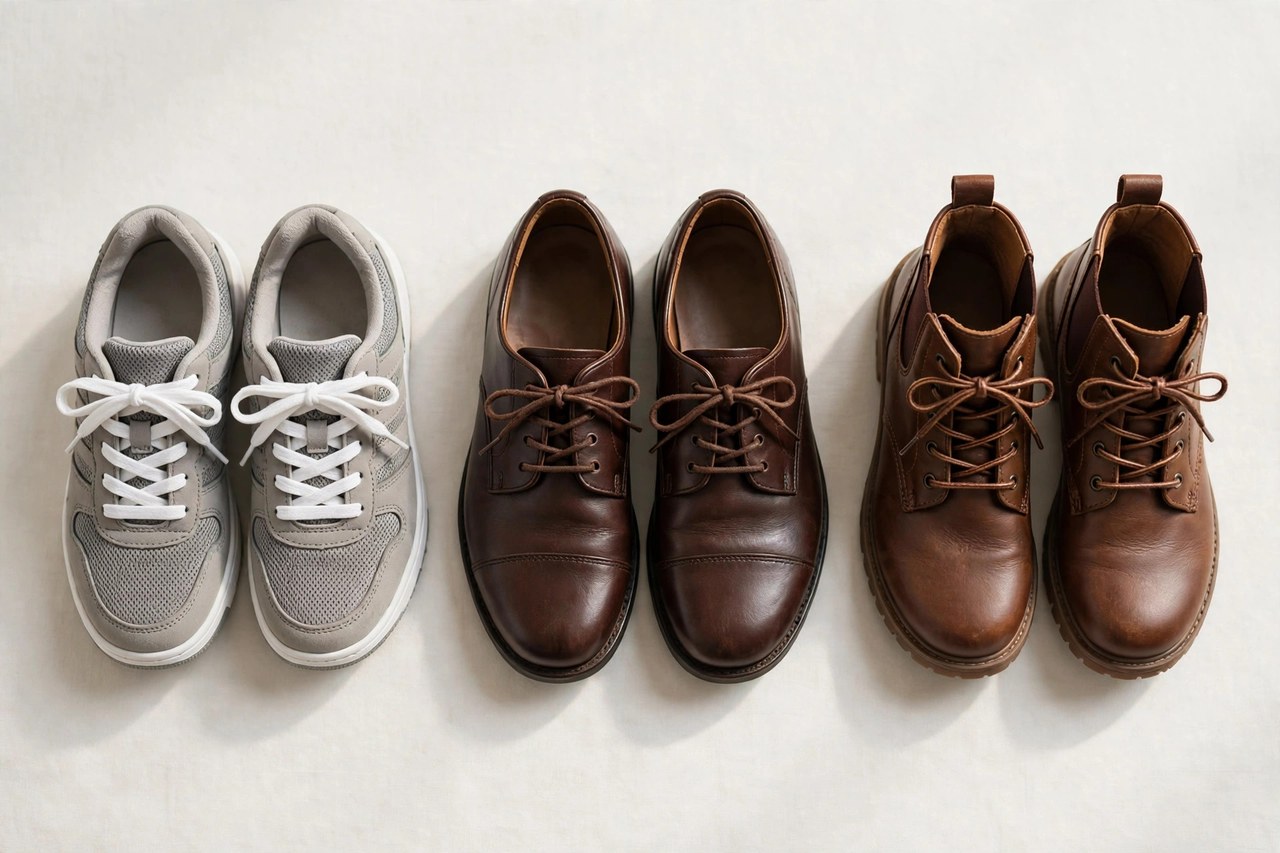
Boys' footwear is the whole shoe wardrobe under one heading: the sneakers, school shoes, boots, sandals and occasion shoes a boy cycles through, and the system that keeps the right pair on the right day. The category is vast and diverse, built for an active and dynamic lifestyle from casual play to formal occasions, sports and outdoor adventures - and this overview is where the footwear guides in this letter are compared, so the specialist pages can do their detailed work. This guide covers the styles worth knowing, the fit points that decide comfort, the fabrics and construction that separate a good buy from a regret, and the simple care that makes the garment last.
Styles and Construction
The wardrobe divides into five working pairs at most: the everyday sneaker, the school shoe where the code requires one, the boot for weather and ground, the sport-specific shoe where a sport demands it, and the dressed shoe for occasions. Everything beyond those five is duplication or fashion, both legitimate but neither essential. The specialist guides here - shoes, sneakers and the two boot guides - each take one member of that system to depth; this page's job is the rotation: which pair rests, which pair works, and when a pair is done.
Judge children's footwear by closure and sole before color: hook-and-loop straps and elastic laces let a child dress independently, while stiff lace-only designs frustrate small hands. The sole should flex at the ball of the foot, not in the middle, and the toe box should be wide enough for toes to spread. A firm heel counter steadies new walkers and hard players alike, and a removable insole makes checking the fit as simple as standing the child on it.
Fit and Sizing
Done has clear signs: toe room gone, the heel counter collapsed so the shoe leans, tread worn smooth at the ball, or the upper split at the flex point. Boys are hard on footwear in a specific pattern - the right foot's toe and the inner heel wear first for most - and reading that pattern at a monthly check turns shoe buying from emergency into schedule. Rotate daily pairs where possible; a rest day is the cheapest life-extension any shoe can be given.
Fit children's shoes at the end of the day, in the socks they will be worn with, allowing about a thumb's width - roughly a centimeter to a centimeter and a half - beyond the longest toe. The heel should hold without slipping, the widest part of the foot should meet the widest part of the shoe, and the child should walk, run and jump in the shop: children's shoes are fitted by watching them move, not by how they look standing still. Recheck the fit every few months; young feet grow in spurts.
Wearing and Care
Budget follows hours: the everyday pair earns the quality money because it works a thousand hours a year, while the occasion shoe, worn twenty hours, can be the modest purchase. Fit every pair in the late day with its proper socks, keep the five measurements current, and the footwear system runs itself - which, given how much else in boys' clothing demands attention, is exactly the point of having a system.
Children's footwear lasts longer on rotation: a rest day lets linings dry fully, which is what keeps shoes smelling like shoes. Brush off mud when dry, stuff wet shoes with paper and dry them at room temperature - never on a radiator, which cracks leather and warps soles. Machine-washable styles should still be air-dried, and hook-and-loop straps should be closed before washing so they do not fill with lint and lose their grip.
Common Questions
What footwear does a boy actually need?
Five working pairs at most: an everyday sneaker, a school shoe where the dress code requires one, a boot suited to the climate, a sport-specific shoe where his sport demands one, and a dressed shoe for occasions. Climate and code adjust the list - sandals join it in hot regions, snow boots in cold ones - but the structure, one pair per job, keeps the wardrobe complete without excess.
How can parents tell when boys' shoes are worn out?
Check monthly for the four signs: less than a thumb's width of toe room, a heel counter collapsed enough to make the shoe lean, tread worn smooth where the foot strikes, and splits at the flex point of the upper. Fit failure - the toe room - ends more boys' shoes than wear does, which is why the check starts with the feet, not the shoes.
Should boys' everyday shoes be leather or synthetic?
Leather uppers breathe, mold to the foot and survive to be passed down; modern synthetics are lighter, cheaper and shrug off water and washing. For the thousand-hour everyday pair, leather or a leather-synthetic hybrid usually wins on cost per wear; for sport and wet-weather specialists, synthetics are the honest material. The rotation matters more than the material: two rested pairs outlast one of either kind.
More in Children's Clothes Guide B
The B letter hub and the guides closest to this one:
Looking for Children's Clothing Stores?
This guide helps you choose children's boys footwear. To browse where to buy, visit our children's clothing store directory, where you can find retailers that carry them.