Children's Rain Boots Guide
Children's rain boots are the fully waterproof boot a child pulls on when the ground is wet: a sealed rubber or waterproof synthetic boot, usually calf- or ankle-height, with a treaded sole and no laces to soak. Rain, rain, go away, come back another day, runs the rhyme, and its practical point is simple: when it is raining, you want to keep your kids' feet dry. This guide covers that job properly: boot heights and materials, sizing with socks, grip, and the drying routine that keeps a pair ready for the next downpour.
Shop Children's Rain Boots Now
Shop Children's Rain Boots on Amazon Shop Children's Rain Boots on eBayThe Amazon and eBay links on this page are affiliate links. If you make a purchase through them, Apparel Search may earn a commission.
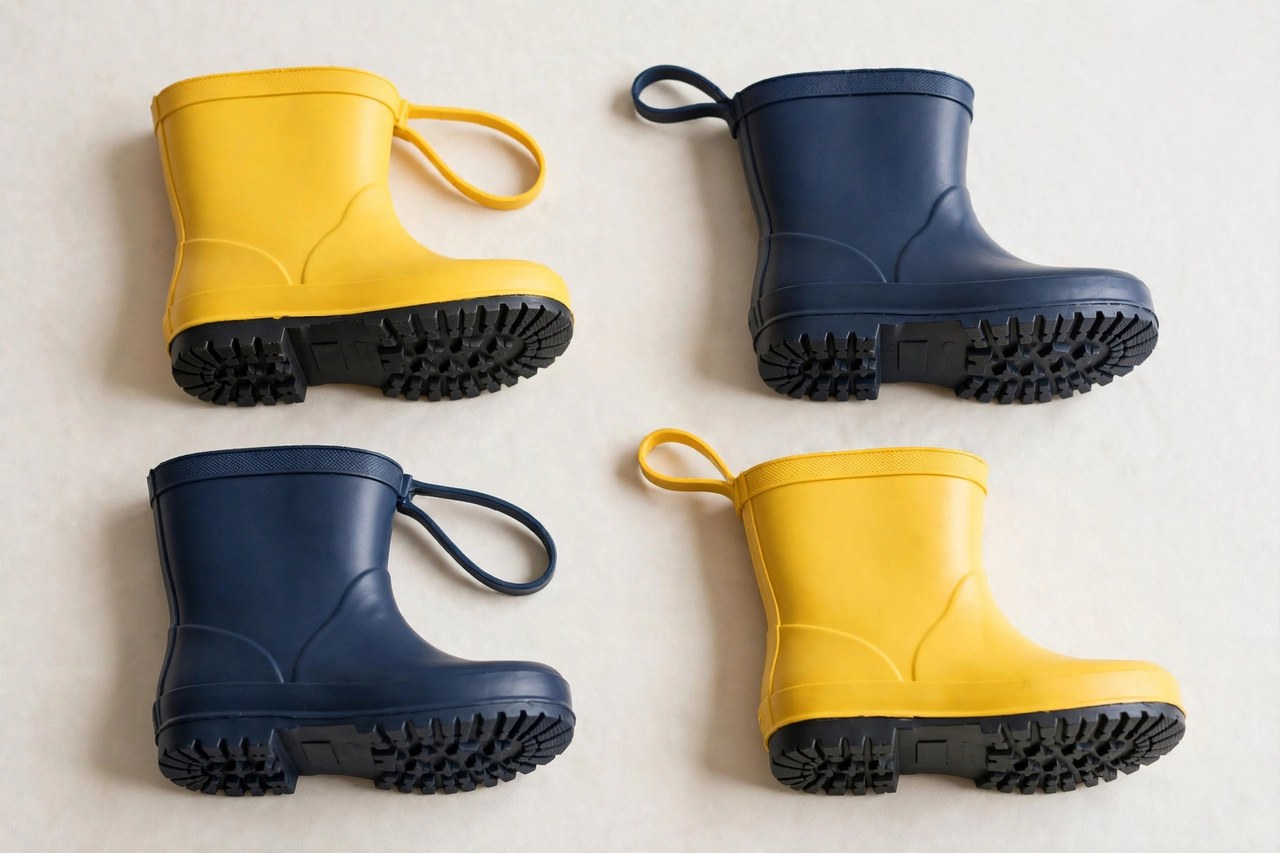
Children's rain boots are the fully waterproof boot a child pulls on when the ground is wet: a sealed rubber or waterproof synthetic boot, usually calf- or ankle-height, with a treaded sole and no laces to soak. Rain, rain, go away, come back another day, runs the rhyme, and its practical point is simple: when it is raining, you want to keep your kids' feet dry. This guide covers that job properly: boot heights and materials, sizing with socks, grip, and the drying routine that keeps a pair ready for the next downpour.
A rain boot is not a fashion boot and not a snow boot, although rails mix all three. Its single job is to keep water out from above and below at once: puddles, wet grass, muddy paths and rainy school runs. Judge every pair by that job first, and the colours and prints children love can be chosen second, from the pairs that actually pass.
Heights, Materials and Pull-On Details
Shaft height decides coverage. Ankle-height rain boots suit light rain and wet pavements; mid-calf styles, the classic children's wellington shape, handle puddles and mud properly and are the default for most families; taller styles add coverage for countryside mud at the cost of weight and leg fatigue for small children. Splash and puddle jumping, which is what children actually do in them, argues for mid-calf in most climates.
Traditional rain boots are natural rubber: flexible, durable and comfortable, but heavier. Lighter PVC and modern waterproof synthetics cost less and weigh less, and quality varies more, so check flexibility and seam finish carefully. Look for fully sealed construction with no stitched seams low on the boot, sturdy pull-on handles or loops a child can grip with cold hands, a soft textile lining that helps the boot slide on, and reflective details if the boots will be worn on dark school runs.
Sizing With Socks, Grip and Growing Room
Size rain boots with the socks the child will actually wear in them, usually a mid-weight sock, because the boot has no laces or straps to adjust: the fit is the size. There should be thumb-width room at the toe, a heel that lifts only slightly when walking, and a calf opening wide enough to tuck trousers in without forcing. A boot that is too big slops, rubs heels and trips; too small is outgrown in a single wet season and cramps toes in thick socks.
Grip is the safety detail. The sole should carry a real tread pattern with channels that clear water and mud, not a smooth fashion sole, because wet leaves, mud and playground surfaces are slippery in exactly the weather these boots are for. Check the tread on a pair being handed down as carefully as on a new pair: a worn-smooth rain boot has lost its main safety feature even if it is still waterproof. Between sizes, a removable insole or a thicker sock bridges a short gap better than jumping two sizes.
Care, Drying and Storage
Rain boots ask for the simplest care in the shoe cupboard and still get neglected. Rinse or wipe mud off after use before it dries hard, stuff the boots loosely with newspaper or stand them upright in moving air to dry the lining, and never bake them on a radiator, which cracks rubber and warps synthetics. A boot put away damp inside will smell within days and stay damp for the next wearing, so the drying habit matters more than any product.
Store upright, out of direct sunlight, which perishes rubber over a summer in a bright porch. Check handed-down and stored pairs for cracks at the flex points beside the toes and for perished, sticky or chalky rubber, since a cracked rain boot is just a heavy shoe. Keep one pair per child in the current size by the door in the wet season, move outgrown pairs on while the tread is still good, and dry feet stop being a weather forecast problem. Whatever rainwear your kids are wearing is a good idea, and dry socks at the end of the school run are the proof.
Common Questions
How should children's rain boots be sized?
With the socks the child will wear in them, since there are no laces to adjust. Allow thumb-width room at the toe, a heel that lifts only slightly, and a calf opening wide enough to tuck trousers into. Between sizes, a thicker sock or removable insole bridges a short gap better than jumping two sizes.
What height of rain boot is best for children?
Mid-calf, the classic wellington shape, for most families: it handles puddles, wet grass and mud properly. Ankle-height boots suit light rain and wet pavements, while taller styles add countryside coverage at the cost of weight for small children.
How do you dry children's rain boots properly?
Wipe or rinse off mud, then stand them upright in moving air or stuff them loosely with newspaper so the lining dries. Never bake them on a radiator, which cracks rubber and warps synthetics, and never put them away damp inside.
More in Children's Clothes Guide R
The R letter hub and related R guides:
Looking for Children's Clothing Stores?
This guide helps you choose children's rain boots. To browse where to buy, visit our children's clothing store directory, where you can find retailers that carry them.