Children's Rainwear Guide
Children's rainwear is the whole wet-weather system, not a single garment: the raincoat on top, rain boots on the feet, and, depending on the day, waterproof trousers, a hat or an umbrella completing the cover. The most practical rainwear advice of all: wear yellow so that you can be seen more easily. This guide takes the umbrella view the other two R pages deliberately do not: how the pieces work together, where the gaps in the system let water in, and how to build a school-run kit that covers a child head to toe.
Shop Children's Rainwear Now
Shop Children's Rainwear on Amazon Shop Children's Rainwear on eBayThe Amazon and eBay links on this page are affiliate links. If you make a purchase through them, Apparel Search may earn a commission.
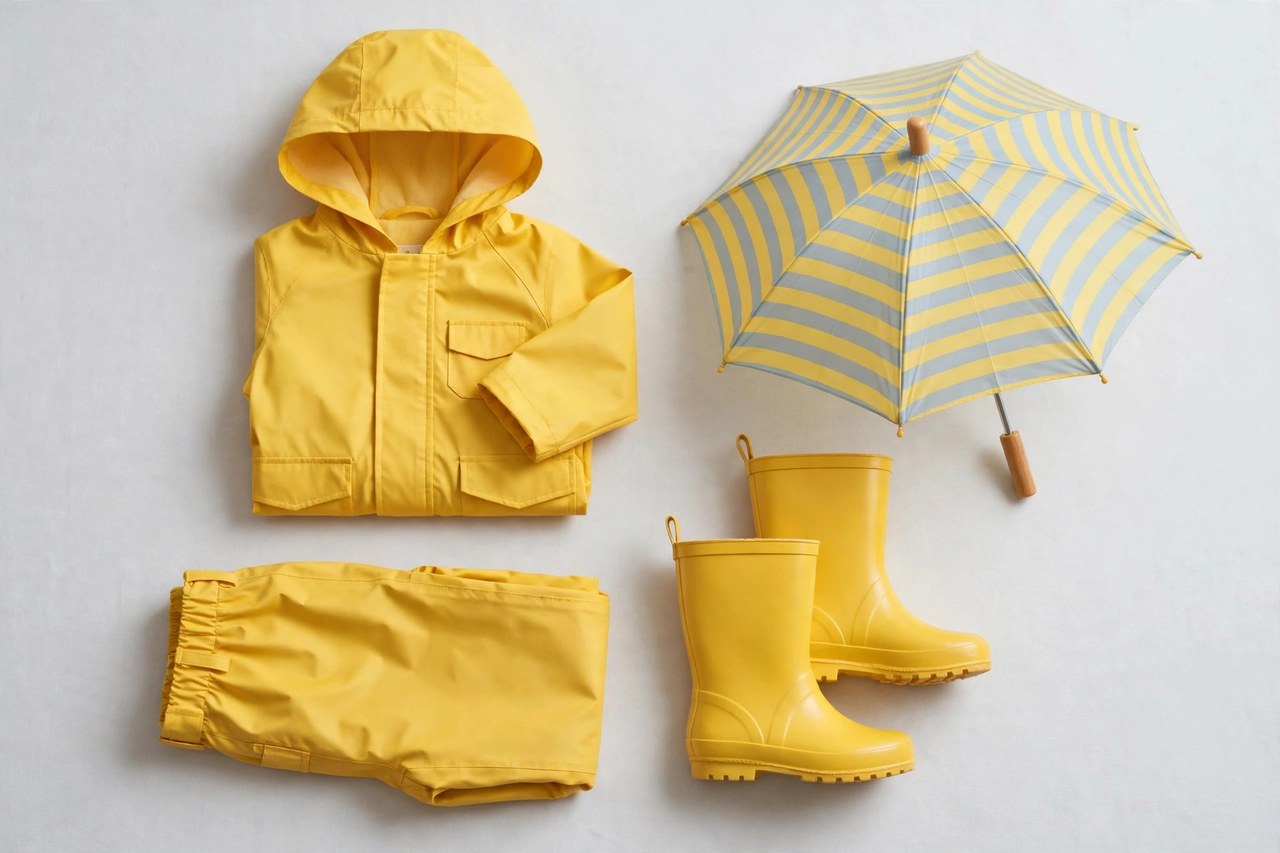
Children's rainwear is the whole wet-weather system, not a single garment: the raincoat on top, rain boots on the feet, and, depending on the day, waterproof trousers, a hat or an umbrella completing the cover. See the raincoats and rain boots pages for each piece in detail. The most practical rainwear advice of all: wear yellow so that you can be seen more easily. This guide takes the umbrella view the other two R pages deliberately do not: how the pieces work together, where the gaps in the system let water in, and how to build a school-run kit that covers a child head to toe.
Think of rainwear as cover with no gaps. A perfect coat over ordinary shoes still ends in wet socks; perfect boots under a shower jacket still end in a soaked jumper. The system succeeds or fails at its joins, and those joins, not any single purchase, are what this guide is about.
The System: Coat, Boots, Trousers and Umbrella
The coat is the core, covered in depth in the raincoats guide: waterproof fabric, sealed seams, a working hood and closures a child can operate. The boots are the foundation, covered in the rain boots guide: mid-calf waterproof boots with real tread. Between them sits the gap most families forget, the legs. Waterproof over-trousers or rain pants close it for countryside walks, cycling and genuinely wet days; for a short school run in ordinary rain, trousers tucked into mid-calf boots are usually cover enough.
Umbrellas are the optional extra, and the children's umbrella guide in this directory covers them properly. For younger children a good hood beats an umbrella, which occupies a hand, blows inside out and pokes companions; for older children walking any distance, an umbrella adds a dry bubble over the top half and protects a school bag. Rain hats and sou'wester-style hats sit between the two, keeping rain off the face while leaving both hands free. Choose per age and journey, not by habit.
Visibility, Layers and the School Run
Rain means poor light, and poor light is why visibility runs through this whole category. The advice is simple: wear yellow so that you can be seen more easily. Bright colours and reflective trim on the coat, and reflective details on boots and bags, make a child visible to drivers on grey mornings far earlier than navy or black rainwear does. If a uniform dictates a dark coat, reflective accessories and a bright umbrella or bag restore the visibility the coat does not give.
Under the system, layers do the warmth, because most rainwear is a shell, not insulation. A jumper or fleece under the coat handles cold rain; in warm summer rain, the shell over a t-shirt is enough and ventilation matters more than warmth. Teach the routine as one kit kept together by the door in the wet season: coat on its hook, boots beneath it, trousers folded with them. A system that has to be assembled from three cupboards in a morning rush is a system that goes out incomplete.
Buying as a Kit, Care and Handing Down
Buy rainwear as a kit, in one size conversation. The coat is sized over layers, the boots with their socks, and the two should be checked together: coat hem over trouser tops, trousers tucking into boot shafts, sleeves covering wrists when arms reach for handrails and handlebars. Buying the pieces a season apart from different makers is how the gaps creep in. One coordinated kit in the current size, checked each autumn, is the working standard.
Care is a system habit too: the whole kit dries together after use, coat hung open, boots upright in moving air, trousers draped, nothing put away damp. Mud is brushed or rinsed off before it dries hard, coatings are washed as their labels direct, and cracks, peeling coatings and worn boot treads are checked at the start of the wet season, not discovered in the first storm. Rainwear hands down exceptionally well because it is worn over everything and outgrown before it is outworn, which is one more reason to buy the kit properly once. Whatever rain protection your kids are wearing, a complete, bright, dry system is the version that actually works.
Common Questions
What pieces make up a complete set of children's rainwear?
A waterproof hooded raincoat, mid-calf waterproof rain boots with tread, and, for longer or heavier rain, waterproof over-trousers. An umbrella or rain hat is optional by age and journey. The system succeeds at its joins: coat hem over trousers, trousers tucked into boot shafts, sleeves covering wrists.
Why wear yellow rainwear?
Visibility. Rain means poor light, and bright yellow shows up to drivers on grey mornings far earlier than dark colours: wear yellow so that you can be seen more easily. Reflective trim on coats, boots and bags adds the same protection.
Raincoat or umbrella for a child - which is better?
For younger children, a good hood beats an umbrella, which occupies a hand, blows inside out and pokes companions. Older children walking any distance gain a dry cover for themselves and their school bag from an umbrella. Rain hats leave both hands free and sit between the two.
More in Children's Clothes Guide R
The R letter hub and related R guides:
Looking for Children's Clothing Stores?
This guide helps you choose children's rainwear. To browse where to buy, visit our children's clothing store directory, where you can find retailers that carry them.