Children's Raincoats Guide
A children's raincoat is the waterproof coat that keeps a child's top half dry: a hooded, fully closing coat in coated or waterproof fabric, long enough to cover the seat and loose enough to go over school clothes and a jumper. Learn more about raincoats in the Apparel Search products section. Whatever rainwear your kids are wearing is in fashion on rainy days. This guide covers the coat itself: the difference between waterproof and merely water-resistant, the seams and closures that decide whether a coat actually keeps water out, and sizing over layers.
Shop Children's Raincoats Now
Shop Children's Raincoats on Amazon Shop Children's Raincoats on eBayThe Amazon and eBay links on this page are affiliate links. If you make a purchase through them, Apparel Search may earn a commission.
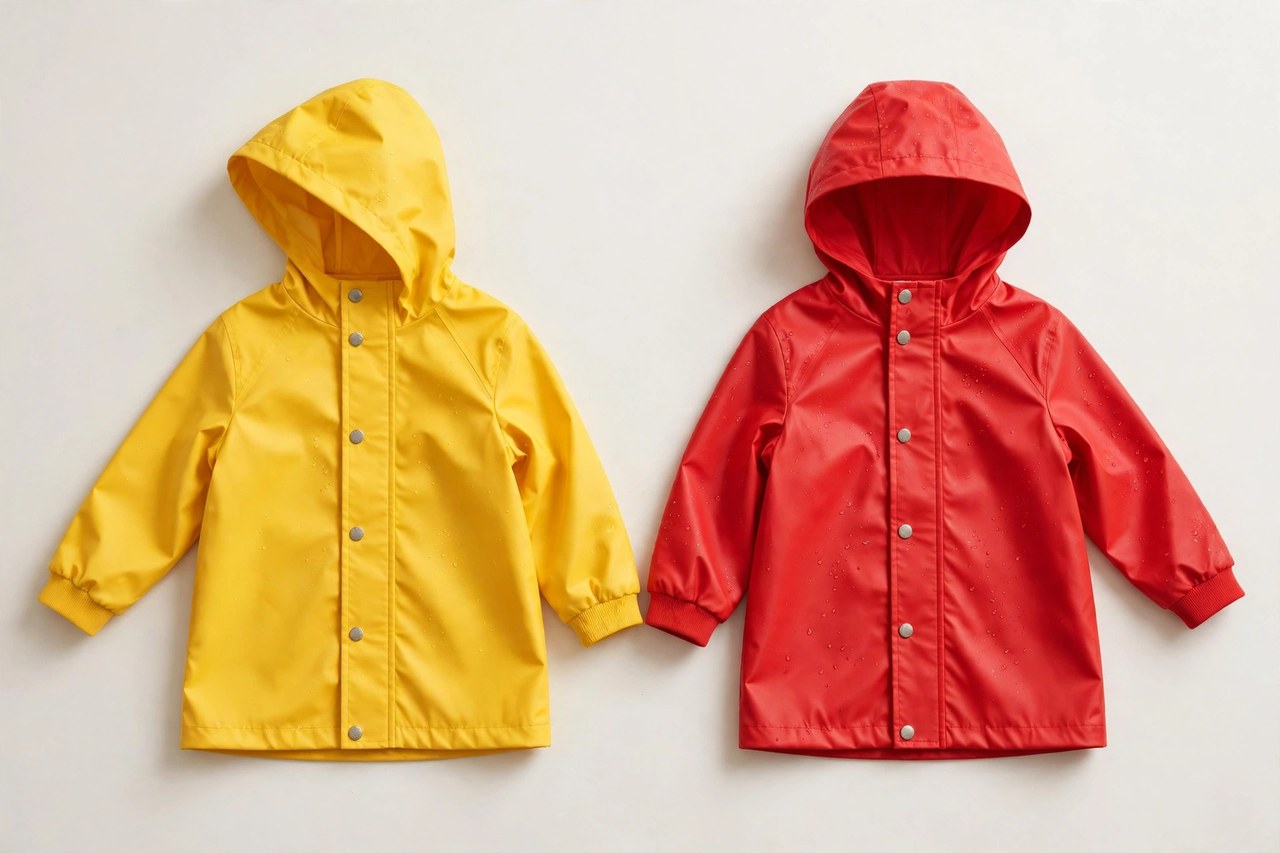
A children's raincoat is the waterproof coat that keeps a child's top half dry: a hooded, fully closing coat in coated or waterproof fabric, long enough to cover the seat and loose enough to go over school clothes and a jumper. Learn more about raincoats in the Apparel Search products section. Whatever rainwear your kids are wearing is in fashion on rainy days. This guide covers the coat itself: the difference between waterproof and merely water-resistant, the seams and closures that decide whether a coat actually keeps water out, and sizing over layers.
Keep the jobs separate, because this letter splits them deliberately. The raincoat is one garment, judged on its own construction. The rainwear guide covers the whole wet-weather system around it, and the rain boots guide covers the feet. A good raincoat bought on the points below slots into either system without needing the others to rescue it.
Waterproof Versus Water-Resistant, Seams and Coatings
Water-resistant means the fabric sheds light rain for a while before wetting through; waterproof means water does not pass through in sustained rain. Children's raincoats achieve it with a coated fabric, a laminated membrane, or traditional rubberised or PVC outer layers. For a school run in real rain, choose a coat sold as waterproof, and treat water-resistant coats as shower jackets for short dashes. The label language matters more in this category than in almost any other children's garment.
Construction decides whether the waterproof fabric delivers. Seams are the weak points, so look for taped, welded or otherwise sealed seams, especially over the shoulders where rain lands hardest. A storm flap over the front zip, or a snap-only front with an overlapping placket, keeps driven rain out of the closure. A lined coat is more comfortable against a t-shirt and less clammy than an unlined shell; an unlined coat is lighter and packs smaller. Ventilation eyelets or a cape-style back vent reduce the sauna effect on active children.
Hoods, Closures and Visibility
The hood is the raincoat's reason for existing, so test it like one: it should come far enough forward to shelter the face, stay up without gripping the head, and ideally adjust or elasticate at the edge so it does not blow back in wind or slide down over the eyes. A peaked hood sheds water away from the face best. Detachable hoods suit dress codes and dry days, but a lost hood is a common school reality, so attached hoods are the safer default for younger children.
Closures must work with cold, wet, small hands. Large snaps and chunky zips with a fabric pull tab can be operated by the child alone; small buttons and fine zips cannot, and a coat a child cannot close gets worn open. Cuffs should close or elasticate so rain does not run down raised arms into the sleeves. Bright colours and reflective trim are a genuine safety feature on grey-day roads: yellow is the classic raincoat colour precisely because it shows up in poor light, a point the rainwear guide in this letter makes as well.
Sizing Over Layers, Packability and Care
Size a raincoat over the bulkiest layer it must cover, usually a school jumper, with the child raising both arms and sitting down in it: the hem should still cover the seat, and the shoulders should not strain when arms reach forward. Length to mid-thigh suits most children; longer coats protect trousers better but can tangle small legs on stairs and bike pedals. Growing room is honest in a raincoat, since a loose fit is part of the design, but sleeves far past the hands defeat the cuffs.
Care is about protecting the coating. Wash as the label directs, usually cool and gentle, and avoid fabric softeners on coated and membrane fabrics unless the label allows them, since they can clog the finish. Re-proof a coat that has started wetting out, if its maker offers a suitable treatment. Hang it to dry fully before cupboard storage, and check handed-down coats at the sealed seams and coating for cracking or peeling, because that is where an old raincoat quietly stops being waterproof while still looking like one.
Common Questions
What is the difference between a waterproof and a water-resistant children's raincoat?
Water-resistant fabric sheds light rain briefly before wetting through; waterproof fabric keeps water out in sustained rain, using a coating, membrane or rubberised layer. For a school run in real rain, choose a coat sold as waterproof, with sealed seams, and treat water-resistant styles as shower jackets.
What closures are best on a children's raincoat?
Large snaps or a chunky zip with a fabric pull tab, under a storm flap, because small hands in cold rain must be able to close the coat alone. Small buttons and fine zips lead to coats worn open. Cuffs should close or elasticate so rain does not run down raised arms.
How should a children's raincoat be sized?
Over the bulkiest layer it must cover, with the child raising both arms and sitting down: the hem should still cover the seat and the shoulders should not strain reaching forward. Mid-thigh length suits most children; sleeves far past the hands mean the size is too big, since they defeat the cuffs.
More in Children's Clothes Guide R
The R letter hub and related R guides:
More to Explore on Apparel Search
Looking for Children's Clothing Stores?
This guide helps you choose children's raincoats. To browse where to buy, visit our children's clothing store directory, where you can find retailers that carry them.