Children's Girls Boots Guide
Boots are the footwear category where a children's wardrobe splits by weather and purpose rather than by fashion, and buying well means knowing which job a pair is hired for. Rain boots handle wet ground and puddle-depth water. Winter boots add insulation and snow-depth shafts. Ankle and fashion boots dress up outfits in dry weather and offer little weatherproofing at all. Riding-style and hiking boots form two smaller, specialised groups. A pair that tries to cover all of those jobs usually does the wet-weather one worst, so start from the wettest day the boots must survive.
Shop Children's Girls Boots Now
Shop Children's Girls Boots on Amazon Shop Children's Girls Boots on eBayThe Amazon and eBay links on this page are affiliate links. If you make a purchase through them, Apparel Search may earn a commission.
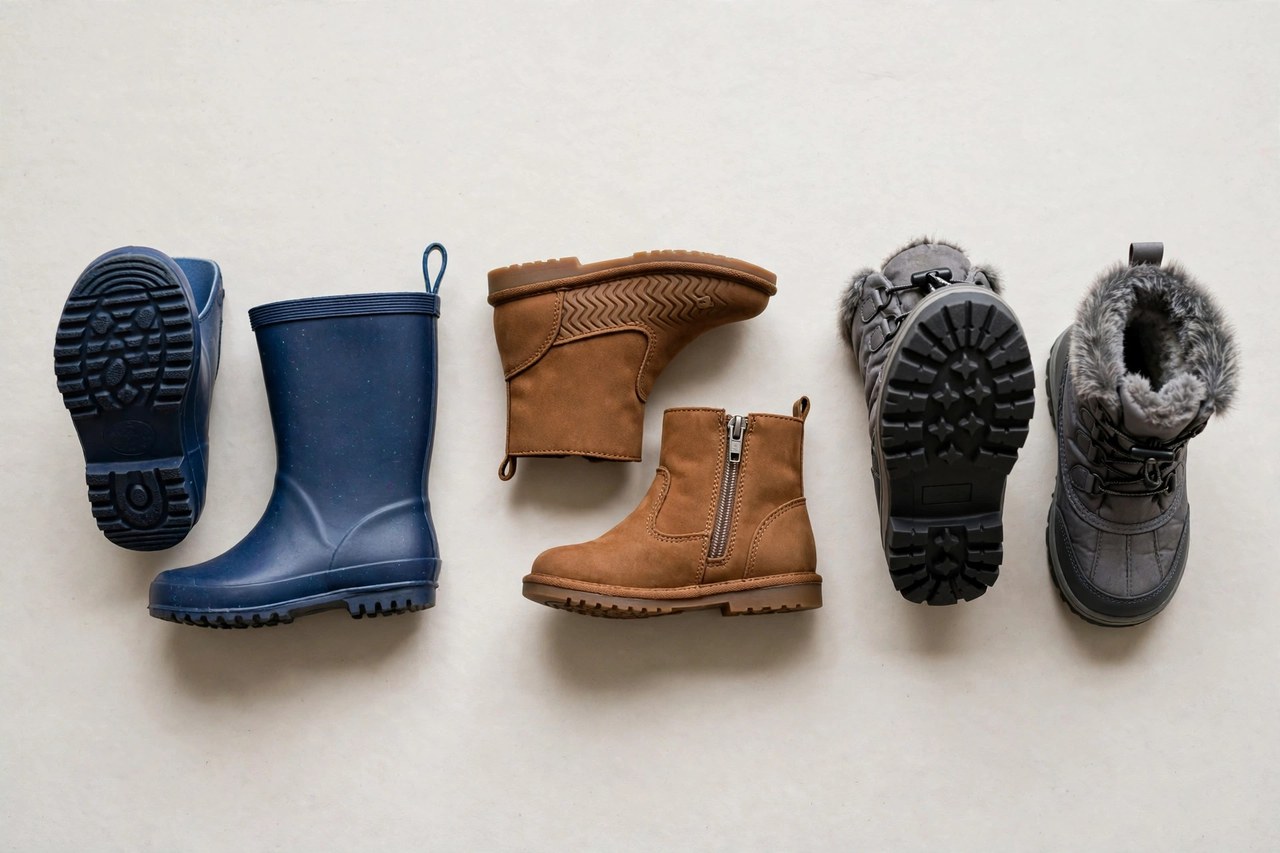
Boots are the footwear category where a children's wardrobe splits by weather and purpose rather than by fashion, and buying well means knowing which job a pair is hired for. Rain boots handle wet ground and puddle-depth water. Winter boots add insulation and snow-depth shafts. Ankle and fashion boots dress up outfits in dry weather and offer little weatherproofing at all. Riding-style and hiking boots form two smaller, specialised groups. A pair that tries to cover all of those jobs usually does the wet-weather one worst, so start from the wettest day the boots must survive.
Height is the first visible variable, from ankle boots that end below the calf to knee-high rain and riding styles. Shaft height decides how much leg a boot protects, how it sits over trousers or under dresses, and how hard it is for a younger child to pull on without help. The second variable is the sole: deep, widely spaced lugs for mud and snow, flatter patterned soles for pavements and schoolyards, and smooth fashion soles that belong indoors and on dry ground. Reading those two features in a shop tells you most of what a boot is actually for.
Rain Boots and Winter Boots
Rain boots are traditionally moulded rubber, with synthetic rubber and PVC versions at lower prices, built as a single waterproof piece with no stitched seams for water to enter. Quality shows in flexibility: a boot that bends at the ankle and forefoot walks far more comfortably than a rigid one, and handles moulded around the top help younger children pull them on. Fit should allow a proper sock without pinching the toes, and the shaft should sit close enough to stop splashes dropping inside, since a rain boot filled from the top is no longer waterproof in any useful sense.
Winter boots are a layered construction rather than a single material: a waterproof lower section or membrane, insulation rated by the maker for a temperature range, a gusseted tongue that keeps snow from sifting in, and a closure system a child can work with cold fingers. Bungee laces, hook-and-loop straps and side zips all beat traditional laces in a snowdrift. Temperature ratings are guides rather than laboratory guarantees, and activity level changes them: a child standing at a bus stop needs warmer boots than one sledging, so rate for the stillest use the pair will see.
Ankle, Fashion and Riding-Style Boots
Ankle boots in leather or synthetic uppers are the dressier end of the category, paired with dresses, skirts and smarter trousers for parties, photographs and family events. A side zip is the practical detail to look for, since it ends the daily struggle with full lacing and lets older children dress independently. Low, broad heels and a lightly textured sole keep the style suitable for a full day; a smooth leather sole and a narrow heel turn a school day into a slipping, tiring exercise and belong to short, indoor occasions only.
Riding-style boots borrow their shape from equestrian footwear: a taller shaft, a small heel and minimal decoration, usually in brown or black leather-look material. True riding boots for lessons are a specialist purchase with their own safety rules about heel size and smooth soles near stirrups, and they should be bought from equestrian suppliers rather than fashion ranges. Hiking boots sit at the other extreme, with padded ankle collars, stiff midsoles and aggressive tread, and are only worth their weight if a child genuinely walks trails; for park and pavement use, a lighter boot is kinder to small legs.
Sizing, Care and Handing Down
Boots size like other children's shoes but fit differently, because socks are thicker and shafts add a second fit point at the calf. Try boots at the end of the day with the socks they will be worn with, and check both toe room standing and heel slip walking: some heel movement is normal in a pull-on boot, but a foot that slides forward until the toes hit the front will bruise on the first downhill walk. Calf width varies more between brands than shoe size does, so a boot that will not close over winter trousers is the wrong boot whatever the foot measurement says.
Care depends on material. Rubber rain boots need only rinsing, drying away from radiators that crack rubber, and storing upright so shafts do not fold and split at the crease. Leather ankle boots benefit from polish or conditioner and a day of rest between wears, while winter boots need their liners, where fitted, pulled out to dry after deep-snow days. Boots hand down better than almost any other children's footwear because they are worn seasonally rather than daily, so a pair stored stuffed with newspaper, in shape, is a real saving when the next child reaches that size.
Common Questions
How much toe room should children's boots have?
About a thumb's width with winter socks on, checked standing at the end of the day. Boots also need a calf check, since shaft width varies by brand more than shoe size does.
Are winter boot temperature ratings reliable?
Treat them as guides for an active child. A child standing still at a bus stop feels cold sooner than one sledging, so choose the rating for the stillest, coldest use expected.
Can fashion ankle boots be worn as winter boots?
Not safely in real snow. Dress boots usually lack insulation, waterproofing and deep tread, so they slip and soak. Keep them for dry, dressier days and buy weather boots for weather.
More in Children's Clothes Guide G
The G letter hub and the guides closest to this one:
Looking for Children's Clothing Stores?
This guide helps you choose children's girls boots. To browse where to buy, visit our children's clothing store directory, where you can find retailers that carry them.