Children's Baby Clothes Guide
Baby clothes are the garments made for the first two years of life - bodysuits, sleep suits, rompers, tiny trousers, dresses, hats and socks sized by weight and height from newborn to 24 months. Shoppers will find unique and personalized pieces, designer hats and headbands alongside the everyday basics, and that mix defines the category: a working wardrobe of washable essentials, plus a few keepsake pieces for photographs and family occasions.
Shop Children's Baby Clothes Now
Shop Children's Baby Clothes on Amazon Shop Children's Baby Clothes on eBayThe Amazon and eBay links on this page are affiliate links. If you make a purchase through them, Apparel Search may earn a commission.
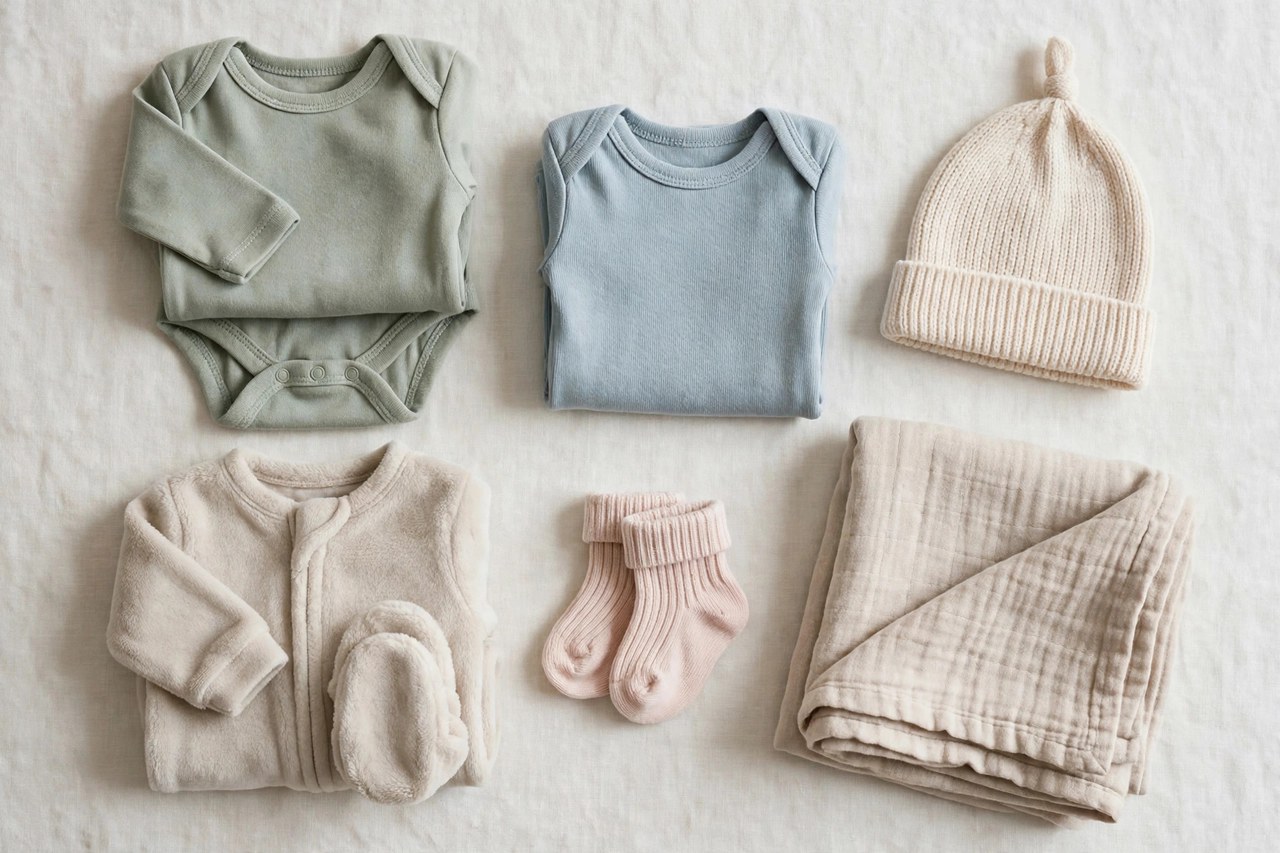
Baby clothes are the garments made for the first two years of life - bodysuits, sleep suits, rompers, tiny trousers, dresses, hats and socks sized by weight and height from newborn to 24 months. Shoppers will find unique and personalized pieces, designer hats and headbands alongside the everyday basics, and that mix defines the category: a working wardrobe of washable essentials, plus a few keepsake pieces for photographs and family occasions. This guide is built around the questions buyers actually ask: which style, which size, which fabric, and what will it look like after a season of real use - answered in order, with the trade-offs stated plainly.
Styles and Construction
Construction is the whole story at this size. Look for envelope necklines that slip on without a fight, snap plackets that open fully for changes, and footed or footless legs chosen by season. Cotton and cotton blends dominate because they wash hot, dry fast and stay soft; bamboo and modal knits add stretch for wriggly dressing. Avoid raised decorations over the tummy for young babies who lie on it, scratchy lace at the neck, and any button that is not sewn on with real conviction - check every fastening with a firm tug before the first wear.
Baby garments are specified by their fastenings before anything else: snaps should be nickel-free, firmly set and placed so changes are quick without undressing the baby fully, and envelope necklines slip over the head or down over the body without a struggle. Seams and tags belong outside or flat against delicate skin. Every fabric claim matters more here than anywhere else in the guide - soft, breathable, free of loose threads around fingers and toes, and washable at the temperatures real laundry demands.
Fit and Sizing
Buy the workhorses in the next size before you need them: growth in the first year arrives in overnight spurts, and a drawer with the next size ready turns a growth spurt into a non-event. Three-piece sets and multi-pack bodysuits are the economical core; single special pieces are where the budget for personalization and photographs belongs. For gifts, the 6-to-12-month sizes outlast the newborn drawer, which most babies exit in weeks.
Baby sizing runs by weight and height first and age second - the charts differ between brands, so check both numbers against the chart on the specific garment. A good fit leaves room for the diaper, lets legs kick freely, and keeps sleeves and legs from riding over hands and feet unless the garment is designed with fold-over cuffs. Snaps should close without straining across the belly; if the placket gaps, the size is done, however new the garment still looks.
Wearing and Care
Wash everything before it touches newborn skin, and keep the laundry system simple enough to run daily: darks and lights matter less than speed. Onesies with envelope necks pull down over the body after a leak, which is the feature exhausted parents value most at 3 a.m. Store outgrown sizes in labeled bags by size - the next child, or a friend's, will use them, and baby clothes in good condition are the most pass-on-able garments in this entire guide.
Wash baby clothes before the first wear and whenever they are soiled, using the detergent routine your pediatric guidance recommends and an extra rinse if skin is sensitive. Fasten snaps and close hook-and-loop tabs before washing so they do not snag knits, wash small socks and hats in a mesh bag so pairs survive the machine, and dry thoroughly - damp folds in tiny garments mildew quickly. Inspect snaps, buttons and seams weekly; anything loose comes off the garment before it can come off in the crib.
Common Questions
What sizes do baby clothes come in?
Baby clothes are sized by age bands - newborn, 0-3, 3-6, 6-9, 9-12, 12-18 and 18-24 months - but the bands are set by weight and height on each brand's chart, and brands differ. Weigh and measure the baby, read the chart for the specific garment, and size up when between sizes: a baby will grow into a roomy garment within weeks and out of a snug one within days.
Which fabrics are best for baby clothes?
Soft, breathable, washable knits: cotton first, then cotton blends with a little elastane for stretch, and bamboo or modal knits for a smoother hand. The fabric matters less than the finish - seams flat or outside, tags printed or placed away from skin, and no loose threads inside sleeves and legs where tiny fingers and toes can catch.
How many baby clothes does a newborn need?
A practical layette is eight to ten bodysuits, six sleep suits, three or four day outfits, two hats and several pairs of socks, adjusted for how often you can wash. Laundry frequency, not wardrobe size, is the real variable: with daily washing, half that list works; with twice-weekly washing, double the bodysuits and sleep suits.
More in Children's Clothes Guide B
The B letter hub and the guides closest to this one:
Looking for Children's Clothing Stores?
This guide helps you choose children's baby clothes. To browse where to buy, visit our children's clothing store directory, where you can find retailers that carry them.