Children's Girls Gymnastics Clothes Guide
Gymnastics clothes are among the most technical garments in a girls wardrobe, because the sport asks for total freedom of movement in every direction at once, a fit that stays exactly in place upside down, and a smooth surface that will not catch on bars, beam or a coach hands during spotting. That is why the leotard, worn alone or with fitted shorts, is the near-universal training garment, and why gymnastics shopping begins and ends with how that one piece is cut, sewn and sized.
Shop Children's Girls Gymnastics Clothes Now
Shop Children's Girls Gymnastics Clothes on Amazon Shop Children's Girls Gymnastics Clothes on eBayThe Amazon and eBay links on this page are affiliate links. If you make a purchase through them, Apparel Search may earn a commission.
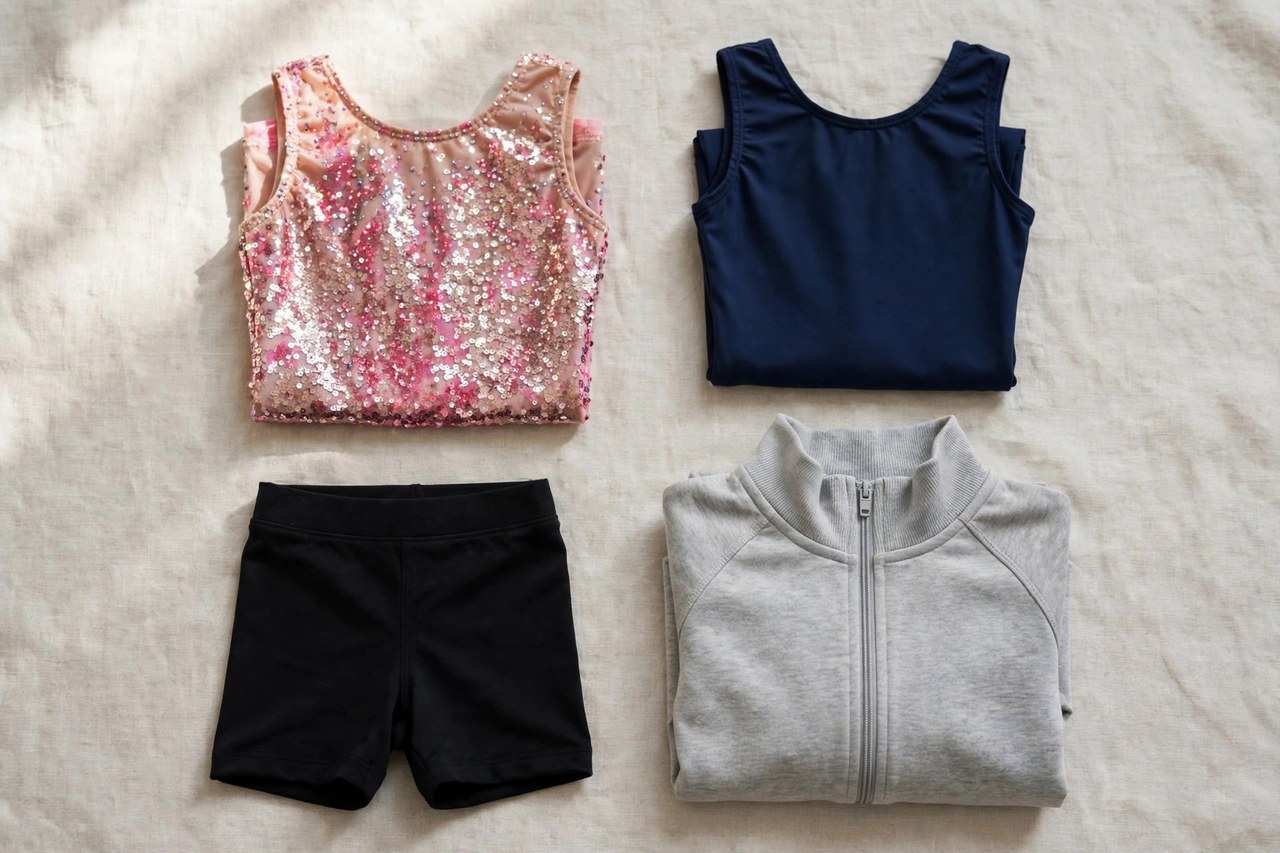
Gymnastics clothes are among the most technical garments in a girls wardrobe, because the sport asks for total freedom of movement in every direction at once, a fit that stays exactly in place upside down, and a smooth surface that will not catch on bars, beam or a coach hands during spotting. That is why the leotard, worn alone or with fitted shorts, is the near-universal training garment, and why gymnastics shopping begins and ends with how that one piece is cut, sewn and sized.
Everything in this guide is strictly about the products themselves: practice leotards, competition leotards, shorts and warm-up layers, plus the small apparel items that sit beside the sport, such as grip bags and hair accessories sold with the clothing. Gyms set their own rules on team colors, logos and competition specifications, so check the club handbook before buying anything beyond basic practice wear. Within those rules, fabric quality and girth fit decide whether a garment is a bargain or a wasted purchase.
Leotard Styles for Practice and Competition
Practice leotards are built for hours and repetition: tank or camisole styles in durable matte nylon-elastane, often with bright prints, ombre shading or modest sparkle that survives washing. They are the everyday workhorses, and most gymnasts rotate two or three so no single garment takes every wash. Scoop backs and racerbacks both work for training, provided straps stay seated during overhead work. Sleeveless styles dominate because bare arms give coaches a clear view of shoulder position and give a secure grip when spotting.
Competition leotards are a different price class entirely. Long sleeves, high embellishment with crystals or sequins, sheer mesh panels and team colors are specified by the club, fitted precisely, and worn only a handful of times a season. Because they are judged garments as much as sportswear, fit must be exact with no sagging at the seat or gaping at the neck when arms are raised. Never substitute a practice leotard for a required competition style, and order competition pieces through the gym channel and timeline the coach sets, since custom team orders run months ahead.
Shorts, Grips-Adjacent Apparel and Warm-Up Layers
Fitted stretch shorts worn over the leotard are standard practice wear at many gyms, giving coverage during bar work and conditioning while keeping the hip line visible enough for form checks. Choose shorts in the same matte stretch fabric as leotards, with a waistband that stays flat and leg bands that do not ride up; loose running shorts have no place near apparatus. Some gyms allow leggings for warm-up and flexibility work in cold halls, but they usually come off before apparatus rotations begin.
Around the leotard sits a small supporting kit. Grip bags, drawstring pouches that hold hand grips and chalk, are sold alongside gymnastics apparel and keep dusty gear away from clothing. Warm-up jackets and fitted zip tops in team colors are worn between rotations and at competitions while waiting to compete, and they should be close fitting so nothing dangles near equipment. Hair is part of the dress code too: smooth, secured styles with soft ties and grips keep hair out of the face and meet the tidy presentation most clubs require.
Fit Checks, Fabrics and Laundering
Fit a gymnastics leotard by girth above all else. Measure the torso loop from one shoulder down the front, under and up the back, and match it to the brand chart, because gymnastics brands size very differently from high-street clothing and from each other. A correct fit looks smooth with arms down and stays smooth overhead: no pulling at the leg line, no shoulder straps digging, and no loose fabric across the back. Modest leg cuts give the best stay-put performance, and most gyms require them for younger age groups.
Metallic foils, hologram finishes and crystal embellishments are the fragile elements of gymnastics fabrics. Wash leotards inside out, by hand or on the gentlest machine cycle, in cold water with mild detergent, never with bleach or softener, and dry them flat or hanging in shade, because heat and tumble drying crack foil prints and dull sparkle quickly. Plain matte practice leotards tolerate machine washing better, but the same cold, gentle treatment extends their elastic life. Rinse sweat out the same day after long sessions to stop odor setting into synthetic fibers.
Common Questions
How is a gymnastics leotard size chosen?
By girth, the torso loop measurement matched to the brand chart, since gymnastics sizing differs sharply from ordinary clothing and between brands.
What is the difference between practice and competition leotards?
Practice styles are durable, washable and rotated daily, while competition leotards are club-specified, embellished, precisely fitted and worn only a few times a season.
How should sparkle leotards be washed?
Inside out in cold water with mild detergent, no bleach or softener, and dried flat in shade, because heat and tumbling crack foil finishes.
More in Children's Clothes Guide G
The G letter hub and the guides closest to this one:
Looking for Children's Clothing Stores?
This guide helps you choose children's girls gymnastics clothes. To browse where to buy, visit our children's clothing store directory, where you can find retailers that carry them.