Children's Girls Bathing Suits Guide
A children's bathing suit is a technical garment before it is a decorative one: it has to stay in place in water, dry quickly between swims, resist chlorine, salt and sunscreen, and increasingly, block ultraviolet light while it does all of that. The main constructions are the one-piece suit, the tankini, the two-piece set and the rash guard worn alone or over another suit, plus swim shorts and skirts offered as separates. Each construction suits a different mix of swimming lessons, beach days and holiday use, which is why this guide works through construction and fabric first.
Shop Children's Girls Bathing Suits Now
Shop Children's Girls Bathing Suits on Amazon Shop Children's Girls Bathing Suits on eBayThe Amazon and eBay links on this page are affiliate links. If you make a purchase through them, Apparel Search may earn a commission.
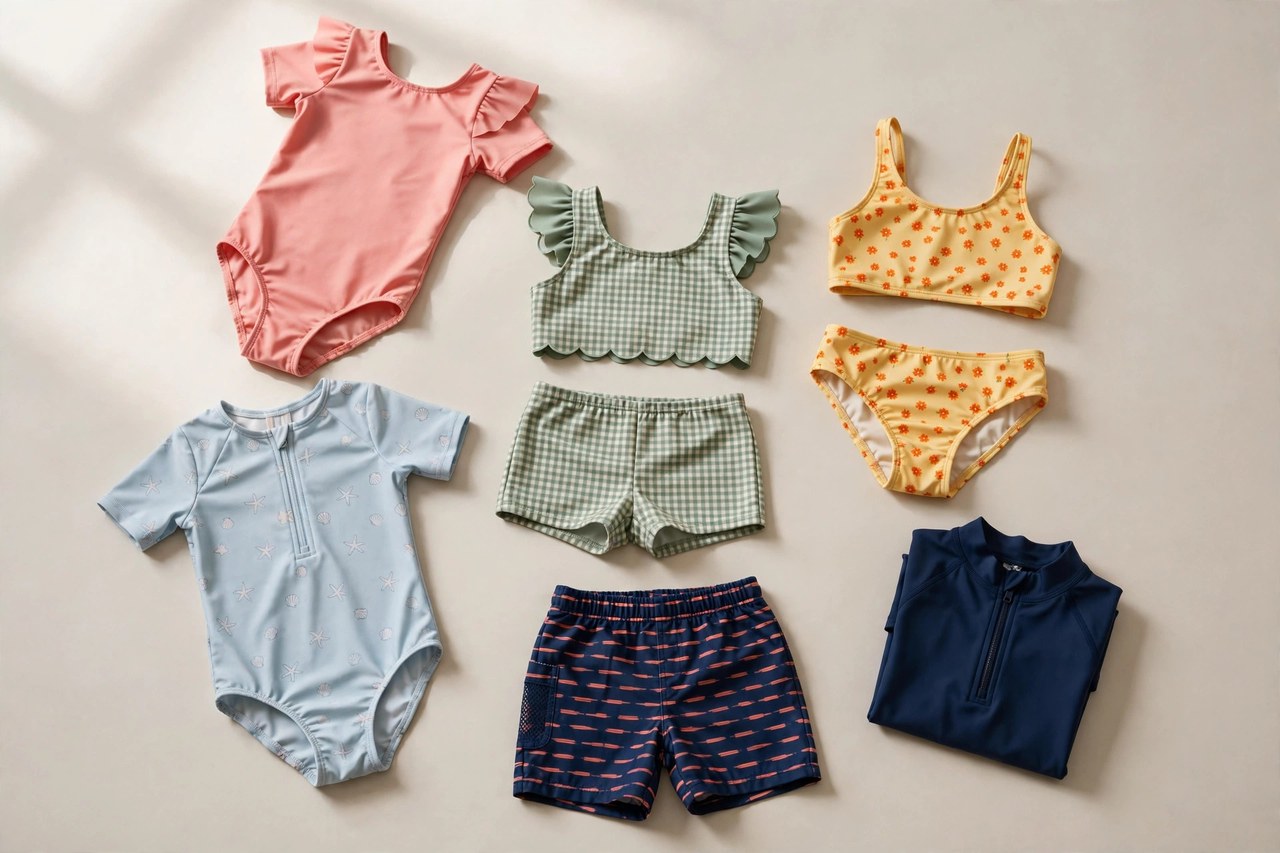
A children's bathing suit is a technical garment before it is a decorative one: it has to stay in place in water, dry quickly between swims, resist chlorine, salt and sunscreen, and increasingly, block ultraviolet light while it does all of that. The main constructions are the one-piece suit, the tankini, the two-piece set and the rash guard worn alone or over another suit, plus swim shorts and skirts offered as separates. Each construction suits a different mix of swimming lessons, beach days and holiday use, which is why this guide works through construction and fabric first.
Start with where the suit will actually be used. A weekly lesson in a chlorinated indoor pool punishes fabric differently from a fortnight of sea swimming, and a suit bought for a holiday may spend the rest of the year in a drawer, by which time sizes have moved on. Chlorine-resistant fabric is worth its small premium for lesson suits, while holiday suits benefit more from high ultraviolet protection ratings and quick-drying knits. Naming the main use before shopping prevents the common outcome: a pretty suit that fades, slackens and goes baggy halfway through the season it was bought for.
Constructions: One-Piece, Tankini and Rash Guards
The one-piece is the workhorse for lessons and swim clubs: a single garment with shoulder straps, sometimes crossed or racer-backed so straps stay in place during dives and tumble turns. Cross-back and racerback cuts also distribute pull across the shoulders, which helps the suit keep its shape. Two-piece sets and tankinis separate top from bottom, which makes changing and bathroom trips simpler, and lets a replacement bottom be bought alone. Tankini tops that overlap the waistband of the bottoms avoid a gap when arms lift overhead in the water.
Rash guards, also sold as swim shirts, add a short or long sleeve to the system and are the most effective construction for sun protection, because fabric coverage does not wash or sweat off the way lotion does. They are sold with ultraviolet protection factor ratings, commonly UPF 50, and are worn over a one-piece or with swim shorts or bikini bottoms. A front zip on a rash guard makes it far easier to remove when wet and clinging. For pool-only use, a rash guard adds drag, so most lesson swimmers leave it for the beach, the outdoor pool and holiday swimming.
Fabrics, UPF and Lining
Swim fabrics are knitted blends built around nylon or polyester with elastane for stretch and recovery. Polyester-based suits, including those woven from chlorine-resistant yarns, hold colour and shape longest in treated pools; nylon feels softer and fits smoothly but degrades faster under repeated chlorine exposure, going thin and losing snap. The elastane percentage, often between fifteen and twenty-five percent, decides how firmly the suit holds its fit: higher elastane gives a snugger hold and tires sooner, so a lesson suit benefits from a chlorine-resistant base yarn more than from extra stretch.
Ultraviolet protection is a property of the knit itself, its density, colour and fibre, and a labelled UPF rating is tested performance rather than a marketing phrase. Darker and brighter colours generally block more light than pale pastels at the same knit density. Lining deserves a look inside the garment before buying: a front-lined suit keeps its shape and opacity in the water, mesh linings drain faster than solid ones, and gusset linings in bottoms are a construction detail that affects both comfort and durability across a season of heavy use.
Sizing, Care and Getting a Full Season
Swimwear sizing runs by age, height or torso length depending on the maker, and torso length is the deciding measurement for a one-piece: too short and straps dig and the suit rides, too long and the fabric sags and fills with water. Fit a new suit dry and snug, because every swim knit relaxes slightly when wet; a suit that feels merely comfortable in the changing room will feel loose by the third length of the pool. Adjustable straps and tie-back closures extend the useful fit across a growth spurt better than fixed straps do.
Rinse a suit in clean, cool water straight after swimming, since chlorine, salt and sunscreen lotions all keep working on the fibres while the suit sits damp in a bag. Wash gently by hand or in a mesh bag on a delicate cycle, avoid wringing, which breaks elastane, and dry in shade out of direct sun, which fades colour and perishes stretch. Never leave a wet suit balled in a swim bag overnight; that habit alone accounts for most of the musty smell and ruined elasticity blamed on fabric quality, and a simple rinse-and-hang routine doubles the working life of a lesson suit.
Common Questions
What does UPF 50 on a children's bathing suit mean?
It is a tested rating saying the fabric lets roughly one fiftieth of ultraviolet light through. Coverage from a rash guard keeps working in the water, unlike lotion, which needs reapplying after swimming.
Which fabric survives weekly swimming lessons best?
A polyester-based, chlorine-resistant knit. It holds colour and stretch in treated pool water far longer than standard nylon blends, which thin and lose recovery under repeated chlorine exposure.
Should a new bathing suit feel tight when dry?
Snug, yes. Swim knits relax when wet, so a suit that feels only comfortable in the changing room will ride and sag in the pool. Torso length is the measurement to check on a one-piece.
More in Children's Clothes Guide G
The G letter hub and the guides closest to this one:
More to Explore on Apparel Search
Looking for Children's Clothing Stores?
This guide helps you choose children's girls bathing suits. To browse where to buy, visit our children's clothing store directory, where you can find retailers that carry them.