Children's Girls Clothes Guide
Girls clothes make most sense when they are planned as a wardrobe system rather than bought as isolated pieces, because a child's week is a repeating pattern: school or nursery days, one or two activity outfits, something smarter for family occasions, sleepwear every night and weather layers over all of it. The garments in this guide are the categories that pattern is built from: tops, bottoms, dresses, knitwear, outerwear, underlayers and sleepwear. When each category holds a few pieces that combine freely with the others, mornings get simpler and the cost per wear of everything drops.
Shop Children's Girls Clothes Now
Shop Children's Girls Clothes on Amazon Shop Children's Girls Clothes on eBayThe Amazon and eBay links on this page are affiliate links. If you make a purchase through them, Apparel Search may earn a commission.
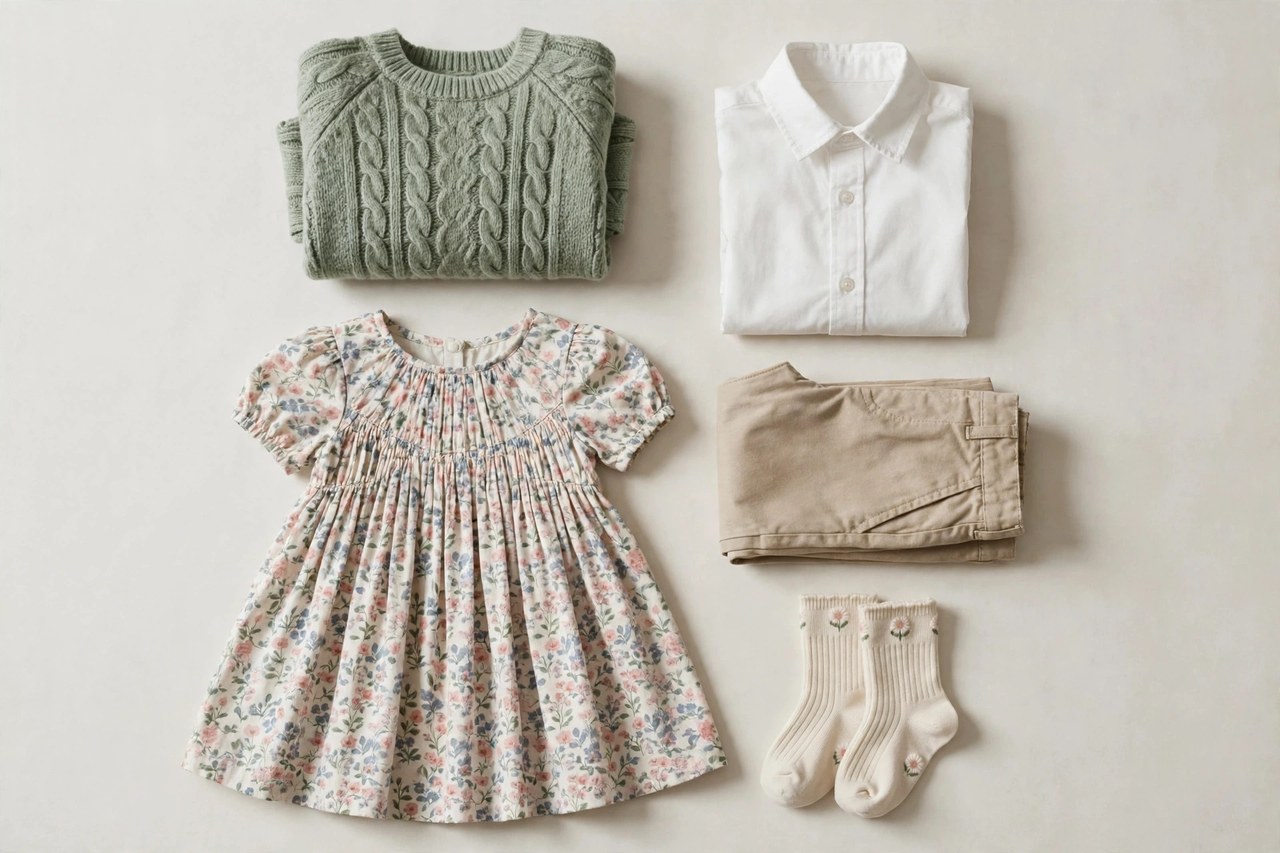
Girls clothes make most sense when they are planned as a wardrobe system rather than bought as isolated pieces, because a child's week is a repeating pattern: school or nursery days, one or two activity outfits, something smarter for family occasions, sleepwear every night and weather layers over all of it. The garments in this guide are the categories that pattern is built from: tops, bottoms, dresses, knitwear, outerwear, underlayers and sleepwear. When each category holds a few pieces that combine freely with the others, mornings get simpler and the cost per wear of everything drops.
The system fails in predictable places. A beautiful dress with nothing to layer over it in cold weather, trousers that only match one top, or a wardrobe heavy on party clothes and light on hard-wearing everyday pieces all create the familiar complaint of a full drawer and nothing to wear. Thinking in categories first, and in individual garments second, prevents those gaps. It also makes shopping lists honest: you can see which category is actually short instead of discovering it on the morning a clean pair of trousers does not exist.
The Core Categories and How They Combine
Everyday tops divide into short and long sleeves, with a handful of each covering most of the year when a cardigan or sweater layers over them in cold spells. Bottoms divide by weather and activity: trousers and leggings for climbing and cycling, shorts for heat, skirts with built-in or separate shorts beneath for school and play. A sensible rule is that every bottom should work with at least three tops already in the drawer; a piece that demands a special partner garment earns its place rarely and usually at party level.
Dresses sit in two groups, everyday jersey dresses that play as hard as trousers do, and occasion dresses kept back for events, which the gowns and dresses guides cover in depth. Knitwear bridges seasons: one warm sweater, one lighter cardigan and a fleece cover most layering needs. Outerwear anchors the system because it is worn over everything and seen most, so coats deserve the largest share of the budget after shoes. Sleepwear and underwear are the high-turnover categories where quantity matters more than distinction, since they cycle through the wash fastest.
Sizing, Growth and Buying Ahead
Children's clothing sizes are sold by age, by height, or by both, and height is the more trustworthy of the two, because two children of the same age can differ by a full size in either direction. Measure height, chest, waist and inside leg twice a year, at the natural change of seasons, and write the figures inside the wardrobe door or in a phone note; those four numbers settle most size arguments in a shop or on a size chart. Fit varies by brand enough that keeping to two or three known brands for basics makes repeat buying far more reliable.
Growth changes the replacement rhythm: in the early school years many children move a size every nine to fifteen months, so buying far ahead in sales is a gamble that pays only when the garment is a classic basic with an adjustable waist or a generous cut. Adjustable waistbands, turn-up hems and raglan sleeves all buy extra months from a garment. The expensive mistake is the special-occasion outfit bought a season early; the cheap mistake is underbuying the basics, which leads to midweek emergency purchases at full price in the wrong size.
Washing Loads, Rotation and Passing On
A wardrobe system only works if the laundry keeps up with it, so quantity decisions are really washing decisions. Enough school-day sets to cover the gap between wash days, plus one spare, is the working formula for most households, and it explains why basics are sold in multipacks. Rotating wear evenly across those sets spreads fading and knee wear, so all of them reach the end of a size in similar condition, ready to hand down together rather than one exhausted favourite and four nearly new pieces nobody liked.
Passing clothes on is where the system pays its second dividend. Garments bought in combining colours survive mixing into a younger sibling's wardrobe, outgrown categories can be stored by size in labelled boxes, and a note of what is stored stops duplicate buying. Before storing, wash, dry fully and mend the small faults, a missing button or a loose hem, because stored clothes are only found again on a busy morning when there is no time to repair them. Kept this way, a girls wardrobe stops being a stream of emergencies and becomes stock that several children can draw on in turn.
Common Questions
How many everyday outfits does a child actually need?
Enough sets to cover the gap between your wash days, plus one spare set. That formula, rather than a fixed number, prevents both overbuying and the midweek hunt for clean trousers.
Which measurement matters most for girls clothing sizes?
Height, supported by chest, waist and inside leg. Age labels mislead because children of one age vary by a full size, while height tracks how brands actually grade their patterns.
What makes clothes combine into a working wardrobe?
Pieces bought in a shared colour family, with every bottom matching at least three tops already owned. That rule turns separate garments into outfits and cuts cost per wear sharply.
More in Children's Clothes Guide G
The G letter hub and the guides closest to this one:
Looking for Children's Clothing Stores?
This guide helps you choose children's girls clothes. To browse where to buy, visit our children's clothing store directory, where you can find retailers that carry them.