Children's Girls Dresses Guide
A girls dress wardrobe usually does three jobs at once: comfortable everyday dresses for school and play, smarter dresses for family occasions, and one or two celebration pieces for parties, holidays and photographs. The styles that succeed are the ones matched honestly to those jobs. A dress with a full skirt and a soft jersey bodice will be reached for constantly, while a stiff, dry-clean-only party dress earns its price only if there are real events on the calendar to wear it to.
Shop Children's Girls Dresses Now
Shop Children's Girls Dresses on Amazon Shop Children's Girls Dresses on eBayThe Amazon and eBay links on this page are affiliate links. If you make a purchase through them, Apparel Search may earn a commission.
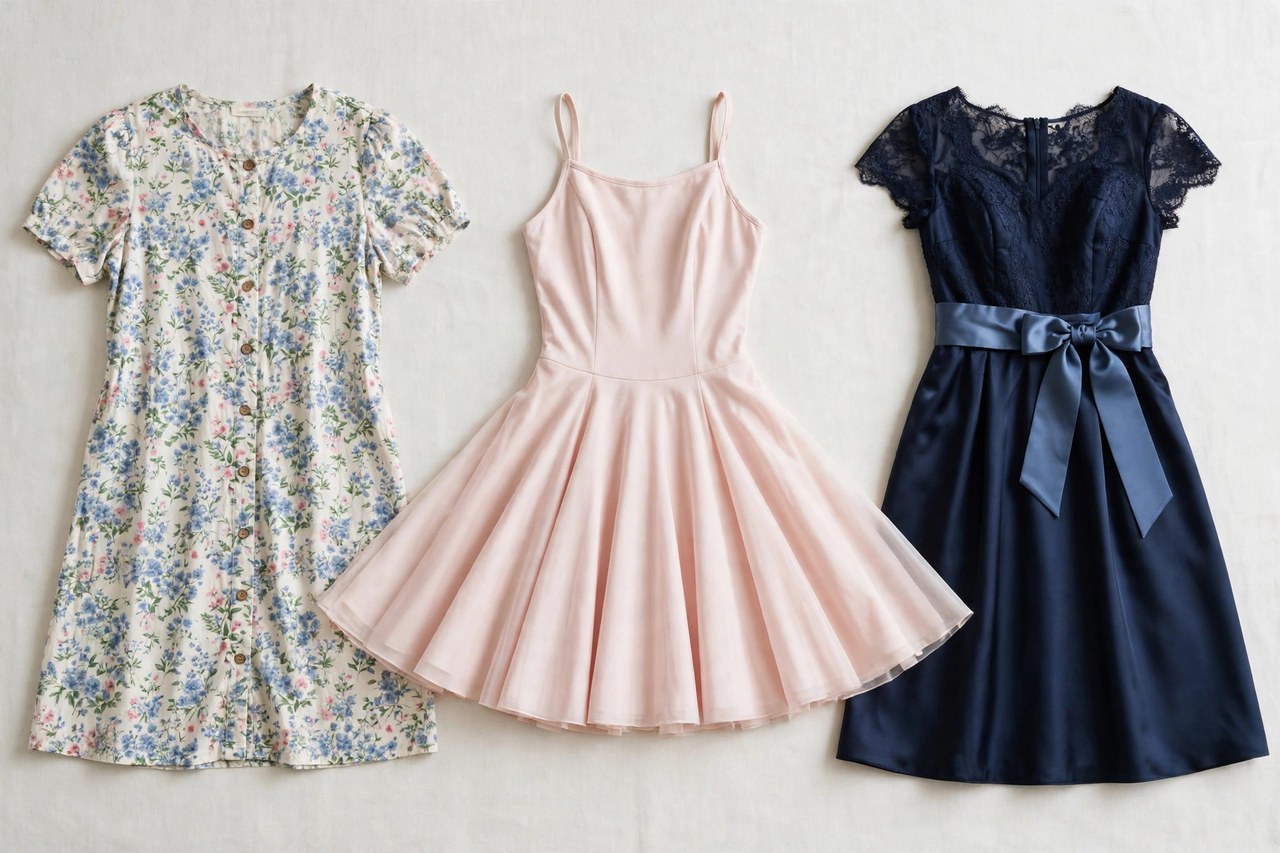
A girls dress wardrobe usually does three jobs at once: comfortable everyday dresses for school and play, smarter dresses for family occasions, and one or two celebration pieces for parties, holidays and photographs. The styles that succeed are the ones matched honestly to those jobs. A dress with a full skirt and a soft jersey bodice will be reached for constantly, while a stiff, dry-clean-only party dress earns its price only if there are real events on the calendar to wear it to.
Start by sorting dresses by how the child will actually move in them. Playground dresses need washable fabrics, secure closures and hems that allow running and climbing, while occasion dresses can trade some practicality for structure, shine and detail. Length matters for comfort as well as looks: very long hems trip younger girls on stairs, and very short ones need leggings or shorts underneath for school. A small, well-chosen rotation beats a rail of similar dresses that all suit the same single occasion.
Silhouettes for Every Season and Occasion
The skater or fit-and-flare dress, fitted through the bodice and flaring from the waist, is the most forgiving everyday shape and the one most girls describe as twirly. A-line dresses hang straighter from the shoulder and suit smocked, embroidered and traditional styles for younger children. Shift and swing dresses in knit fabrics pull on with no fastenings at all, which helps independent dressing, while wrap and faux-wrap bodices give a dressed-up line that still adjusts as a child grows through a season.
For formal occasions, look at tiered tulle skirts, satin sashes and lined bodices, but check the total weight, because heavily layered skirts can drag and tire a small wearer at a long event. Sleeveless sundresses layer over tees in spring and under cardigans in autumn, extending their season considerably. Long-sleeve knit dresses and jumper or pinafore styles worn over blouses cover the cold months, and a pinafore with adjustable straps is one of the longest-fitting garments in a young wardrobe, working first as a dress and later almost as a tunic.
Fabrics, Linings and Finishing Details
Cotton jersey is the workhorse everyday fabric: soft, breathable, washable and forgiving of stains after treatment. Woven cotton poplin and lawn feel crisper and hold prints sharply for summer dresses, while corduroy and velvet bring warmth and richness to winter styles. Party fabrics such as organza, tulle and satin look beautiful but snag, crease and often need careful spot cleaning, so weigh the care label against how often the dress will realistically be worn before paying a premium for them.
A lined bodice is the clearest sign of a well-made occasion dress, because lining protects skin from scratchy seams, sequins and embroidery backing. Check that zips run smoothly and are guarded at the top so they do not catch skin or hair, and that buttons are sewn through both fabric layers with a small shank. Sashes should be attached at the side seams so they cannot be lost in the wash. Inside-out construction, with enclosed seam allowances, also stops the itching that makes children refuse an otherwise lovely dress.
Getting the Fit Right and Keeping Dresses Fresh
Measure chest and height rather than trusting age sizes, which vary widely between brands, and remember that dress fit is decided mostly at the chest and shoulders: the waist of most girls styles is shaped by a sash or elastic rather than a fixed measurement. Leave a finger of ease at the chest so the wearer can sit, reach and eat comfortably at an event. If a dress is bought ahead for a specific date, choose the size that fits two weeks before, not months of hoped-for growth.
Wash everyday knit dresses inside out in cool water to protect prints and appliques, and treat food stains promptly, since party food is the main enemy of occasion wear. Hang woven dresses by their hanging loops rather than the shoulders to avoid stretching, and store special dresses in a breathable garment bag rather than sealed plastic. A loose button resewn the same evening and a hem pressed before it is needed again keep the small rotation ready, which is the whole point of buying fewer, better-chosen dresses.
Common Questions
Which dress shape works best for everyday wear?
A fit-and-flare skater dress in cotton jersey, because it pulls on easily, washes well, allows full movement and still looks neat for school and family days.
How can you tell a well-made party dress?
Look for a lined bodice, enclosed seams, a smooth guarded zip and a sash attached at the side seams, all of which prevent itching and lost parts.
Should dresses be bought by age size?
No. Measure chest and height, since age labels vary between brands and dress fit is decided mainly at the chest and shoulders.
More in Children's Clothes Guide G
The G letter hub and the guides closest to this one:
Looking for Children's Clothing Stores?
This guide helps you choose children's girls dresses. To browse where to buy, visit our children's clothing store directory, where you can find retailers that carry them.