Children's Gowns Guide
A children's gown is the formal end of the dress family: a long, deliberately dressy garment kept for occasions where an ordinary party dress would look underdone. Weddings, christenings, first communion celebrations, formal recitals, pageants and studio portraits are its natural territory. Length is the defining feature, since most gowns reach the ankle or the floor, and that length changes everything about how the garment is chosen, fitted, transported and cared for compared with the shorter dresses a child wears through the rest of the year.
Shop Children's Gowns Now
Shop Children's Gowns on Amazon Shop Children's Gowns on eBayThe Amazon and eBay links on this page are affiliate links. If you make a purchase through them, Apparel Search may earn a commission.
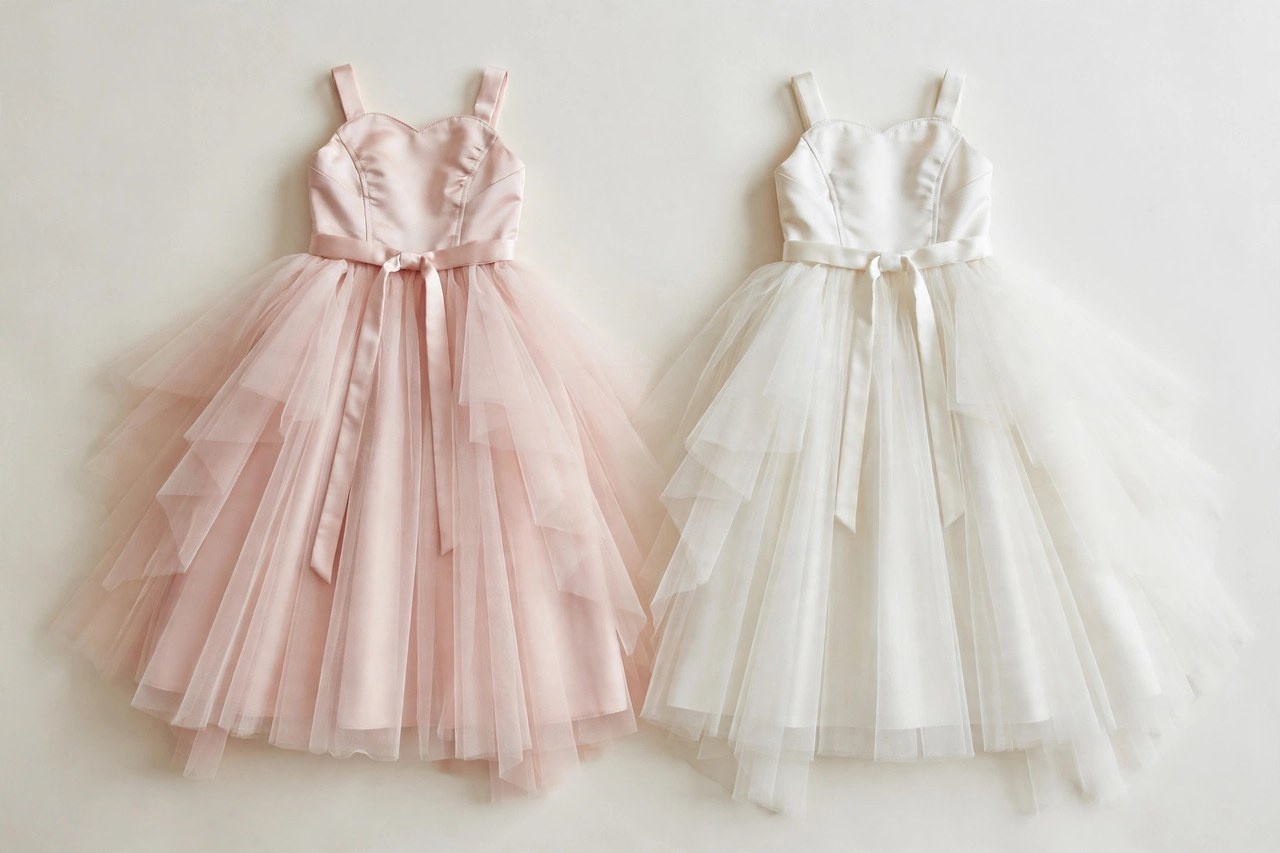
A children's gown is the formal end of the dress family: a long, deliberately dressy garment kept for occasions where an ordinary party dress would look underdone. Weddings, christenings, first communion celebrations, formal recitals, pageants and studio portraits are its natural territory. Length is the defining feature, since most gowns reach the ankle or the floor, and that length changes everything about how the garment is chosen, fitted, transported and cared for compared with the shorter dresses a child wears through the rest of the year.
Because a gown is usually bought for one named event, the purchase works backwards from that date. The event sets the formality level, any colour expectations from a wedding party, and the deadline by which alterations must be finished. It also sets the growth risk: a gown bought four months early for a fast-growing child may need its hem and waist revisited before the day. Buying closer to the event, while leaving a fortnight for adjustments, is the safer pattern for most families, even when an early bargain looks tempting.
Bodices, Skirts and Fabrics
Most children's gowns are built in two parts: a structured bodice that carries the fit, and a skirt that carries the drama. Bodices may be satin, lace over a lining, or lightly boned in older children's pageant styles, and they close with a back zip, corset-style lacing or covered buttons. Lacing is the forgiving option, since it adjusts across a small range of waist sizes and growth. Skirts range from a smooth A-line in satin to layered tulle over a lining, sometimes with a detachable underskirt adding volume that can be removed for the journey home.
Fabric choice sets both the look and the workload. Satin photographs beautifully but shows creases, water spots and every tug mark, and polyester satin is far more forgiving than silk at children's prices. Tulle hides minor creases and travels well but snags on rough surfaces and collects static in dry indoor air. Organza gives crisp volume with less weight, while velvet suits winter events and hides handling marks best of all. Whatever the outer fabric, check the lining: a smooth, fully lined bodice and a skirt lining that reaches past the tulle layers make the difference between a gown worn happily all day and one complained about within the hour.
Length, Fit and Alterations
Hem length is the measurement to get right, and it must be set with the shoes that will be worn on the day, since an extra inch of heel or a flat ballet-style shoe changes where the skirt falls. For an event with dancing, stairs or outdoor photographs, a hem that just clears the floor is far more practical than a trailing one, which gets stepped on by its wearer and everyone nearby. Younger children in particular should be able to walk, climb steps and sit cross-legged in a trial run at home before the event decides the question in public.
Fit at the bodice should allow two fingers at the waist and free movement of the arms overhead; straps on sleeveless styles should be shortened rather than left to slip. Sensible makers leave generous seam allowances and a deep hem, so a gown can be let down a size the following year for a sibling or a second event. Ask about those allowances when buying if hand-me-down use is part of the plan. Sashes deserve attention too: a sash that ties in a bow looks charming and adjusts the waist, but a stitched-down centre front stops it migrating up the bodice during wear.
Care, Storage and Reuse
Most children's gowns are labelled dry clean only, and the label deserves respect where beading, glued sequins or layered tulle are involved, since home washing can shift embellishments and cloud satin. Attend to spills on the day with blotting rather than rubbing, and keep the gown away from party food and felt-tip pens until photographs are safely taken. After the event, have it cleaned before storage rather than months later, because invisible sugar and drink marks oxidise in a wardrobe and reappear as yellow patches that no later cleaning fully removes.
Store a gown hanging from its internal loops, never by thin shoulder straps, inside a breathable cotton garment bag in a cool, dark place; plastic bags trap moisture and can yellow pale fabrics over time. Fold tulle skirts as little as possible, and steam rather than iron to release travel creases, holding the steamer back from glued decoration. A gown stored well has several lives available: a sibling's event, a costume box upgrade that outclasses shop-bought dressing-up clothes, or resale while the style is still current, with the cleaned, bagged condition justifying a better price.
Common Questions
How long should a child's gown be for a wedding?
Fit the hem with the event shoes on and aim for just clearing the floor. That length photographs formally but still allows walking, stairs and dancing without the skirt being stepped on.
Is satin or tulle better for a children's gown?
Tulle is more forgiving: it hides creases, travels well and weighs little. Satin looks sleeker in photographs but marks easily, so polyester satin is the practical version at children's prices.
When should a gown be cleaned after an event?
Before storage, not months later. Invisible drink and sugar marks oxidise in a wardrobe and turn into yellow patches that later cleaning cannot fully remove, so clean first, then bag and hang it.
More in Children's Clothes Guide G
The G letter hub and the guides closest to this one:
Looking for Children's Clothing Stores?
This guide helps you choose children's gowns. To browse where to buy, visit our children's clothing store directory, where you can find retailers that carry them.