Children's Swimwear Guide
Children's swimwear is the clothing made for the water: swimwear is clothing designed and manufactured to be used for swimming, though it can also be worn for lounging by a pool or beach, and swimwear, swimsuits and bathing suits are basically all the same type of clothes. This guide stays strictly with the garments as products — suits, swim shorts, swim shirts and their fabrics, fit and care — and covers the family whole, including two specialist pieces: board shorts and swim shirts.
Shop Children's Swimwear Now
Shop Children's Swimwear on Amazon Shop Children's Swimwear on eBayThe Amazon and eBay links on this page are affiliate links. If you make a purchase through them, Apparel Search may earn a commission.
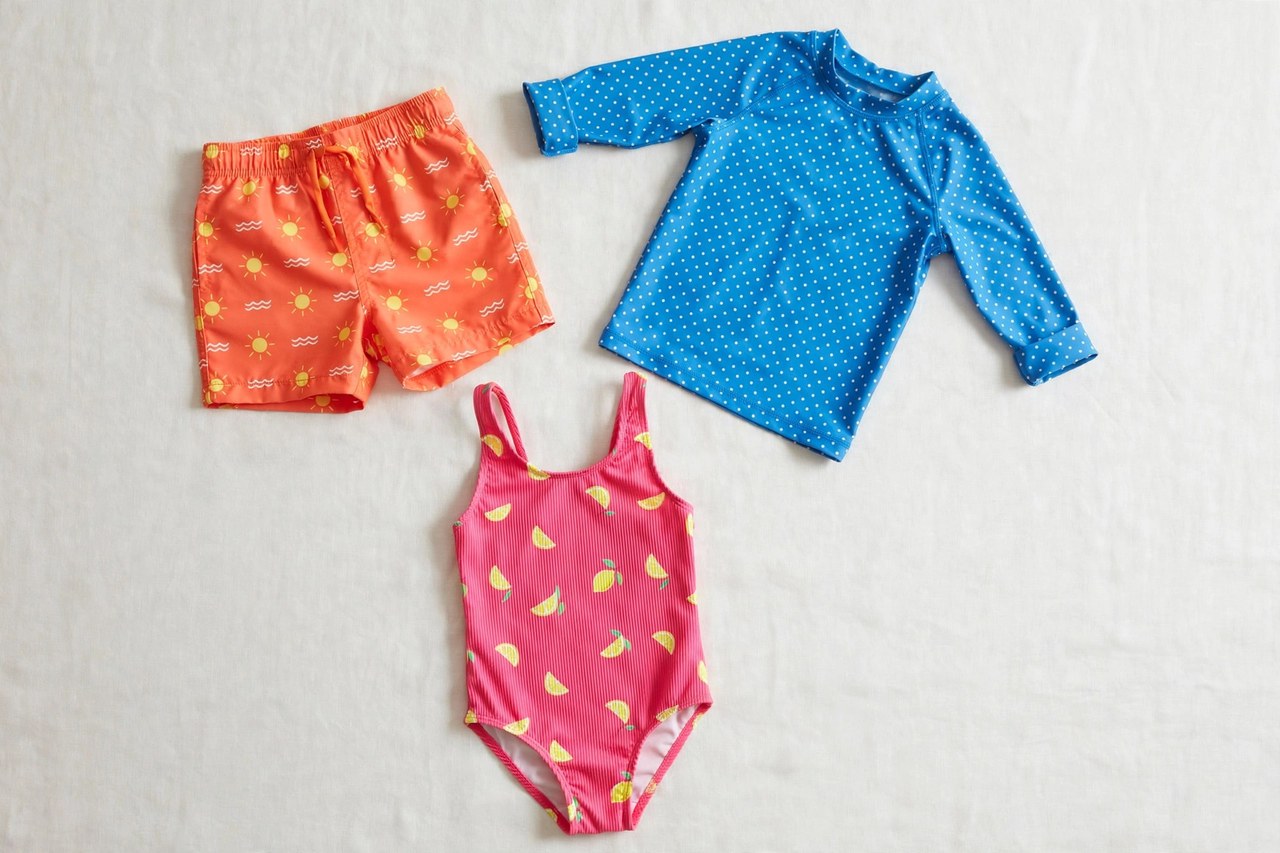
Children's swimwear is the clothing made for the water: swimwear is clothing designed and manufactured to be used for swimming, though it can also be worn for lounging by a pool or beach, and swimwear, swimsuits and bathing suits are basically all the same type of clothes. This guide stays strictly with the garments as products — suits, swim shorts, swim shirts and their fabrics, fit and care — and covers the family whole, including two specialist pieces: board shorts and swim shirts.
Swimwear is bought differently from every other category in this letter: it must fit closely enough to swim in, survive chlorine and salt, dry fast, and — in sunny places — double as sun protection. A suit that is charming on a hanger and wrong in the water fails at its only job, so every test in this guide is a water test.
The Swimwear Family: Suits, Swim Shorts and Swim Shirts
One-piece swimsuits are the secure, streamlined standard for swimming lessons and active water play: no waistband to slip, no top to ride up. Two-piece and tankini styles trade a little of that security for easier bathroom trips, which matters enormously for younger children in a wet suit. Swim shorts and trunks, worn by children of every gender, range from brief fitted styles for lessons to longer board shorts — loose, quick-dry shorts with a fixed waist — for beach and casual swimming.
Swim shirts, also called rash guards, are the family's modern essential: close-fitting tops in quick-dry fabric, short or long sleeved, that protect shoulders and backs from sun and from friction on boards, pool edges and slides. Rated UPF fabric blocks ultraviolet far more reliably than a wet cotton t-shirt, which protects almost nothing and drags heavily in water — never substitute an ordinary tee for a swim shirt where sun or swimming is serious. For the youngest children, swim nappies are the required base layer under any suit in most pools.
Bought by the numbers, those shirts belong to a rated category of their own: our sun-protective clothing for kids guide covers UPF ratings, coverage suits, legionnaire hats and swim leggings, with sizing-for-growth and school-and-camp practicality.
Fabrics, Fit and Chlorine, Salt and Sun
Swimwear fabrics are nylon or polyester blended with elastane, and the choice matters: polyester resists chlorine far better and is the lesson-pool choice, while nylon blends feel softer and suit occasional sea swimming. Elastane gives the close fit and loses its spring to chlorine, heat and time — a suit that has gone baggy and thin has lost its elastane and its job. Seams should be flat, straps wide enough not to dig, and any lining smooth, because wet fabric against skin for hours finds every rough edge.
Fit swimwear close, in the child's current size: it should stay in place through a jump, a dive and a swim length without adjustment, with straps that do not slide and a waistband that holds when wet — remember that fabric relaxes in water, so a suit that feels merely snug dry is right, and one that feels loose dry will wander. Growing room does not work in swimwear the way it works in sweaters; a too-big suit drags, fills with water and gets left in the bag. Buy the lesson suit in the size for this term.
Care: Rinsing, Drying and Making a Suit Last
Rinse every suit in clean cold water immediately after swimming — chlorine and salt left in the fabric are what eat elastane — then wash gently as labels direct, and dry in shade out of direct sun, which fades colours and ages fabric. Never wring a suit hard, never leave it balled wet in the swim bag, and never tumble-dry it. On holiday, two suits in rotation let each dry fully between swims, which doubles comfort and life; a single suit worn damp daily degrades in a fortnight.
Retire a suit when it goes translucent, baggy or rough-textured, or when straps and waistbands stop recovering — in a lesson context a failed suit is a distraction a teacher cannot fix. Keep the holiday suit and the lesson suit as separate purchases where budget allows: the chlorine-resistant lesson suit takes the weekly pool, the brighter beach suit takes the sea. Hand down only suits with full elasticity and opacity intact. Picked in polyester for lessons, fitted close for this term and rinsed every single time, children's swimwear does its wet, bright work exactly as designed.
Common Questions
What counts as children's swimwear?
Clothing designed to be used for swimming — swimsuits, bathing suits, swim shorts and swim shirts are all the same family, though the clothes also serve for lounging by a pool or beach. Board shorts and swim shirts are the family's specialist pieces.
Why should a swim shirt be worn instead of a wet t-shirt?
A swim shirt or rash guard in rated UPF fabric protects shoulders and backs from sun and friction, dries fast and stays light in water. A wet cotton t-shirt protects almost nothing against ultraviolet, drags heavily and chills the child. Ordinary tees are not a substitute where sun or swimming is serious.
How do you make children's swimwear last?
Rinse in clean cold water immediately after every swim to remove chlorine and salt, wash gently as labels direct, and dry in shade — never wrung hard, never balled wet in the bag, never tumble-dried. Polyester suits resist chlorine best for lessons. Retire suits that go baggy, thin or translucent.
More in Children's Clothes Guide S
The S letter hub and related S guides:
Looking for Children's Clothing Stores?
This guide helps you choose children's swimwear. To browse where to buy, visit our children's clothing store directory, where you can find retailers that carry them.