Children's Sleepwear Guide
Children's sleepwear is the clothing made for bed: this type of clothing can be thought of as pajamas or other clothing suitable for wearing in bed. This guide stays strictly with the garments as products — sets, nightdresses, fabrics, fit and the safety standards that govern this category more than any other in children's clothing. Sleepwear is the one category where regulations, not fashion, set the rules, and the governing texts are linked directly in the references on this page.
Shop Children's Sleepwear Now
Shop Children's Sleepwear on Amazon Shop Children's Sleepwear on eBayThe Amazon and eBay links on this page are affiliate links. If you make a purchase through them, Apparel Search may earn a commission.
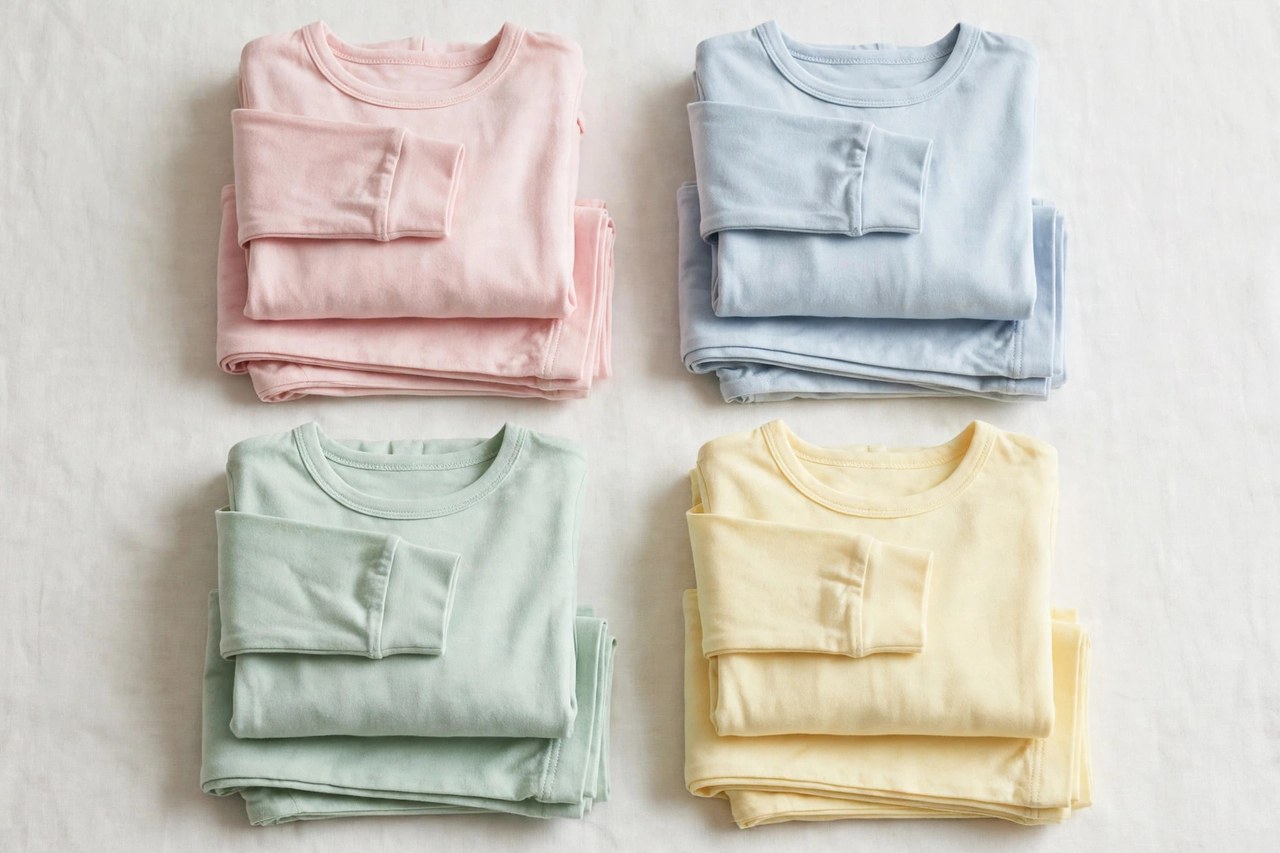
Children's sleepwear is the clothing made for bed: this type of clothing can be thought of as pajamas or other clothing suitable for wearing in bed. This guide stays strictly with the garments as products — sets, nightdresses, fabrics, fit and the safety standards that govern this category more than any other in children's clothing. Sleepwear is the one category where regulations, not fashion, set the rules, and the governing texts are linked directly in the references on this page.
The pajamas guide under P covers the two-piece set in depth. This page takes the whole sleepwear wardrobe: pajama sets, nightdresses, onesie-style sleep suits for the youngest children, bathrobes for the trip to the bathroom, and the seasonal rotation between them. Judge sleepwear by three tests only: is it safe under the regulations, is it comfortable enough to sleep in all night, and does it wash well enough to survive being worn a third of a child's life?
The Safety Regulations That Govern Sleepwear
Children's sleepwear is subject to flammability rules that do not apply to ordinary day clothes, because children in nightwear are near bedding, heaters and — in the accidents the rules were written after — flames. In the United States, the U.S. Consumer Product Safety Commission's Children's Sleepwear Regulations, at 16 C.F.R. Parts 1615 and 1616, require sleepwear to be flame resistant or to fit snugly, since close-fitting garments resist ignition and burn more slowly than loose, airy ones. The CPSC regulations page and the regulation text itself are both linked in this page's references.
What this means at the rail is simple. Sleepwear sold as snug-fitting will be labelled as such and must genuinely fit close — a snug-fit set bought two sizes up for growing room defeats the design the safety case rests on. Loose sleepwear must be made from fabric that meets the flame-resistance standard. Either way, never substitute ordinary day clothes with loose, flowing fabric as informal sleepwear for young children without thinking about it, and treat hand-me-down sleepwear whose labels have washed away with caution: if you cannot tell which standard it met, retire it.
Fabrics, Fit and Comfort Through the Night
Within the regulations, comfort decides what gets slept in. Cotton is breathable, soft and the year-round default; cotton with a touch of elastane keeps a snug fit comfortable. Brushed cotton and flannel serve winter. Lightweight cotton or cotton-modal serves summer, when many children sleep in a short set or a plain top. Seams should be flat or soft — a scratchy seam that goes unnoticed in a shop fitting room announces itself at two in the morning — and necklines, cuffs and waistbands should sit without digging, since sleepwear is worn longer in one stretch than any day garment.
Fit for sleep is its own standard. Snug-fit styles fit as described above. Loose styles should still be sized to the child now, not the child next year: trailing legs trip on night-time bathroom trips and excess fabric twists in bed. Sleeve and leg lengths should clear hands and feet. For the youngest children, sleep suits with enclosed feet remove the lost-sock problem, and envelope necks and two-way zips — where fitted — make night changes faster, which everyone in the house appreciates.
Rotation, Care and When to Retire Sleepwear
Sleepwear earns a rotation like school uniform: three sets in use means one being worn, one in the wash and one ready, and no set takes a wash every second night, which is what kills elastic and fades cotton fastest. Wash sleepwear with the regular family wash as labels direct, keep snug-fit sets out of very hot tumble cycles that relax their fit, and replace sets whose elastic has gone, whose fabric has thinned, or whose snug fit no longer fits snugly — that last point is a safety standard, not a style preference.
Hand sleepwear down only with its labels legible and its fit standard intact, and retire anything doubtful without regret — this is the one category where the cautious answer is always right. Keep a spare set at grandparents' houses and in the holiday bag from the rotation rather than buying special sets. Chosen by regulation first, comfort second and washability third, children's sleepwear does the quietest job in the wardrobe: a third of childhood, spent asleep, in garments that were picked properly.
Common Questions
What rules govern children's sleepwear safety?
In the United States, the CPSC Children's Sleepwear Regulations at 16 C.F.R. Parts 1615 and 1616 require children's sleepwear to be flame resistant or to fit snugly, since close-fitting garments resist ignition. The CPSC regulations page and the regulation text are both linked in this page's references.
Why must snug-fit sleepwear actually fit snugly?
Because the safety case for snug-fit sleepwear rests on the close fit itself: loose, airy fabric ignites and burns more readily. A snug-fit set bought two sizes up for growing room defeats that design. Buy the child's current size and replace the set when it no longer fits as intended.
How many sleepwear sets does a child need?
Three in rotation is the working standard: one being worn, one in the wash, one ready. Rotation means no single set takes a wash every second night, which is what wears out elastic and fabric fastest. Keep a spare from the rotation for grandparents' houses and holidays.
More in Children's Clothes Guide S
The S letter hub and related S guides:
More to Explore on Apparel Search
Looking for Children's Clothing Stores?
This guide helps you choose children's sleepwear. To browse where to buy, visit our children's clothing store directory, where you can find retailers that carry them.