Children's Pajamas Guide
Pajamas - also spelled pyjamas, and shortened to PJs, jimmies, jimjams or jammies - are loose-fitting, two-piece garments worn chiefly for sleeping, but sometimes also for lounging. A children's pajama set is normally a top and a matching bottom sold together, and this guide stays strictly product-focused: the fabrics, the fit, the construction and the safety standard that children's sleepwear, uniquely in a child's wardrobe, is required to meet.
Shop Children's Pajamas Now
Shop Children's Pajamas on Amazon Shop Children's Pajamas on eBayThe Amazon and eBay links on this page are affiliate links. If you make a purchase through them, Apparel Search may earn a commission.
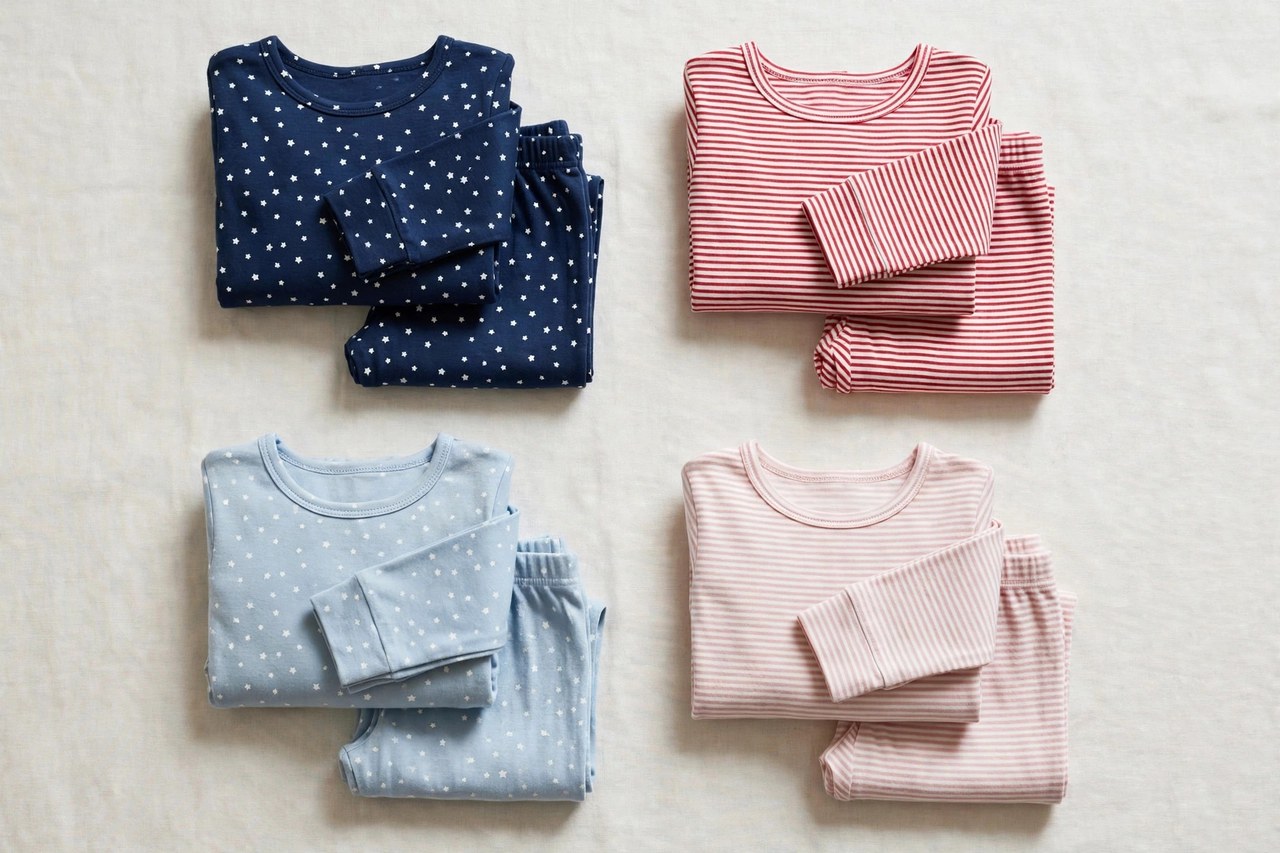
Pajamas - also spelled pyjamas, and shortened to PJs, jimmies, jimjams or jammies - are loose-fitting, two-piece garments worn chiefly for sleeping, but sometimes also for lounging. A children's pajama set is normally a top and a matching bottom sold together, and this guide stays strictly product-focused: the fabrics, the fit, the construction and the safety standard that children's sleepwear, uniquely in a child's wardrobe, is required to meet.
That safety point is the one genuinely critical fact in this category, : for children's pajamas, flammability is an issue of critical importance, and the pajamas must meet the federal flammability standard for children's sleepwear. The detail sits in the U.S. Consumer Product Safety Commission's Children's Sleepwear Regulations, 16 C.F.R. Parts 1615 and 1616, linked in References below. Everything else in this guide - softness, warmth, easy washing - comes after that standard on the checklist.
Styles and Fabrics: What the Sets Are Made Of
The classic set is a long- or short-sleeved top with full-length or short bottoms, in cotton, cotton jersey, flannel for winter, or a cotton blend. Cotton and cotton jersey are breathable, soft against skin and easy to wash, which is why they dominate the category; brushed flannel adds warmth for cold houses and winter nights; lightweight woven cotton suits warm sleepers and summer. Footed one-piece styles and separate nightshirts sit alongside the two-piece sets, but the two-piece set remains the default because each half can be replaced, mixed and handed down independently.
Construction details decide comfort more than the print does. Look for flat or smoothly finished seams that will not rub through a night of turning, a soft elastic waistband that holds without digging in, cuffs at wrist and ankle that stay put without tightness, and no scratchy labels or rough embroidery against the back or chest. Buttons and snaps, where a style has them, should be firmly attached. A set that passes those checks in a plain colour will out-sleep a novelty set that fails them, however loved the novelty print is on day one.
Fit and the Flammability Standard
Children's sleepwear is sold in two broad fit families, and the label tells you which you are holding. Snug-fitting pajamas are cut close to the body, and that close fit itself is part of how they meet the federal standard, because fabric held away from the body catches more air and more risk. Flame-resistant pajamas are made from fabric treated or inherently able to meet the standard in a looser cut. Either route is legitimate; what matters is that the set carries the sleepwear labelling and is worn and sized as its maker directs - a snug-fitting set bought two sizes up for growing room is no longer the fit it was tested as.
Size by height, chest and waist against the maker's own chart rather than by age alone, and check the fit the way the standard assumes it: top close without straining, bottoms at the ankle without pooling, sleeves at the wrist. Pajamas marketed for lounging or play rather than sleep are not always made to the sleepwear standard, so for actual bedtime, choose garments sold and labelled as sleepwear. The CPSC guidance in References below is the authoritative source; this guide's job is simply to point every parent to it before style is even discussed.
Care: Washing, Drying and Knowing When to Replace
Wash pajama sets cool or warm with similar colours, and follow the label on flame-resistant fabrics in particular, since some fabric softeners and harsh treatments can affect a finish - when the care label restricts a product, obey it rather than assuming. Cotton sets soften with washing and are the easiest to keep in rotation; flannel should be washed before first wear to settle its fibres. Turn printed sleepwear inside out to protect the design, and dry as the label directs.
Replace sleepwear when the fit stops being the fit it was bought as: cuffs stretched loose, elastic gone slack, fabric thinned at knees and elbows, or a snug set outgrown into a strained one. Because sets are worn nightly and washed constantly, they work harder than almost any daytime garment, and a planned replacement rhythm - a warm-season set and a cold-season set per child, replaced as sizes change - keeps bedtime covered without drama. Choose the standard first, the fabric second and the print last, and the category does its quiet job every single night.
For children whose skin chooses the wardrobe, the same category carries a specialist branch: pajamas with fold-over mitten cuffs, enclosed feet and printed labels. Our eczema-friendly clothing for kids guide covers that branch garment by garment, alongside school-day layers and the laundry routine that goes with them.
Common Questions
What standard must children's pajamas meet?
The federal flammability standard for children's sleepwear. Flammability is an issue of critical importance for children's pajamas, and the detail is in the U.S. Consumer Product Safety Commission's Children's Sleepwear Regulations, 16 C.F.R. Parts 1615 and 1616, linked in References below.
What is the difference between snug-fitting and flame-resistant children's pajamas?
Snug-fitting sets meet the standard through their close fit, which holds fabric against the body, so they must be bought and worn in the child's true size. Flame-resistant sets meet it through the fabric itself in a looser cut. Both are legitimate; the label tells you which family a set belongs to.
Which fabric is best for children's pajama sets?
Cotton or cotton jersey for most of the year - breathable, soft and easy to wash - with brushed flannel for winter warmth and lightweight woven cotton for warm sleepers. Judge comfort by flat seams, a soft waistband and firm fastenings as much as by the fabric name.
More in Children's Clothes Guide P
The P letter hub and related P guides:
More to Explore on Apparel Search
References & Further Reading
Looking for Children's Clothing Stores?
This guide helps you choose children's pajamas. To browse where to buy, visit our children's clothing store directory, where you can find retailers that carry them.