Children's Girls Shirts Guide
Girls shirts range from the plainest short-sleeve tee to a button-front blouse with a Peter Pan collar, and most drawers work best when they hold a deliberate mix of both ends. Graphic tees and soft jersey tops carry school and weekend wear, woven blouses lift an ordinary pair of pants for photographs or performances, and a couple of long-sleeve layering shirts extend summer favorites into cooler months. Sleeve length is a quick seasonal shorthand: sleeveless and cap sleeves for high summer, short sleeves for most of the year, and full-length sleeves once layering season truly arrives.
Shop Children's Girls Shirts Now
Shop Children's Girls Shirts on Amazon Shop Children's Girls Shirts on eBayThe Amazon and eBay links on this page are affiliate links. If you make a purchase through them, Apparel Search may earn a commission.
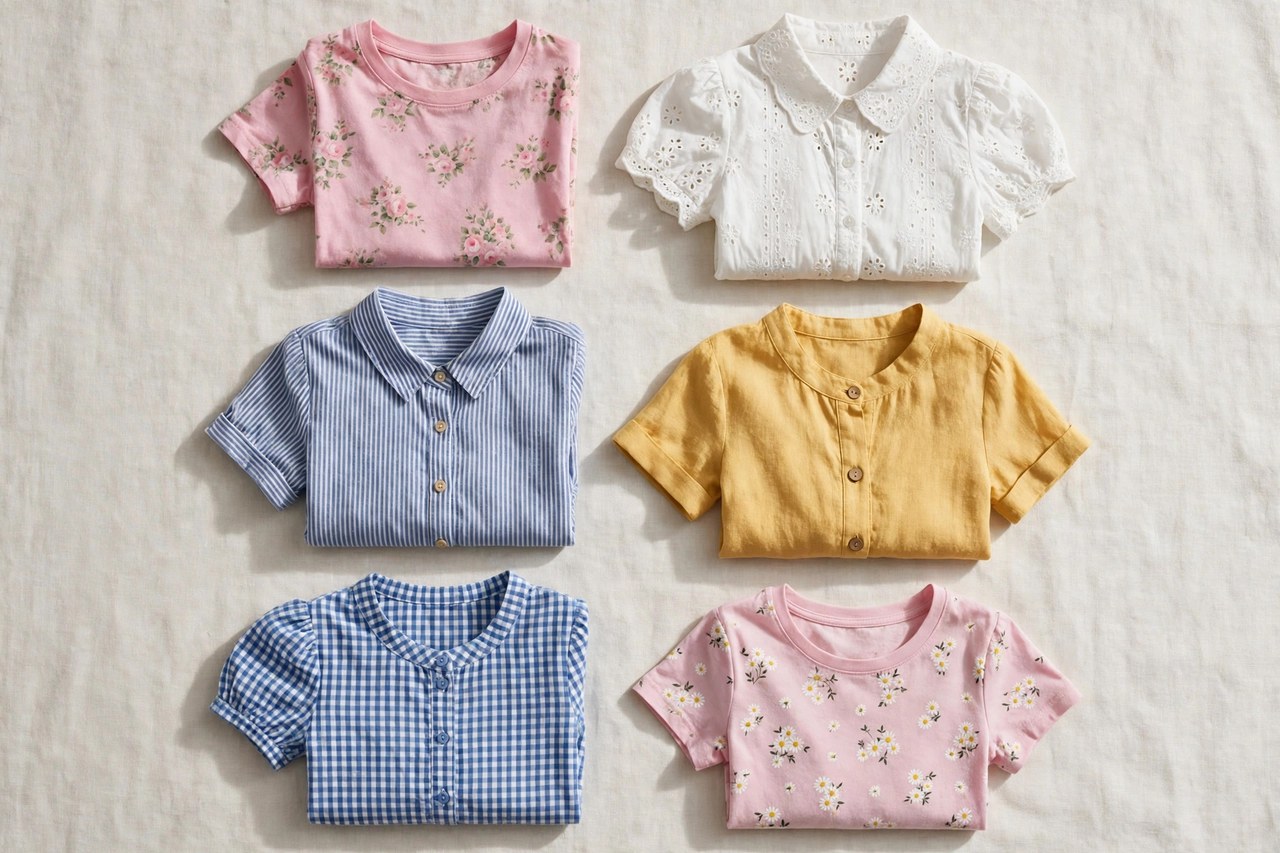
Girls shirts range from the plainest short-sleeve tee to a button-front blouse with a Peter Pan collar, and most drawers work best when they hold a deliberate mix of both ends. Graphic tees and soft jersey tops carry school and weekend wear, woven blouses lift an ordinary pair of pants for photographs or performances, and a couple of long-sleeve layering shirts extend summer favorites into cooler months. Sleeve length is a quick seasonal shorthand: sleeveless and cap sleeves for high summer, short sleeves for most of the year, and full-length sleeves once layering season truly arrives.
Build the mix around how the shirts will be worn rather than around prints alone. A top that must tuck into skirts or pants needs enough length through the body, while a shirt meant for leggings should cover the waistband completely. Checking that one detail before purchase prevents the familiar drawer full of cute shirts that never quite pair with anything. A small rotation of plain shirts in white, navy, and a favorite color multiplies outfit options, because those quiet bases let patterned pants and skirts take the visual lead instead.
Everyday Styles and Dressier Options
Crew-neck and V-neck tees in cotton jersey form the everyday base, with cap, short, three-quarter, and long sleeves marking the seasons. Henley shirts add a short button placket that dresses up knit comfort slightly, and polo shirts bring a knitted collar that suits schools with informal uniform codes. Raglan sleeves, where the sleeve seam runs diagonally to the neck, allow easy arm movement for sports days. Tie-front and cropped casual styles suit older girls, but school settings may restrict midriff-baring cuts, so keep at least several full-length tops that meet any dress code without debate.
Woven blouses open the dressier side of the category: puff sleeves, smocked yokes, and ruffled collars add detail without extra accessories. Button-front camp shirts in light cotton feel breezy in summer and layer over swimsuits at the pool. Peplum tops flare gently below the waist, a shape that pairs neatly with leggings or slim pants and gives a plain fabric more presence. Sequin and glitter-front shirts shed particles in the wash, so laundering them in a closed mesh bag protects both the design and every other garment sharing that load of laundry.
Collars, Buttons and Easy Dressing
Neckline construction decides how independently a girl can dress. Stretchy ribbed collars and envelope shoulders pull on without fuss, while back keyhole buttons and tiny front buttons demand more patience and finger strength. Snaps hidden along a placket give the look of buttons with faster fastening, useful on school mornings when time runs short. Shoulder seams should sit at the edge of the shoulder bone, and a seam that droops halfway down the arm usually signals the next size down would fit more cleanly overall.
Examine buttonholes and stitching before the first wear, since loose threads on a new shirt predict early repairs. Sleeve cuffs should slip over the hand without forcing, and armholes need enough depth that raising both arms does not lift the whole hem. For girls sensitive to texture, tag-free printing and flat interior seams remove the two most common reasons a new shirt gets rejected. Girls with sensory sensitivities may also reject shirts because of a stiff printed design across the chest, so press a hand inside the print area before removing the store tags.
Fabrics, Fit and Care
Cotton jersey breathes and softens with washing, while cotton-polyester blends hold bright colors longer and emerge from the dryer with fewer wrinkles. Rayon and modal blouses drape fluidly but often need gentler washing and lower heat. Eyelet cotton and double gauze bring texture and airflow to warm-weather tops, though open weaves should be checked for a lining or camisole need. A touch of spandex in a woven blouse can rescue an otherwise stiff fit, although most classic blouses rely on darts, gathers, or a swingy cut for their ease instead.
Fit through the shoulders matters more than overall length, because narrow shoulders make even a long shirt twist and pull. Leave a finger of ease at the chest for woven styles that lack stretch. Wash printed tees inside out, treat collar stains before they set through a school day, and fold knit shirts instead of hanging them so gravity does not stretch the shoulders out of shape.
Common Questions
Which shirts layer best under sweaters?
Smooth long-sleeve jersey tees with close collars layer cleanly, adding warmth without bunching at the neckline.
How can a blouse feel dressier without extra accessories?
Details such as puff sleeves, smocking, or a rounded collar add finish directly in the garment itself.
Why fold knit shirts instead of hanging them?
Hangers stretch knit shoulders over time; folding keeps the neckline and shoulder shape intact much longer.
More in Children's Clothes Guide G
The G letter hub and the guides closest to this one:
More to Explore on Apparel Search
Looking for Children's Clothing Stores?
This guide helps you choose children's girls shirts. To browse where to buy, visit our children's clothing store directory, where you can find retailers that carry them.