Children's Girls Socks Guide
Girls socks look like the smallest purchase in the drawer, yet they decide whether good shoes feel comfortable or miserable by midday. Length, fabric, and cushioning each change how a sock behaves inside a shoe: a thin ankle sock disappears inside a sneaker on a hot day, a cushioned crew protects the shin under boots, and a smooth dress sock lets a formal shoe keep its intended fit. Turn a new pair inside out before the first wear and trim any loose loop of thread at the toe, because that stray loop is a frequent hidden cause of complaints.
Shop Children's Girls Socks Now
Shop Children's Girls Socks on Amazon Shop Children's Girls Socks on eBayThe Amazon and eBay links on this page are affiliate links. If you make a purchase through them, Apparel Search may earn a commission.
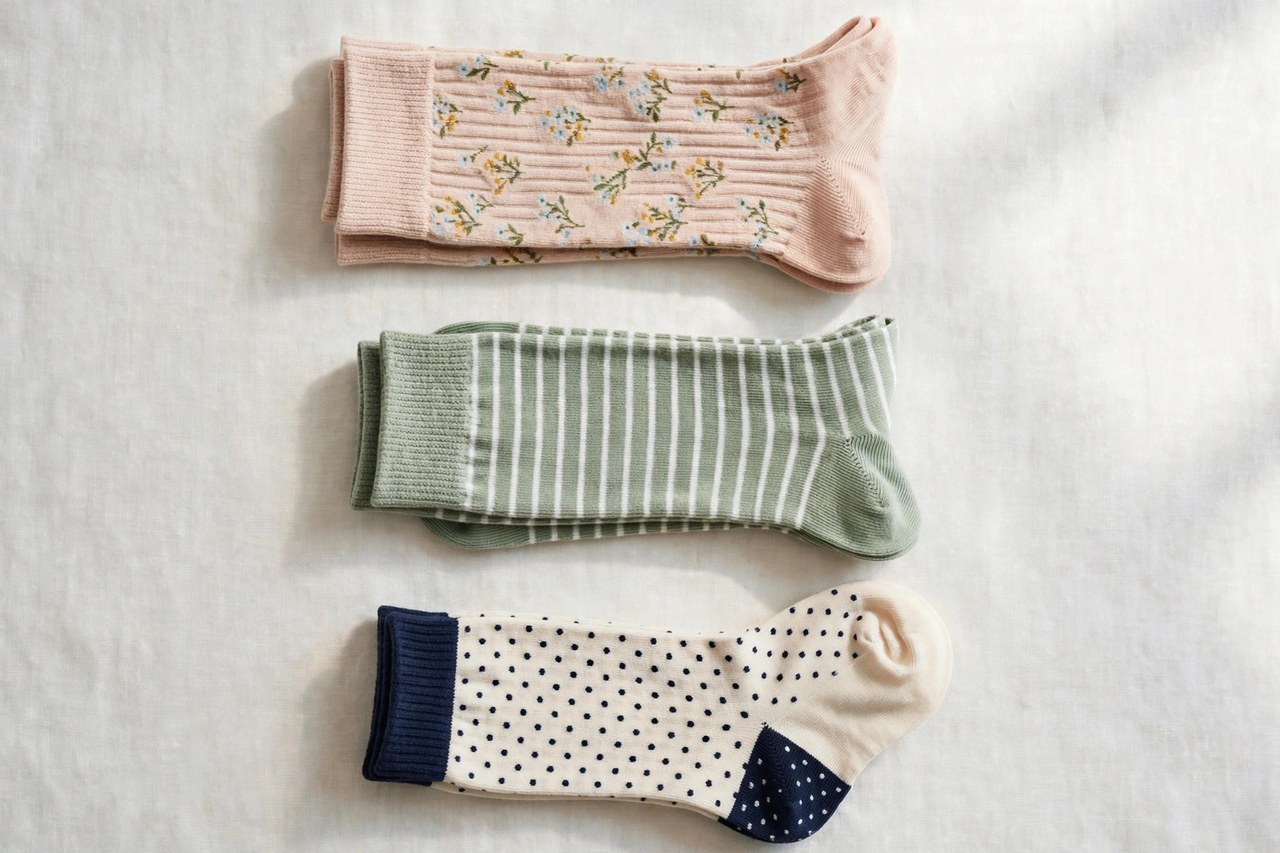
Girls socks look like the smallest purchase in the drawer, yet they decide whether good shoes feel comfortable or miserable by midday. Length, fabric, and cushioning each change how a sock behaves inside a shoe: a thin ankle sock disappears inside a sneaker on a hot day, a cushioned crew protects the shin under boots, and a smooth dress sock lets a formal shoe keep its intended fit. Turn a new pair inside out before the first wear and trim any loose loop of thread at the toe, because that stray loop is a frequent hidden cause of complaints.
Buy socks by shoe pairing rather than by the multipack alone. List the shoes worn most often, then match heights so no sock top lands exactly at a shoe edge where it can slip down or rub. Keeping pairs in only two or three core colors for school simplifies matching after laundry, while patterned pairs can be reserved for weekends and sleepovers. Holiday and novelty socks make cheerful gifts, yet their raised motifs sometimes press inside snug shoes, so save heavily decorated pairs for roomy boots or relaxed weekend footwear at home.
Lengths and Styles for Every Shoe
No-show socks sit below the shoe line for loafers and ballet flats, relying on silicone heel grips or snug arch bands to stay in place. Ankle and quarter lengths rise just above the collar of a trainer, shielding the skin from the shoe edge during sports. Crew socks reach mid-calf and remain the default for school uniforms, boots, and cooler weather when bare ankles feel unfinished. A grippy-sole sock, sold for indoor play spaces and trampoline parks, fills a niche between bare feet and slippers and should live near the sports bag rather than the dresser.
Knee-high socks pair with skirts, uniforms, and tall boots, and their longer cuff must grip without binding the calf. Ruffled and lace-trimmed dress socks frame occasion shoes for photographs and ceremonies, usually in thin smooth knits. Athletic socks add targeted padding under the heel and ball, plus arch compression that helps the sock move with the foot instead of bunching inside the shoe. Uniform socks deserve their own small stack in the drawer, separated from weekend pairs, so a school morning never begins with discovering that only neon patterns remain clean that day.
Fabrics, Cushioning and Fit
Cotton socks feel soft and familiar, but cotton holds sweat against the skin during long active days, which can chill feet later and encourage blisters. Blends that add polyester or nylon dry faster and keep their shape through many washes, while a small share of spandex helps cuffs stay up. Wool blends, including merino, regulate temperature surprisingly well in both cold classrooms and warm spring afternoons. Merino blends also resist odor longer between washes, a practical bonus for camp packing lists where laundry access may not arrive for several days at a time during trips.
Fit a sock by shoe size range, then check the heel pocket: on the foot, the sock heel should sit exactly at the wearer heel, not drift under the arch or climb the ankle. Toe seams should lie flat across the top of the toes; a raised seam inside a snug shoe becomes a pressure point within an hour. Cushioned soles add thickness, so try heavily padded sports socks with the actual trainers before committing to a full pack. After trying a new brand, buy one pack first and wash it three times before stocking up, since some cuffs relax dramatically once their factory finish has fully washed away.
Sizing, Pairs and Care
Sock size labels confuse many shoppers because the number printed often refers to sock measurements rather than shoe size. Use the chart on the package, match it to current shoe size, and size up when between ranges to avoid overstretched heels. Growth spurts make socks a quiet budget item: a drawer audit at each season change catches pairs that have become too short before they cause complaints.
Wash socks inside out to reduce pilling on patterned surfaces, and pair them before folding so singles do not accumulate. A mesh laundry bag keeps small sizes from vanishing into other garments. Replace socks when the elastic relaxes enough to slide into the shoe, when heels thin to a visible sheen, or when repeated washing no longer removes odor from the fabric itself.
Common Questions
Why do no-show socks slip down?
They rely on heel grips and arch bands; a worn or oversized pair loses that hold and slides.
Are cotton socks best for sports?
Cotton holds sweat against skin, so faster-drying synthetic blends usually serve active days more comfortably.
How should a sock heel fit?
The heel pocket should sit exactly on the wearer heel, never drifting under the arch or upward.
More in Children's Clothes Guide G
The G letter hub and the guides closest to this one:
Looking for Children's Clothing Stores?
This guide helps you choose children's girls socks. To browse where to buy, visit our children's clothing store directory, where you can find retailers that carry them.