Children's Girls Hats Guide
A hat is the smallest purchase in a girls wardrobe and one of the most frequently replaced, because hats are left on buses, dropped in playgrounds and outgrown quietly between one winter and the next. The category divides by season more sharply than any other accessory. Cold-weather hats are insulation, judged by coverage and warmth, while warm-weather hats are shade, judged by brim width and ventilation. Dress hats form a small third group tied to occasions, photographs and seasonal traditions.
Shop Children's Girls Hats Now
Shop Children's Girls Hats on Amazon Shop Children's Girls Hats on eBayThe Amazon and eBay links on this page are affiliate links. If you make a purchase through them, Apparel Search may earn a commission.
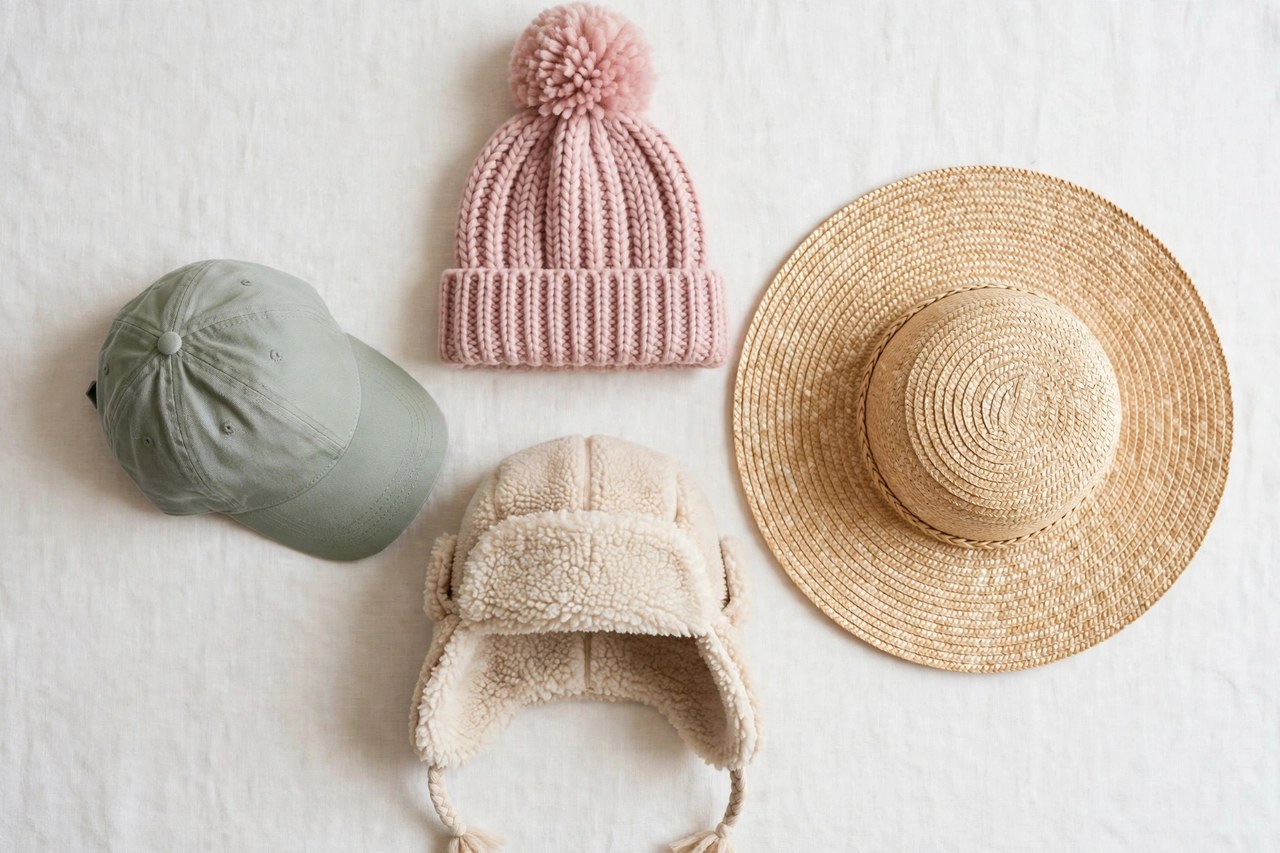
A hat is the smallest purchase in a girls wardrobe and one of the most frequently replaced, because hats are left on buses, dropped in playgrounds and outgrown quietly between one winter and the next. The category divides by season more sharply than any other accessory. Cold-weather hats are insulation, judged by coverage and warmth, while warm-weather hats are shade, judged by brim width and ventilation. Dress hats form a small third group tied to occasions, photographs and seasonal traditions.
Buying well means resisting the multipack of identical thin hats and instead matching one proper hat to each job: a genuinely warm hat for the coldest days, a lighter knit or fleece for in-between weather, a real sun hat with a brim for summer, and a cap for sport and casual shade. This guide covers how those styles differ, which materials do the work in each season, and how to measure a head so the hat bought in a shop or online actually stays on outdoors.
Warm Hats for Cold Weather
The knitted beanie is the default winter hat, and its warmth depends on yarn and lining more than on thickness alone. Acrylic knits are cheap, washable and adequate for mild cold, while a fleece lining band inside a knit hat transforms wind resistance at the ears, which is where discomfort starts. Earflap hats, including trapper styles with a faux-fur lining, give the fullest coverage for genuinely cold climates and for children who spend long periods outside, and chin ties or hook-and-loop straps keep them seated on younger girls.
Bobble hats, berets and knitted headbands fill the style end of the cold range. A bobble adds nothing to warmth but a great deal to willingness to wear the hat. Ear-warmer headbands suit milder days, ponytail hairstyles and sport, since they cover the ears without flattening or overheating the crown. For school, choose hats without detachable small parts and put a name label inside from day one, because identical pink bobble hats multiply in every classroom.
Sun Hats, Caps and Dress Styles
Summer protection starts with brim width. A wide-brim hat in cotton canvas, woven paper braid or lightweight straw shades the face, ears and back of the neck, and a legionnaire style with a rear flap gives the most complete cover for beach and holiday days. Look for a UPF rating on hats sold for serious sun use, an internal drawstring or elastic to adjust fit, and a chin cord for breezy coasts. Bucket hats pack flat and survive being stuffed into bags.
Baseball caps shade the eyes and suit sport and casual wear, but they leave ears and neck exposed, so they complement rather than replace a brimmed hat in strong sun. Adjustable back straps extend the life of a cap across growth, while fitted styles are outgrown quickly. Dress hats, from spring bonnets for younger girls to simple straw boaters and felt hats for autumn occasions, are bought for a look and an event, and the sensible approach is the plainest version that completes the outfit, stored in a box so the brim keeps its shape.
Measuring Head Size and Hat Care
Measure head circumference with a soft tape around the widest part of the head, just above the eyebrows and ears, and match the result in centimeters to the maker chart. Age labels on hats are rough guides only, because head size varies independently of height and clothing size. A winter hat should sit snugly without pressure and cover the ears fully; a sun hat should stay put in a breeze without relying entirely on its cord. Between sizes, an adjustable inner band is worth more than a size up that slips over the eyes.
Knit hats wash in cool water and dry flat so the ribbing keeps its grip, and they should never be wrung hard, which twists stitches out of shape. Straw and paper-braid hats are spot-clean only and must be stored supported, since a crushed brim rarely recovers. Keep winter hats with the gloves they are worn with, clipped or bagged as a set during the off-season, and check fit each autumn before the first cold week rather than during it, when the shops are full of everyone else doing the same.
Common Questions
How is a girls hat size measured?
Wrap a soft tape around the widest part of the head, just above the eyebrows and ears, and match the centimeter measurement to the maker chart.
Is a baseball cap enough sun protection?
Not on its own, because a cap leaves the ears and neck exposed; a wide-brim or legionnaire hat gives far more complete summer cover.
What makes a winter hat genuinely warm?
A fleece lining for wind resistance at the ears, full ear coverage and a secure fit, rather than knit thickness alone.
More in Children's Clothes Guide G
The G letter hub and the guides closest to this one:
More to Explore on Apparel Search
Looking for Children's Clothing Stores?
This guide helps you choose children's girls hats. To browse where to buy, visit our children's clothing store directory, where you can find retailers that carry them.