Children's Girls Outerwear Guide
Outerwear is the complete weather-facing wardrobe: every coat, jacket, snowsuit layer and rain piece a girl owns, organized as one system rather than a series of separate impulse buys. Viewed as a system, the gaps become obvious. Many wardrobes hold three similar mid-weight jackets and nothing genuinely waterproof, or a beautiful winter coat and no light layer for the long months on either side of it. This guide maps the whole category so each purchase fills a real weather slot.
Shop Children's Girls Outerwear Now
Shop Children's Girls Outerwear on Amazon Shop Children's Girls Outerwear on eBayThe Amazon and eBay links on this page are affiliate links. If you make a purchase through them, Apparel Search may earn a commission.
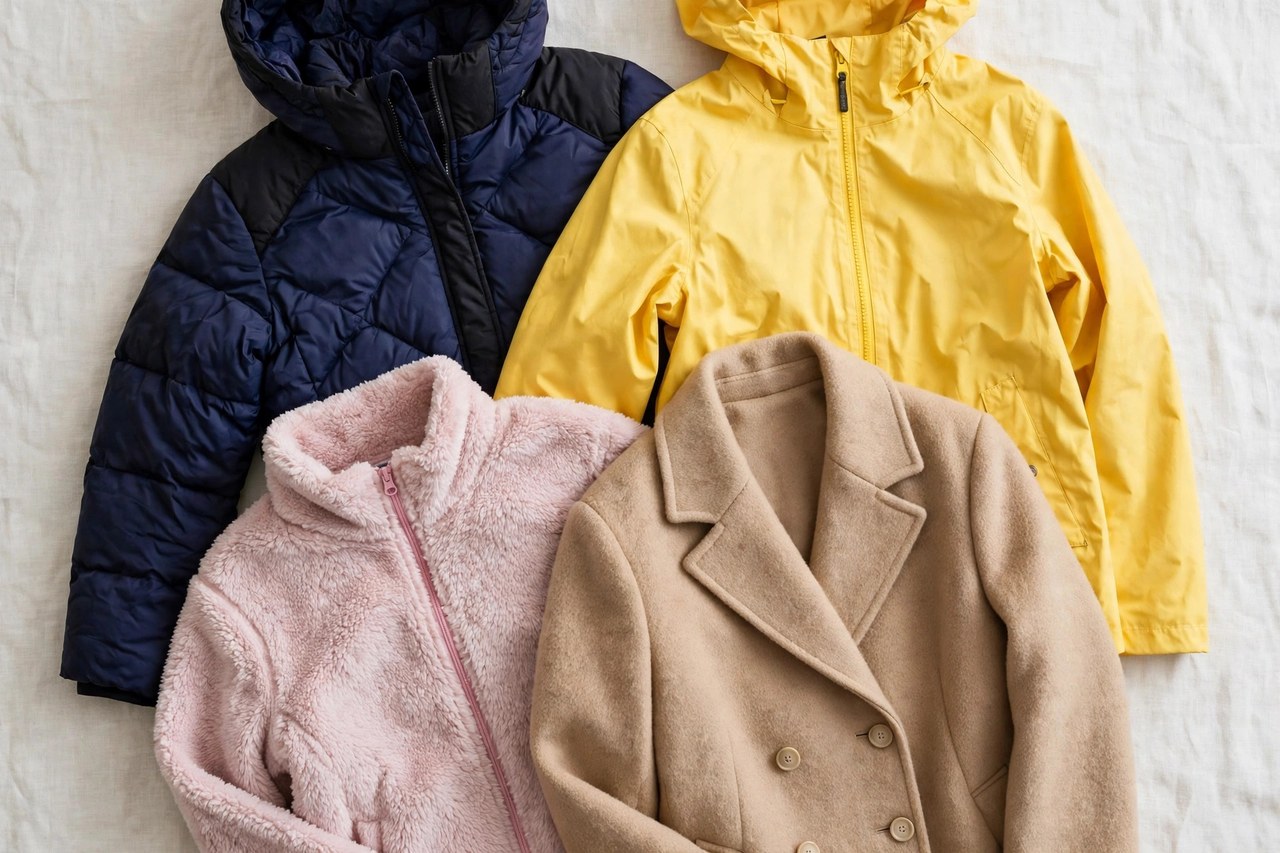
Outerwear is the complete weather-facing wardrobe: every coat, jacket, snowsuit layer and rain piece a girl owns, organized as one system rather than a series of separate impulse buys. Viewed as a system, the gaps become obvious. Many wardrobes hold three similar mid-weight jackets and nothing genuinely waterproof, or a beautiful winter coat and no light layer for the long months on either side of it. This guide maps the whole category so each purchase fills a real weather slot.
The system has three working layers of decision. First comes the climate the child actually lives in, including the school journey, waiting around outdoors and weekend activities. Second comes coverage across the temperature range, from summer rain to the coldest winter week. Third comes growth: outerwear is among the most expensive clothing a family buys, pieces are often bought a size generous, and a well-planned hand-me-down or resale value rewards buying the better construction.
Coats and Jackets as One Layering System
At the warm end of the system sits the winter coat: a padded puffer or a wool or wool-blend coat, long enough to cover the hips, fitted over knitwear. Synthetic fill dominates girls ranges because it insulates when damp, washes easily and costs less than down, while down-filled styles give the most warmth per weight for very cold, dry climates. Beside the winter coat, a mid-weight quilted or softshell jacket covers autumn and spring, and a fleece functions both as a light jacket and as the insulating layer under a shell.
The shell layer completes the system. A waterproof raincoat or rain jacket, worn alone in warm wet weather and over fleece or a light puffer in cold wet weather, is what turns three ordinary pieces into coverage for nearly every forecast. Younger girls may also have a one-piece rain suit or snow suit, which gives unmatched playground protection. Planning the pieces to layer together, with compatible lengths and no two bulky hoods fighting at the neck, is the single most valuable habit in outerwear buying.
Weather Protection: Rain, Wind and Snow
Waterproof and water-resistant are not the same claim. Water-resistant fabrics shed light rain and are fine for short showers and school runs, while genuinely waterproof garments add a membrane or coating plus sealed or taped seams and a storm flap over the zip, and only these keep a wearer dry through sustained rain. Check product descriptions for a waterproof rating figure where one is given, and treat an unrated fashion raincoat as shower protection only. Hoods should adjust or elasticate so they turn with the head rather than blocking side vision at roads.
For snow, look for insulated ski-style coats and salopettes or snow pants with reinforced knees and seats, inner gaiters that seal over boots, and cuffs that close over gloves. Wind is the quiet factor in all cold weather: a windproof shell over a warm fleece often outperforms a thicker but airy coat, because moving air strips insulation value quickly. Reflective trims and brighter colors earn their place on winter outerwear for visibility on dark afternoons, and a name label inside every piece is essential, since school cloakrooms fill with near-identical navy and black coats.
Sizing Over Layers and Seasonal Storage
Size outerwear over the layers it must contain. Try or measure with a typical winter jumper underneath, check that the zip closes without strain, and confirm the child can sit, bend and raise both arms, since playground movement is the real test. A size up is sensible at the start of winter for a growing child, provided sleeves can be cuffed and the coat does not hang so long that it trips on stairs; a size up bought in a lightweight jacket is far less forgiving, because there is no bulk of knitwear to fill it.
At the end of each season, wash or clean pieces before storage, since marks set invisibly and attract damage in a cupboard. Dry padded coats thoroughly, store them uncompressed so synthetic fill keeps its loft, and hang wool coats on broad hangers under a breathable cover. Check pockets for the gloves, tissues and small treasures that otherwise go into storage with the coat. A ten-minute end-of-season inspection, noting what still fits and what needs replacing, turns the first cold snap from an emergency shop into a planned one.
Common Questions
What pieces make up a complete girls outerwear system?
A winter coat, a mid-weight jacket, a fleece for layering and a waterproof shell that works alone in warm rain and over layers in cold rain.
Is water-resistant the same as waterproof?
No. Water-resistant fabric sheds light showers, while waterproof garments add a membrane, taped seams and a storm flap for sustained rain.
Should winter outerwear be bought a size up?
Often yes at the start of winter, if sleeves can be cuffed and the length stays safe on stairs, with fit checked over winter knitwear.
More in Children's Clothes Guide G
The G letter hub and the guides closest to this one:
Looking for Children's Clothing Stores?
This guide helps you choose children's girls outerwear. To browse where to buy, visit our children's clothing store directory, where you can find retailers that carry them.