Children's Girls Robes Guide
A girls robe is a simple wrap layer with an outsized daily role: it covers pajamas on the way to breakfast, adds warmth after a bath, and packs easily for sleepovers and family trips. Because it is worn over other garments rather than against bare skin all day, the buying decision centers on fabric weight, overall length, and whether the belt and closures stay put during ordinary movement around the house. Girls who read in bed often appreciate a robe with sleeves that push up and stay put, rather than wide bell cuffs that keep sliding down over their hands repeatedly.
Shop Children's Girls Robes Now
Shop Children's Girls Robes on Amazon Shop Children's Girls Robes on eBayThe Amazon and eBay links on this page are affiliate links. If you make a purchase through them, Apparel Search may earn a commission.
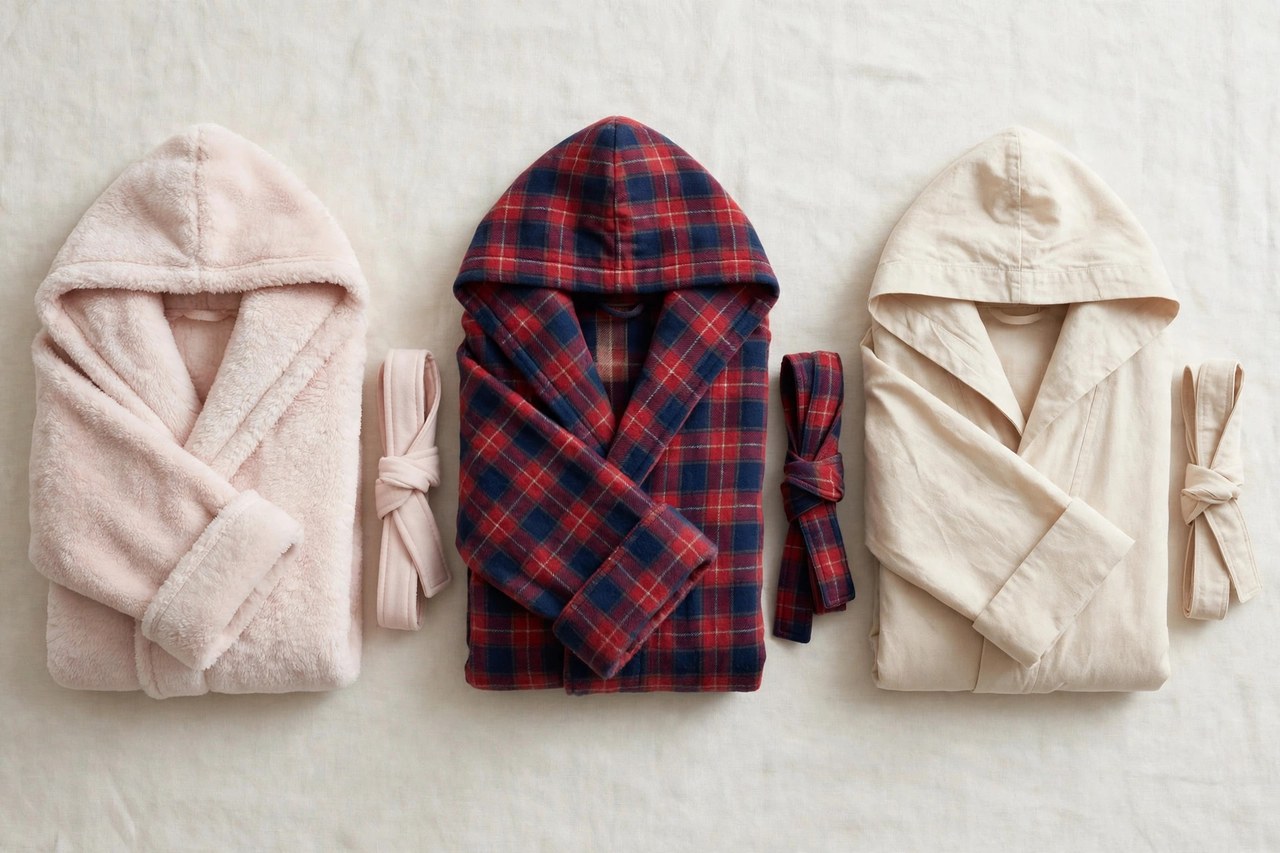
A girls robe is a simple wrap layer with an outsized daily role: it covers pajamas on the way to breakfast, adds warmth after a bath, and packs easily for sleepovers and family trips. Because it is worn over other garments rather than against bare skin all day, the buying decision centers on fabric weight, overall length, and whether the belt and closures stay put during ordinary movement around the house. Girls who read in bed often appreciate a robe with sleeves that push up and stay put, rather than wide bell cuffs that keep sliding down over their hands repeatedly.
Think first about when the robe will actually be used. A post-bath robe needs absorbency and a hood or high collar, while a morning robe worn over sleepwear mainly needs softness and enough room through the shoulders. Matching the robe to that single main job prevents the common mistake of buying a plush winter weight for a house that stays warm year-round. A second robe in a lighter weight solves the shoulder-season problem, when mornings feel chilly for an hour but a plush winter robe becomes stifling before breakfast is finished.
Fabrics and Weights for Different Seasons
Plush fleece and minky-style polyester make the warmest robes, with a deep pile that feels cozy immediately on cool mornings. These fabrics dry quickly and resist shrinking, although very thick versions can feel bulky in a small suitcase. Cotton flannel offers a lighter, breathable alternative with a brushed surface, better suited to mild climates or girls who overheat easily under synthetics. Terry also weighs more than most fabrics when wet, so a younger girl may manage a waffle robe more easily after swimming lessons than a thick looped cotton version.
For after swimming or bathing, cotton terry behaves like a wearable towel, absorbing water along its looped surface instead of pushing moisture around. Waffle-weave cotton dries faster than terry and packs flatter, a useful trait for camp or travel. Summer robes in thin cotton jersey or seersucker provide modesty and a light layer without trapping heat, especially in short lengths with elbow sleeves. Short robes in bright prints double nicely as pool cover-ups at home, although fabrics meant only for indoor wear should not be expected to block strong midday sun outside.
Lengths, Ties and Closures
Robe lengths run from above the knee to the ankle, and the right choice balances warmth against tripping risk on stairs. Mid-calf usually gives the best compromise for home use, covering the legs while clearing most steps. Attached belts that thread through side loops stay with the garment in the wash and cannot be lost in a drawer, a quiet advantage over fully removable sashes. If the sash is very long, tie it in a bow at the back after wrapping, which keeps the loose ends from trailing into sinks, pet bowls, or breakfast plates nearby.
Some robes add interior ties that hold the wrap closed even when the outer belt loosens, plus patch pockets sized for a tissue or lip balm. Hoods add neck warmth and help dry hair after a bath, but they add bulk under a coat if the robe doubles as a travel layer. Check that belt loops sit at the natural waist rather than the hip, or the front panels will gape when tied. Two rows of belt loops, a detail on better-made robes, let the tie sit higher or lower, accommodating both a shorter torso and a thicker layer of pajamas underneath comfortably.
Sizing and Care
Size a robe by height and chest rather than by pajama size, since it must close comfortably over sleepwear with room to reach and bend. A wrap front should overlap by several inches at the belt line; if the panels barely meet while standing still, the next size will serve longer. Sleeves ending at the wrist bone keep cuffs out of cereal bowls and sink water.
Wash fleece robes separately at first, because new pile sheds lint that clings to towels and dark clothing. Avoid fabric softener on terry, which coats the loops and reduces absorbency over time. Shake out pockets before laundering, hang robes by their fabric loop to keep the shoulders in shape, and replace a robe when the belt frays or the wrap no longer overlaps safely on stairs.
Common Questions
What robe length works best at home?
Mid-calf covers the legs for warmth while clearing most stairs, balancing comfort against tripping risk.
Which robe fabric absorbs bath water best?
Cotton terry acts like a towel with looped fibers, while waffle cotton dries faster and packs smaller.
Why choose an attached belt?
A belt sewn through side loops cannot be lost in drawers or laundry, and it stays positioned at the waist.
More in Children's Clothes Guide G
The G letter hub and the guides closest to this one:
More to Explore on Apparel Search
Looking for Children's Clothing Stores?
This guide helps you choose children's girls robes. To browse where to buy, visit our children's clothing store directory, where you can find retailers that carry them.