Children's Outerwear Guide
Outerwear is the layer a child wears over everything else outdoors: coats, jackets, rainwear, snow gear and the lighter layers that bridge the seasons. It is the most weather-specific category in a child's wardrobe and, size for size, usually the most expensive - which is why this guide treats it as a system to plan rather than a single coat to buy. The right system covers the actual weather where you live, in the sizes the child is actually in, for the length of the season ahead.
Shop Children's Outerwear Now
Shop Children's Outerwear on Amazon Shop Children's Outerwear on eBayThe Amazon and eBay links on this page are affiliate links. If you make a purchase through them, Apparel Search may earn a commission.
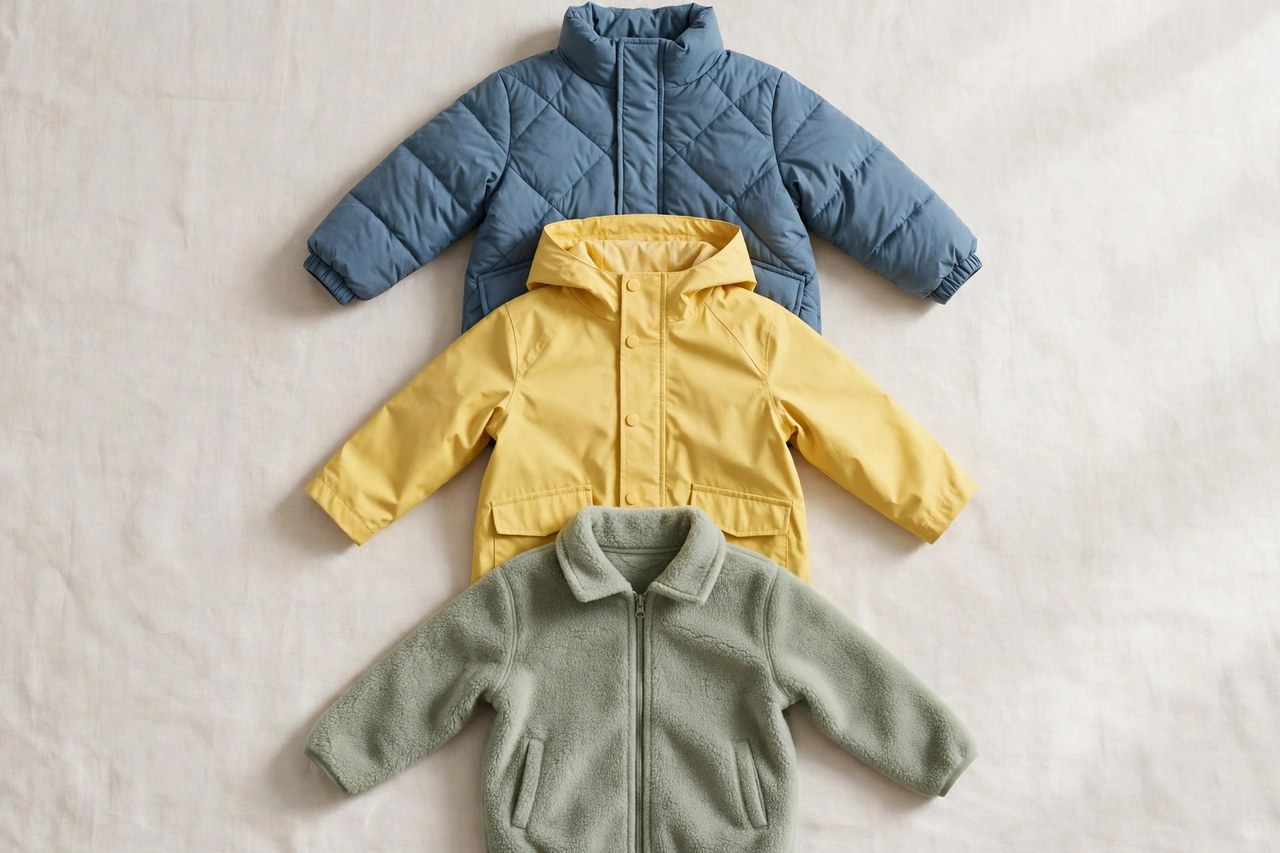
Outerwear is the layer a child wears over everything else outdoors: coats, jackets, rainwear, snow gear and the lighter layers that bridge the seasons. It is the most weather-specific category in a child's wardrobe and, size for size, usually the most expensive - which is why this guide treats it as a system to plan rather than a single coat to buy. The right system covers the actual weather where you live, in the sizes the child is actually in, for the length of the season ahead.
One cheerful truth closes the subject: whatever your kids are wearing is in fashion. Outerwear is where that matters most. A child who is warm, dry and able to move will wear a coat happily in almost any colour or style, while the most fashionable coat in the shop fails completely if it soaks through in October rain or will not zip over a winter jumper. Function first, in other words - then choose the colours and details the child loves within the coat that does the job.
The Outerwear Families, by Weather
Rainwear is its own family: a waterproof or properly water-resistant shell with sealed or well-overlapped seams, a hood that stays up, and cuffs that close against the rain. It earns its keep on school runs and wet weekends, and in mild climates a good rain jacket over a fleece can be the whole winter system. Padded and insulated coats are the cold-weather family - synthetic fill is the practical default for children because it keeps insulating when damp and washes easily, while lighter insulated jackets handle frosty but dry days.
Snow gear adds waterproof trousers or salopettes, longer coat hems and closures that keep snow out at the wrist and waist. At the other end of the scale, softshells, fleeces and light jackets are the in-between family - wind-resistant, breathable layers for autumn and spring that children actually keep on because they do not overheat. Most families need two families covered well, not all four covered thinly: the wet-weather piece and the cold-weather piece for their own climate.
Fit, Layering and Room to Grow
Fit outerwear over the layers it will really cover. A winter coat should zip comfortably over a jumper without pulling across the chest, sleeves should reach the wrist with arms raised, and the hem should cover the lower back when the child bends and sits - playground tests, not changing-room poses. Shoulder seams that sit near the natural shoulder keep the coat balanced; a coat bought hugely oversized hangs off the shoulders, lets cold air in at the neck and trips active children at the hem.
A little growing room is sensible - cuffs that turn down, or a size that will last a second winter - but buy for this season's warmth first. Check the practical details that decide daily life: a two-way or chunky front zip a gloved hand can work, pockets a child can reach, a hood that detaches or lies flat for safety and comfort, and closures without long dangling cords. Reflective trims are a genuine plus for dark winter school runs, and a name label inside is not optional in a cloakroom of similar coats.
Care, Storage and Handing Down
Outerwear rewards basic care. Shake and hang wet coats open to dry fully before they go back on a hook, wash insulated pieces as the label directs - usually cool and gentle - and re-proof rain shells when water stops beading on the surface, because a wetted-out shell feels clammy even when its membrane still works. Check zips, poppers and elastic cuffs at the start of each season, when a small repair is cheap, rather than on the first cold morning, when it is not.
Store off-season outerwear clean, dry and uncompressed where possible, so insulation keeps its loft, and keep the outgrown-but-sound pieces: good outerwear hands down better than almost any other children's clothing because it is worn over everything and outgrown before it is outworn. Buy the system in the right order - the weatherproof piece first, the deep-cold piece second, the in-between layer last - and the category that decides whether winter outings happen at all is covered calmly, for this child and often the next one too.
Common Questions
What counts as children's outerwear?
Every layer worn over other clothes outdoors: rain jackets and waterproofs, padded and insulated coats, snow gear, and lighter layers such as fleeces and softshell jackets for in-between weather. Most families need the wet-weather and cold-weather pieces for their own climate covered well.
How much growing room should a child's coat have?
Enough to zip comfortably over a jumper, reach the wrist with arms raised and cover the lower back when bending - with cuffs that can turn down for a second winter. A hugely oversized coat hangs off the shoulders, lets cold air in and trips active children, so buy for this season's warmth first.
When should a child's rain jacket be re-proofed?
When water stops beading on the surface and starts soaking into the outer fabric. A wetted-out shell feels clammy even if its waterproof membrane still works, so re-proofing restores comfort as well as shedding.
More in Children's Clothes Guide O
The O letter hub and the other O guide:
More to Explore on Apparel Search
Looking for Children's Clothing Stores?
This guide helps you choose children's outerwear. To browse where to buy, visit our children's clothing store directory, where you can find retailers that carry them.