Children's Jackets Guide
Children's jackets are the outerwear layer a child wears over the rest of an outfit - lighter than a winter coat, more structured than a sweatshirt, and built to block wind, shed light rain or add a layer of warmth exactly when the weather is in between. A jacket is the most frequently grabbed garment in many children's wardrobes: it goes on for the school run, comes off at lunchtime, gets carried, dropped and stuffed into a backpack, and goes back on again for the trip home. This guide explains what to look for, how the main jacket styles differ, how closures and sizing work for growing children, and how to care for a jacket so it survives more than one season of that treatment.
Shop Children's Jackets Now
Shop Children's Jackets on Amazon Shop Children's Jackets on eBayThe Amazon and eBay links on this page are affiliate links. If you make a purchase through them, Apparel Search may earn a commission.
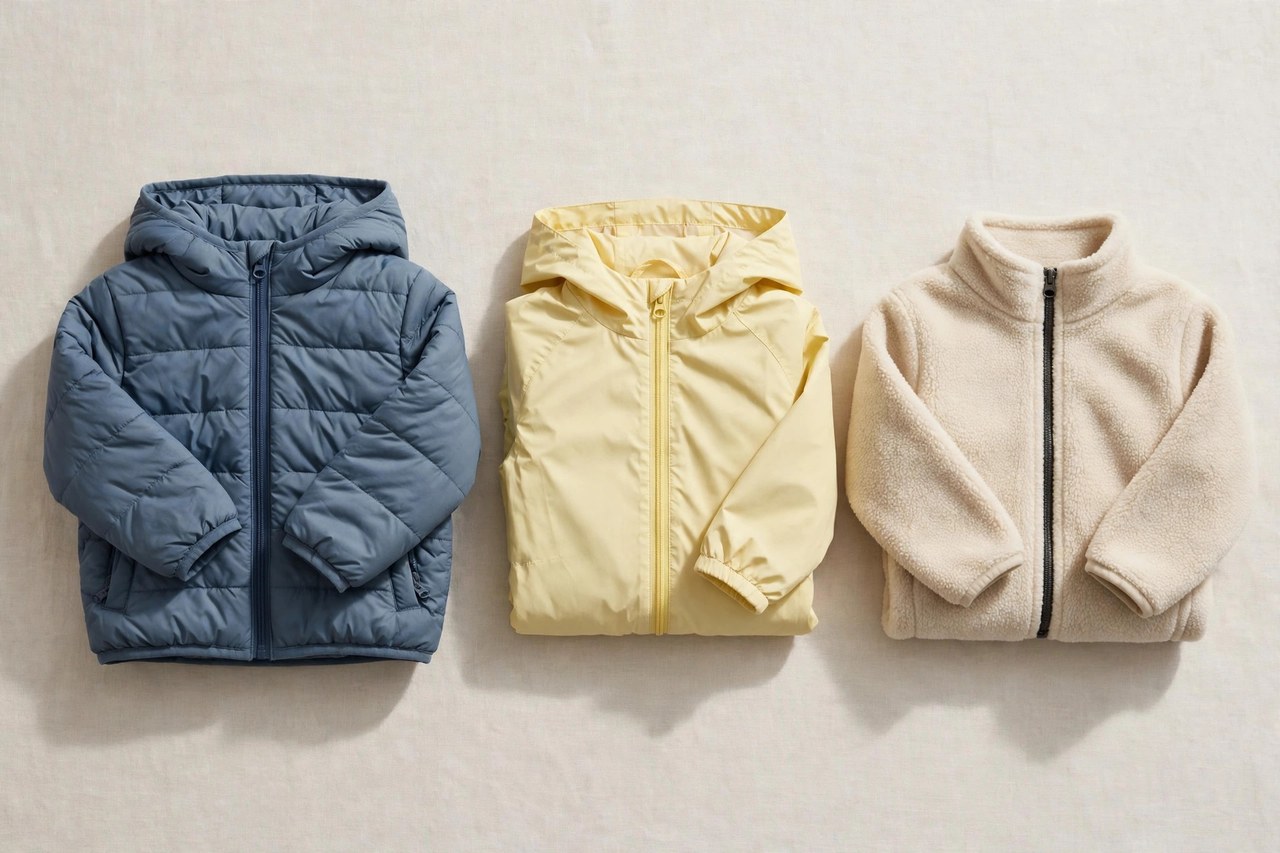
Children's jackets are the outerwear layer a child wears over the rest of an outfit - lighter than a winter coat, more structured than a sweatshirt, and built to block wind, shed light rain or add a layer of warmth exactly when the weather is in between. A jacket is the most frequently grabbed garment in many children's wardrobes: it goes on for the school run, comes off at lunchtime, gets carried, dropped and stuffed into a backpack, and goes back on again for the trip home. This guide explains what to look for, how the main jacket styles differ, how closures and sizing work for growing children, and how to care for a jacket so it survives more than one season of that treatment.
Start with the job the jacket has to do. A lightweight jacket is a wind and light-shower shell for spring and autumn days that are cool rather than cold. An insulated jacket adds fill - synthetic padding or fleece lining - for genuinely cold days that do not quite need a full winter coat. A rain jacket is a waterproof or water-resistant shell whose only job is keeping the clothes underneath dry. Many families own two of the three, because no single jacket does all three jobs well: the waterproof shell is clammy as a warm layer, and the warm padded jacket soaks through in steady rain.
Styles and Construction
Lightweight jackets are usually unlined or mesh-lined shells in nylon or polyester, with a zip front, elastic or adjustable cuffs, and a hood or a stand collar. Insulated jackets add a fill layer quilted or baffled between the shell and lining so the padding cannot bunch into one corner, and better ones put a smoother lining in the sleeves so the jacket slides over sweaters instead of dragging them up the arm. Fleece jackets work as a warm mid-layer outdoors in mild weather and as the main jacket on dry, chilly days, while denim and canvas jackets borrow the work-jacket shape - button or snap front, chest pockets - as a sturdy, mostly decorative layer for dry days.
Closures decide whether a child can dress independently, and that matters more than almost any style detail. A smooth, large-toothed zip with a pull a small hand can grip is manageable for most school-age children, especially with a chin guard at the top so the zip cannot pinch skin. Snaps are the next easiest, buttons the slowest, and toggles sit in between. Check the details that take daily abuse: pockets deep enough for gloves, hanging loop strong enough for a school hook, and reflective trim if the jacket will be worn on dark winter afternoons. Seams at the shoulder should sit at or just past the child's shoulder - that is where a carried backpack's straps will rub.
Fit and Sizing
A children's jacket should be sized for what goes underneath it, not for the child alone on a warm shop floor. Try it, or measure it, over a typical sweater: the child should be able to raise both arms overhead without the hem lifting to the waist, bend and sit without the front pulling tight, and zip it fully without the lining bunching. A little growing room in body length is sensible - a jacket that ends at the hip this year still covers well next year - while sleeves that cover the whole hand are not growing room but a daily annoyance that gets chewed, dragged and soaked.
Hoods deserve their own fit check. A hood should stay up in a breeze without covering the child's side vision, and lie flat against the back when it is down so a backpack sits comfortably over it. Drawcords, where a jacket has them, should be short and secured per the maker's design. Finally, weigh the jacket in your hand: a warm jacket a child finds heavy will be carried rather than worn, and a carried jacket provides no warmth at all. Insulation that delivers warmth without bulk - modern synthetic fills do this well - is worth more than maximum thickness on the label.
Wearing and Care
Jackets collect a specific kind of dirt: playground dust on the cuffs, lunch on the front, and a tide-mark of splash up the back. Most children's jackets wash well on a gentle cycle, but check the label first - waterproof coatings and some insulated fills have specific instructions, and a rain jacket's water-shedding finish can often be revived by a warm tumble dry or a re-proofing spray once water stops beading on the shell. Zip the jacket closed and empty the pockets before washing, both to protect the zip and to recover the stones, conkers and notes from school that pockets reliably contain.
Name-label the jacket inside the back or on the hanging loop - jackets are the single most common item in school lost property, because every child takes theirs off in the same places at the same times. Hang it to dry by that loop rather than over a radiator, which can damage coatings and elastic. Bought with a closure the child can work, room for the layers underneath, and a weight the child will actually wear, a jacket earns its place by the door for seasons. Bought by color alone, the same jacket lives on the hook - the difference, as with most children's clothes, is fit and function first.
Common Questions
What is the difference between a children's jacket and a coat?
Length, weight and warmth. A jacket is generally hip-length or shorter, lighter, and built for cool or in-between weather and layering; a coat is longer, heavier and insulated for sustained cold. Many children need both across a year: the jacket for most school days in spring and autumn, the coat for the coldest winter weeks.
Which jacket closure is easiest for a young child?
A large-toothed zip with a grippable pull is usually easiest for school-age children, followed by snaps. Buttons are the slowest and hardest for small fingers, especially with cold hands. Whatever the closure, test that the child can open and close it alone - a jacket a child cannot manage will be left unfastened or left behind.
How much growing room should a children's jacket have?
Enough that it zips comfortably over a typical sweater and still covers the hips when the child raises both arms - but not so much that the sleeves cover the whole hand. A little length in the body wears well into a second season; excess sleeve length and a swamping body just get in the way and wear out faster.
More in Children's Clothes Guide J
The J letter hub and the guide closest to this one:
Looking for Children's Clothing Stores?
This guide helps you choose children's jackets. To browse where to buy, visit our children's clothing store directory, where you can find retailers that carry them.