Children's Coats Guide
Children's coats are the outer layer bought to a weather specification: the insulated winter coat rated for the local cold, the raincoat that keeps a school walk dry, the dress coat kept for occasions, and the lighter jackets that shoulder the seasons between. The original coat guide divided its subject simply, pointing parents to the boys' and girls' coat guides in their own letters; this guide takes the shared ground - what a coat must do at child height, in child weather, on a child's schedule of lost mittens and growth spurts.
Shop Children's Coats Now
Shop Children's Coats on Amazon Shop Children's Coats on eBayThe Amazon and eBay links on this page are affiliate links. If you make a purchase through them, Apparel Search may earn a commission.
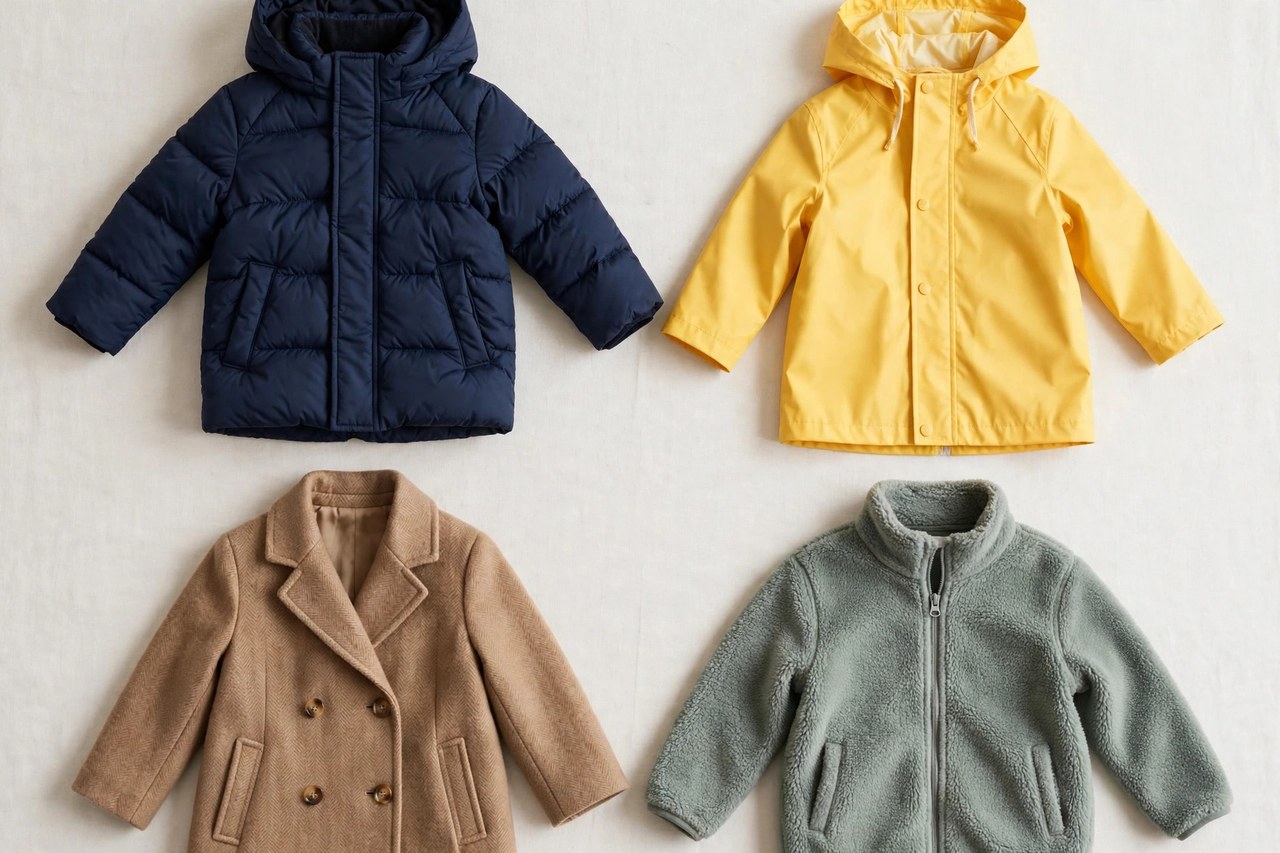
Children's coats are the outer layer bought to a weather specification: the insulated winter coat rated for the local cold, the raincoat that keeps a school walk dry, the dress coat kept for occasions, and the lighter jackets that shoulder the seasons between. The original coat guide divided its subject simply, pointing parents to the boys' and girls' coat guides in their own letters; this guide takes the shared ground - what a coat must do at child height, in child weather, on a child's schedule of lost mittens and growth spurts. This guide walks through the choices that matter - style, fit, fabric and finish - with the practical detail a product listing rarely gives, and closes with the care habits that keep the garment in service.
Styles and Construction
Construction follows the job. A winter coat is a system - insulation, a windproof shell, sealed or taped seams where rain meets snow, a hood that turns with the head - and its temperature rating assumes a moving child, not one standing at a bus stop. A raincoat's quality lives in its seams and closures, since an unsealed waterproof fabric leaks exactly along its stitching. Dress coats trade weatherproofing for finish: better cloth, cleaner lines, and a life measured in occasions rather than storms.
Children's outerwear has to work at child height: zippers with large pulls that small, cold fingers can grip, hoods that detach or lie flat under a backpack strap, and cuffs that adjust so sleeves stay put while arms grow. Reflective trim is a genuine safety feature on coats worn to school in winter light. Waterproof ratings matter less than sealed seams - an unsealed waterproof fabric still leaks exactly where a child gets wettest, along the stitching.
Fit and Sizing
The closures decide whether the coat works at 7 a.m.: zippers with pulls small cold fingers can grip, snaps and toggles a child can work with mittens half on, and a front that closes fully without a gap at the throat. Reflective trim is a real safety feature on a coat worn in winter light on school routes. Buy the coat in the autumn check, not the first storm: fitted over the bulkiest sweater it will honestly cover, with sleeves that still cover the wrist when arms reach forward for the sled, the bus rail or the snowball.
Fit children's outerwear over the bulkiest layer it will honestly cover, then test the working range: arms forward, arms overhead, sitting with the zipper closed. Sleeves should still cover the wrist with arms raised, the hem should cover the seat for warmth, and the hood should turn with the head so the child can see sideways at road crossings. A coat fitted over a T-shirt in September will be a coat outgrown by January.
Wearing and Care
Coats earn their closet space between seasons: hung to air after wet wear, washed or cleaned as the shell requires, water-repellent finishes refreshed when rain stops beading, and stored clean with the size noted for the hand-me-down queue. A coat that survives one child usually has a second child in it - the winter coat is the single most pass-on-able garment in the wardrobe, and buying it well the first time is what makes that possible.
Hang children's coats on a hook at child height so they actually get hung up, and air them after wet wear before they go back in the closet. Wash waterproof pieces with the detergent the maker specifies and refresh the water-repellent finish when rain stops beading on the surface. Zip every zipper and close every strap before washing to protect both the coat and the rest of the load, and store the coat clean - ground-in playground dirt is what degrades coatings in storage.
Common Questions
What types of coats does a child need?
Climate decides: most children cycle through an insulated winter coat where winters are real, a raincoat for wet seasons, and one lighter jacket for the in-between months, with a dress coat added only where occasions call for it. Not every child needs every type. What every coat must do is fit over the layers it will cover, close completely with closures the child can work, and be bought before its season, not during its first storm.
How much growing room should a child's coat have?
Enough to fit over the bulkiest sweater with sleeves still covering the wrist when arms reach forward - and no more. An oversized coat loses warmth to the air moving inside it, drags its cuffs through everything, and trips small wearers on stairs. Fit the coat over layers in the shop, test sitting and reaching, and let the adjustable cuffs and hem do whatever growing the season honestly allows.
Are expensive winter coats worth it for children?
Where winters are genuinely cold, warmth and waterproof construction are worth paying for - a miserable child outdoors is a short outing, and a sound coat passes to the next child. Trust construction over headline temperature numbers: real insulation, sealed seams, a windproof shell and a hood that turns with the head. In mild climates a good raincoat over warm layers covers most of the same ground at half the price.
More in Children's Clothes Guide C
The C letter hub and the guides closest to this one:
Looking for Children's Clothing Stores?
This guide helps you choose children's coats. To browse where to buy, visit our children's clothing store directory, where you can find retailers that carry them.