Children's Apparel Guide
Children's apparel is the trade's own word for the whole category: every garment, shoe and accessory made for babies, toddlers, children and the oldest kids, organized by the industry into departments - layette, toddler, girls, boys, uniforms, occasionwear, outerwear, sleepwear and sport - before it ever reaches a shop floor. Apparel is the umbrella term over the site's children's clothing area, linking the apparel directory, the children's brands and the clothes guides beneath it.
Shop Children's Apparel Now
Shop Children's Apparel on Amazon Shop Children's Apparel on eBayThe Amazon and eBay links on this page are affiliate links. If you make a purchase through them, Apparel Search may earn a commission.
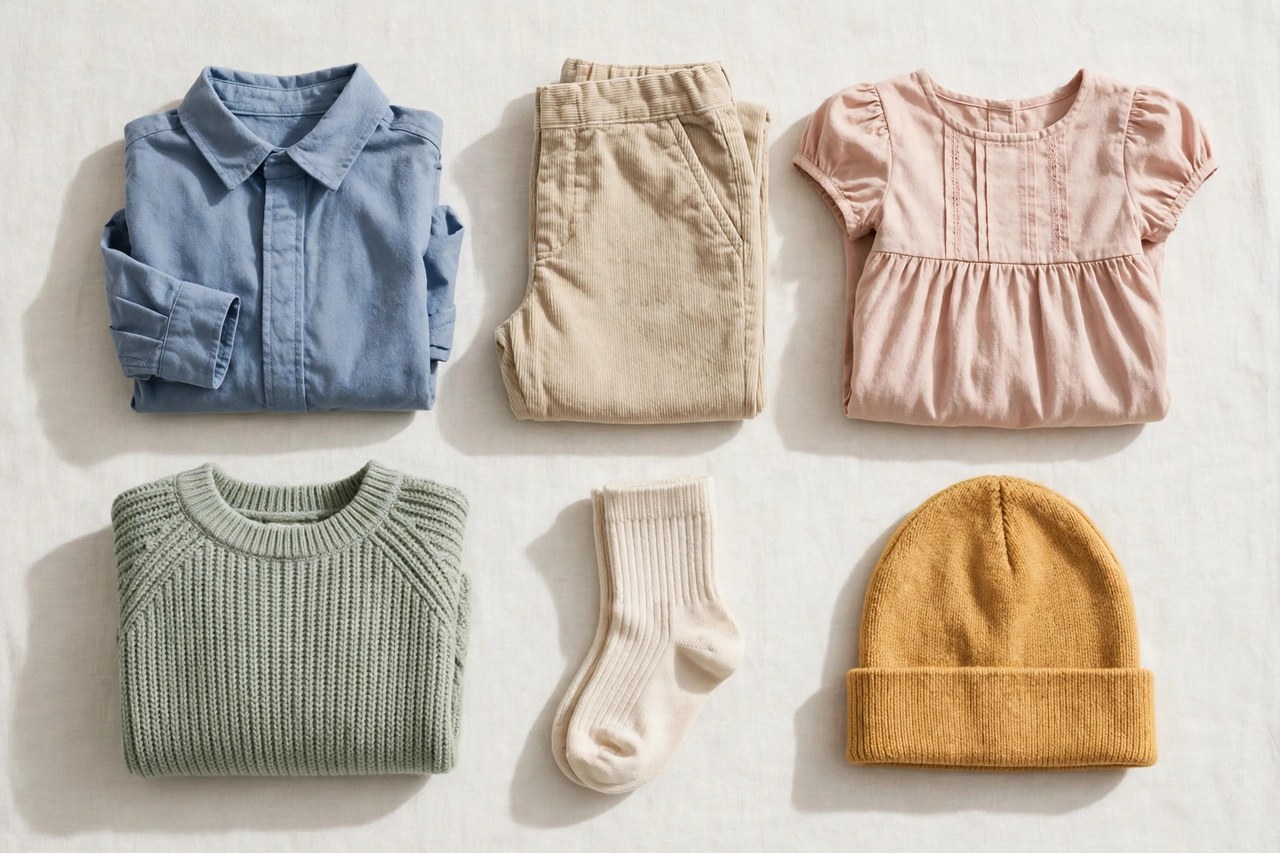
Children's apparel is the trade's own word for the whole category: every garment, shoe and accessory made for babies, toddlers, children and the oldest kids, organized by the industry into departments - layette, toddler, girls, boys, uniforms, occasionwear, outerwear, sleepwear and sport - before it ever reaches a shop floor. Apparel is the umbrella term over the site's children's clothing area, linking the apparel directory, the children's brands and the clothes guides beneath it. This guide explains what to look for, how the sizing actually works, which fabrics and constructions earn their price, and how to care for the garment so it keeps doing its job all season.
Styles and Construction
Understanding the department system is genuinely useful at buying time, because the same child is served by different departments at different moments: the uniform department for school staples at controlled prices, occasionwear for the party dress, outerwear for the coat bought to a weather rating rather than a look. Apparel sizing follows the departments too - baby sizes by weight and height, toddler sizes with a T, then numbered children's sizes, then the junior and young-adult ranges the oldest children graduate into - and the jumps between systems are where most sizing mistakes happen.
Children outgrow clothes before they wear them out, so the honest specification is fit now with room to grow, construction that survives the wash cycle it will actually get, and a price that respects how short the service life is. Measure the child - height, chest, waist and foot - rather than trusting the age on the label, because age sizing is an average no individual child is obliged to match. Keep the measurements with the shopping list.
Fit and Sizing
This guide's angle is the map, not the territory: the garment-by-garment detail lives in the letter guides around this one, from the coats and costumes of this letter to the sweaters and shoes of theirs. What the apparel view adds is proportion: most of a child's apparel life is a small rotation of hard-wearing everyday pieces, and the budget and attention should follow that proportion - depth in the everyday departments, one or two considered pieces where occasions demand them.
Measure the child twice a year - height, chest, waist, inside leg and foot length - and shop from those numbers, because age-based sizing assumes an average child and growth rarely follows the average. Keep the measurements on the phone or the shopping list. Between sizes, choose by garment: tops and outerwear tolerate the larger size, bottoms and footwear rarely do. And try everything on under real conditions - over layers, with school shoes, at the end of the day for feet.
Wearing and Care
Keep the map current as the child grows: departments change faster than sizes in the later years, and a child measured twice a year - height, chest, waist, inside leg and foot - can be placed in the right department at a glance. When a garment fails, note which department it came from and why; the pattern of failures across a year of apparel buying is the most honest shopping advice a family owns, and it is written by the child, not by a catalogue.
Five habits preserve any child's wardrobe: wash by the label, treat stains before they are dried into the fabric, mend the small tear while it is small, store each season clean, and pass on outgrown pieces promptly while they still have wear in them. Keep a small repair kit where the clothes live - needle, thread in the family's common colors, spare buttons and iron-on patches - and most clothing emergencies shrink to five minutes.
Common Questions
What is the difference between children's apparel and children's clothing?
Almost none in meaning - apparel is the industry and retail word, clothing the everyday word - but the distinction is useful in searching and shopping: retailers organize departments, wholesale and trade sources, and many catalogues under 'apparel', while parents' everyday buying is usually labeled 'clothing'. This guide uses both terms: apparel for the category system, clothing for the garments themselves.
How is children's apparel sized across the departments?
By weight and height in the baby department, by age-and-height toddler sizes marked T, then by numbered sizes through childhood, with separate girls', boys' and unisex charts that diverge as children grow. The systems do not convert cleanly between brands, so the child's current measurements - not the last department's size - are the reliable guide at every department change.
What are the main departments of children's apparel?
Layette and baby, toddler, girls and boys everyday wear, school uniforms, occasionwear, outerwear, sleepwear, swim and sport, plus footwear and accessories. Most families buy deeply in two or three departments and lightly in the rest; knowing which departments a season actually needs is the difference between a wardrobe plan and a shopping trip.
More in Children's Clothes Guide C
The C letter hub and the guides closest to this one:
Looking for Children's Clothing Stores?
This guide helps you choose children's apparel. To browse where to buy, visit our children's clothing store directory, where you can find retailers that carry them.