Children's Clothing Guide
Children's clothing is the garments themselves: the t-shirts, jeans, sweaters, dresses, underwear and socks a child actually wears through an ordinary week. Where the companion apparel guide in this letter deals with the category system, this guide deals with cloth and fit - what a working children's wardrobe consists of, what each piece must do all day at child height, and how the pieces are bought, rotated and replaced as the wearer grows through them at considerable speed.
Shop Children's Clothing Now
Shop Children's Clothing on Amazon Shop Children's Clothing on eBayThe Amazon and eBay links on this page are affiliate links. If you make a purchase through them, Apparel Search may earn a commission.
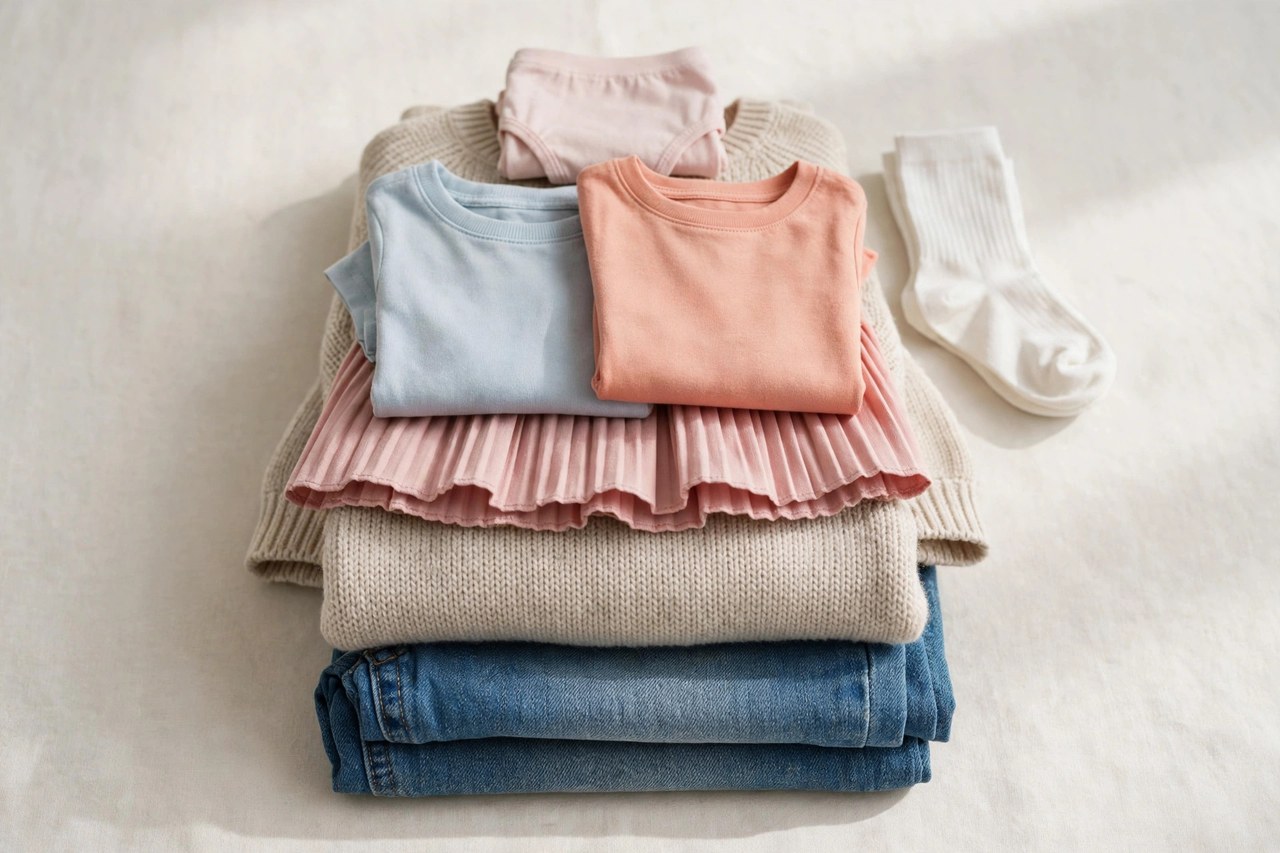
Children's clothing is the garments themselves: the t-shirts, jeans, sweaters, dresses, underwear and socks a child actually wears through an ordinary week. Where the companion apparel guide in this letter deals with the category system, this guide deals with cloth and fit - what a working children's wardrobe consists of, what each piece must do all day at child height, and how the pieces are bought, rotated and replaced as the wearer grows through them at considerable speed. This guide is built around the questions buyers actually ask: which style, which size, which fabric, and what will it look like after a season of real use - answered in order, with the trade-offs stated plainly.
Styles and Construction
A working wardrobe is smaller than most shopping trips assume: a week of tops and bottoms that all combine, underwear and socks in genuine quantity, one weather layer, sleepwear, and the school or occasion pieces the family's life requires. Children's clothing is the heart of this section of the directory: every other guide in the letter - coats, costumes, Christmas pieces - is a specialist branch off this central stock of everyday garments, and the everyday stock is where fit, fabric and wash survival are decided.
Children outgrow clothes before they wear them out, so the honest specification is fit now with room to grow, construction that survives the wash cycle it will actually get, and a price that respects how short the service life is. Measure the child - height, chest, waist and foot - rather than trusting the age on the label, because age sizing is an average no individual child is obliged to match. Keep the measurements with the shopping list.
Fit and Sizing
Buy clothing by the wash cycle it will actually live: garments washed weekly need seams, colorfastness and elastic that survive fifty washes, not five. Natural fibers and their blends dominate children's clothing for honest reasons - cotton breathes, washes hot and stays soft - with synthetics earning their place where the job demands them: rain layers, swim, sport. Whatever the fiber, the label should state it plainly, and the garment should feel finished inside, where it touches the child, not just outside, where it photographs.
Measure the child twice a year - height, chest, waist, inside leg and foot length - and shop from those numbers, because age-based sizing assumes an average child and growth rarely follows the average. Keep the measurements on the phone or the shopping list. Between sizes, choose by garment: tops and outerwear tolerate the larger size, bottoms and footwear rarely do. And try everything on under real conditions - over layers, with school shoes, at the end of the day for feet.
Wearing and Care
The economics of children's clothing are governed by one fact: the wearer outgrows before wearing out. That argues for sound mid-range staples bought in the current size, a labeling system that keeps school pieces coming home, and a hand-me-down pipeline that moves outgrown clothing on while it still has wear in it. Keep one clean spare set in reserve for the spill, the photograph day and the growth spurt that arrives the night before both.
Five habits preserve any child's wardrobe: wash by the label, treat stains before they are dried into the fabric, mend the small tear while it is small, store each season clean, and pass on outgrown pieces promptly while they still have wear in them. Keep a small repair kit where the clothes live - needle, thread in the family's common colors, spare buttons and iron-on patches - and most clothing emergencies shrink to five minutes.
Common Questions
How many clothes does a child actually need?
A working rotation is five to seven days of mix-and-match tops and bottoms, underwear and socks for the full wash cycle plus spares, two sets of sleepwear, one weather layer and the school or occasion pieces the week requires. More than that mostly produces laundry and choice paralysis; less produces emergencies. The right number follows the family's washing rhythm, not the shop's display.
Which fabrics are best for everyday children's clothing?
Cotton and cotton blends for the next-to-skin staples - soft, breathable, hot-washable - with polyester blends where color and shape must survive heavy washing, and synthetics reserved for the specialist jobs: rainwear, swim and sport. Read the fiber label on every garment, and weight the inside finish as heavily as the fiber: a soft fabric with scratchy seams fails the child daily.
How do you make children's clothing last longer?
Wash by the label, treat stains the day they happen, mend the small tear while it is small, and rotate the favorites so no single garment takes every wash. Fit honestly in the current size - clothing strained by a size too small wears at the seams, and clothing a size too large wears at the dragged hem and cuff. Pass outgrown pieces on promptly, while their remaining wear is still worth having.
More in Children's Clothes Guide C
The C letter hub and the guides closest to this one:
Looking for Children's Clothing Stores?
This guide helps you choose children's clothing. To browse where to buy, visit our children's clothing store directory, where you can find retailers that carry them.