Children's Costumes Guide
Children's costumes are clothing built for transformation: the Halloween disguise, the school-play outfit, the carnival and party dress-up, the book-week character and the dress-up box's permanent residents. Costumes are worn for carnivals and parties, and are thought of first around holidays such as Halloween in the United States. This guide covers how costumes are made, how they are fitted for a child who will run, sit and need the toilet in one, and how a good costume survives its big day into the dress-up box.
Shop Children's Costumes Now
Shop Children's Costumes on Amazon Shop Children's Costumes on eBayThe Amazon and eBay links on this page are affiliate links. If you make a purchase through them, Apparel Search may earn a commission.
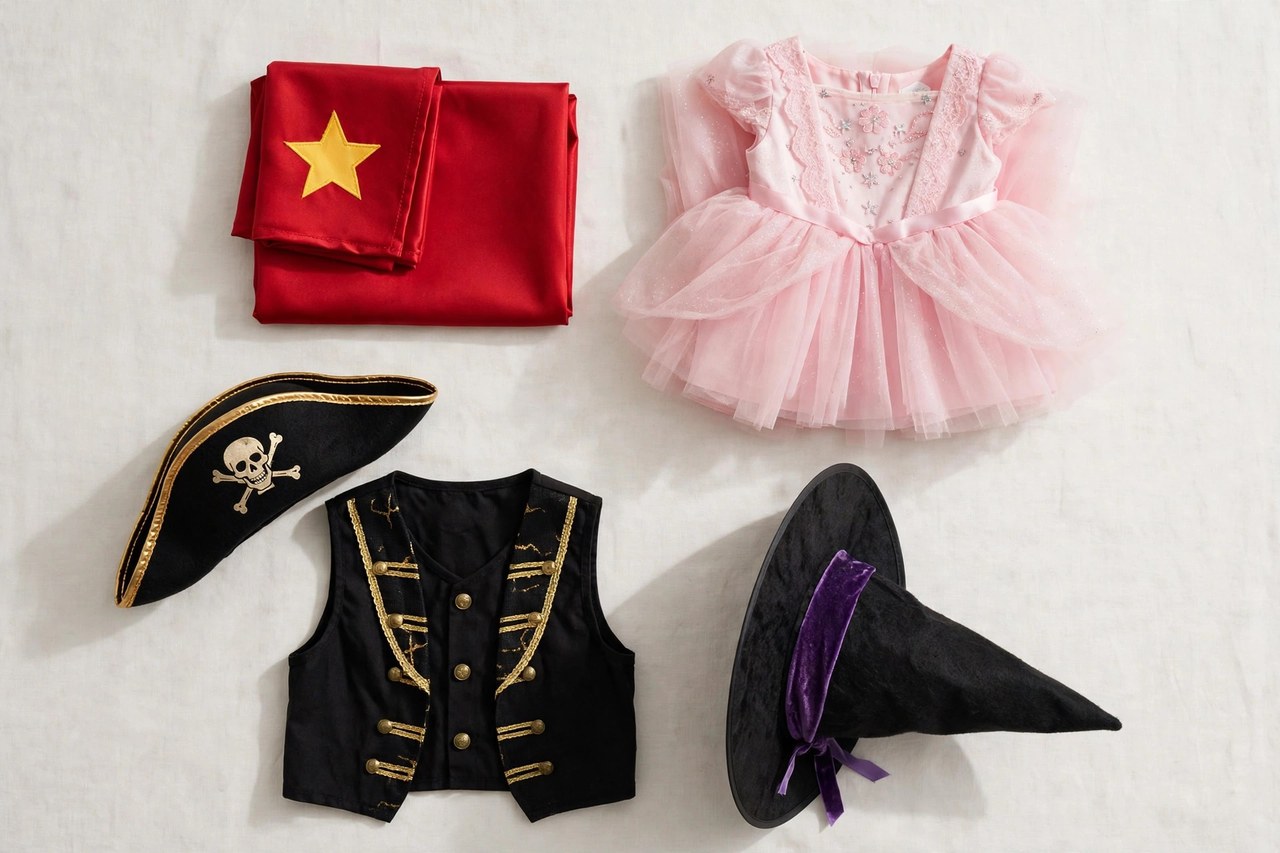
Children's costumes are clothing built for transformation: the Halloween disguise, the school-play outfit, the carnival and party dress-up, the book-week character and the dress-up box's permanent residents. Costumes are worn for carnivals and parties, and are thought of first around holidays such as Halloween in the United States. This guide covers how costumes are made, how they are fitted for a child who will run, sit and need the toilet in one, and how a good costume survives its big day into the dress-up box. This guide explains what to look for, how the sizing actually works, which fabrics and constructions earn their price, and how to care for the garment so it keeps doing its job all season.
Styles and Construction
Costumes divide into the bought, the assembled and the made. Bought costumes trade money for completeness - garment, hat and props in one bag - and their quality is wildly variable at the stress points. Assembled costumes build a character from wardrobe pieces plus one or two bought signatures, and they fit and last best. Made costumes fit the child's imagination exactly and the child's body as well as the maker manages. In every family, judge the seams that take strain, the closure that will be worked twenty times, and the trims that are glued where they should be sewn.
Costumes and party clothes are built to a different honest standard than school clothes: they must survive one glorious day completely and a handful of dress-up days after it, not a season of weekly washing. Judge them on the seams that take strain - shoulders, waist, closures - on flame-resistant labeling where the law provides it, and on visibility and fit for a child moving in the dark or in a crowd. Anything that restricts breathing, sight or the toilet is a failed costume however splendid it looks on the hanger.
Fit and Sizing
Safety is the costume specification that outranks likeness: flame-resistant labeling where provided, a hem that clears the ground and stairs, masks and hoods that give full sight and air, no long trailing pieces near candles, steps or bicycle wheels, and - for Halloween - light colors or reflective trim that make a child visible to drivers at dusk. A costume test-worn at home in daylight, including the walk, the sit and the toilet trip, prevents every classic costume emergency on the day itself.
Fit a costume standing, sitting, walking and - the test that decides Halloween - in the dark with the shoes it will be worn with. The hem should clear the ground and stairs, the mask or hood should give full sight and air, and the whole costume should come off quickly for the toilet without an adult engineering degree. For parties indoors, the same tests apply at room temperature: a costume that only works outdoors in November is a sauna by the second hour of a heated hall party.
Wearing and Care
After the event, the costume's second life is the dress-up box, where a well-made piece serves years of play, parties and younger siblings. Repair the small tear the same evening, store the costume complete with its accessories in one labeled bag, and the box becomes a family asset: the first place to look for the next play, the next party and the next Halloween, before any shop gets the chance.
Costumes come home carrying a day of evidence: check for the small tear at the seam and the loose fastening the same evening, while the repair is still five minutes. Most costumes spot-clean rather than wash; foam, glitter and glued trims rarely survive a machine. Store the costume complete - garment, hat, props, accessories together in one bag, labeled with the size - because a costume that survives storage whole is next year's dress-up box, party spare or hand-me-down, and its value compounds with every reuse.
Common Questions
What makes a children's costume safe?
Four things: fabric with flame-resistant labeling where the law provides it, a fit that clears the ground and stairs, full vision and breathing through any mask or hood, and visibility - light colors or reflective trim for trick-or-treating at dusk. Add the practical tests: the child can walk, sit, climb steps and use the toilet in it, quickly, without an adult's engineering help.
Is it better to buy, assemble or make a child's costume?
Each wins somewhere: bought costumes are complete and fast but vary in quality at the seams and closures; assembled costumes - wardrobe pieces plus a bought signature hat, cape or prop - fit and last best and can be worn after as ordinary clothes; made costumes fit the imagination exactly. For one-day events assembly is usually the value winner; for a beloved character worn all year, quality bought or carefully made pays back in the dress-up box.
How should a costume fit a child?
Loose enough over the clothes it will be worn with - Halloween costumes go over warm layers outdoors - with a hem that clears shoes and stairs and sleeves that stay clear of hands. Buy the size by the maker's chart against the child's measurements, and if between sizes, size up for costumes: extra room disappears under a coat or with a belt, while a tight costume splits at its first lunge for candy.
More in Children's Clothes Guide C
The C letter hub and the guides closest to this one:
More to Explore on Apparel Search
Looking for Children's Clothing Stores?
This guide helps you choose children's costumes. To browse where to buy, visit our children's clothing store directory, where you can find retailers that carry them.