Children's Halloween Costumes Guide
A children's Halloween costume is an outfit worn on or around Halloween, the festival that falls on October 31, the eve of All Saints' Day, when children traditionally dress in costume and go door to door asking for candy. Costumes are traditionally based on frightening supernatural or folkloric beings - ghosts, witches, vampires, skeletons and monsters - and that spooky core is still the heart of the category, even though the modern costume rack holds far more than fright-night figures.
Shop Children's Halloween Costumes Now
Shop Children's Halloween Costumes on Amazon Shop Children's Halloween Costumes on eBayThe Amazon and eBay links on this page are affiliate links. If you make a purchase through them, Apparel Search may earn a commission.
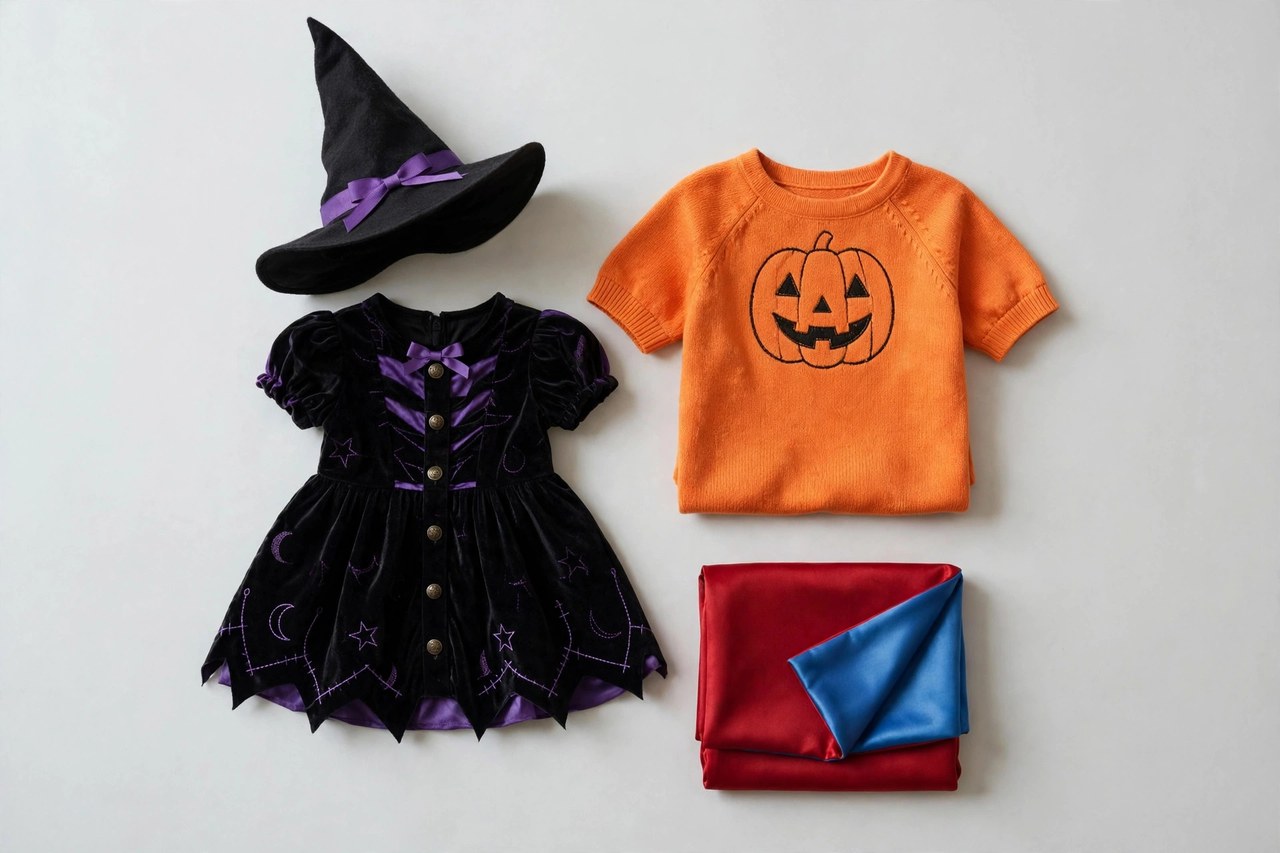
A children's Halloween costume is an outfit worn on or around Halloween, the festival that falls on October 31, the eve of All Saints' Day, when children traditionally dress in costume and go door to door asking for candy. Costumes are traditionally based on frightening supernatural or folkloric beings - ghosts, witches, vampires, skeletons and monsters - and that spooky core is still the heart of the category, even though the modern costume rack holds far more than fright-night figures.
By the 1930s, costumes based on characters from mass media such as film, literature and radio had become popular alongside the traditional monsters, and every new medium since has reshaped the rack. Comic books, television and the internet play an important part in deciding which costumes are most popular in any particular year, which is why a character can dominate one Halloween and vanish the next. Parents shopping the costume guide should expect that year's screen favourites to sell out first and to cost the most.
Costume Types and Construction
Children's costumes fall into a few construction families. Tunic and tabard styles pull over everyday clothes, which makes them the practical choice for school events and for trick-or-treating over a coat in cold weather. Full jumpsuit costumes give the most complete transformation but complicate bathroom trips and layering. Dress-up costumes with skirts, capes and attached detail sit between the two, and two-piece sets - a character top with matching bottoms - double as pajamas or play clothes after Halloween, which improves their cost per wear considerably.
Materials are usually lightweight synthetics: polyester tricot, satin-look fabrics, felt and foam-backed panels that hold a shape without weight. Seams on budget costumes are finished quickly, so check stress points - shoulder joins, waist ties and any place a cape or accessory attaches - before the night rather than during it. Flame behaviour matters around pumpkins and candles: look for costumes labelled flame resistant, keep trailing fabric away from open flames, and prefer a short hem a child cannot trip over on dark steps.
Sizing, Comfort and Safety
Costume sizing rarely matches everyday clothing sizes, and many ranges are sold in broad bands such as 4-6 or 7-8 years. Measure the child's height and chest and compare with the maker's chart, and when a child falls between bands, size up: a costume almost always needs to fit over a layer of ordinary clothes, and a slightly loose costume can be pinned while a tight one cannot be let out. Build in growing room only within reason, because an oversized mask or floor-length robe is a trip hazard.
Comfort decides whether the costume survives the evening. Scratchy netting, tight elastic masks and itchy seams are the usual reasons costumes come off early, so check linings against skin, choose face paint or a soft hood over a vision-limiting mask where you can, and add reflective tape or a glow accessory if the child will be out after dark. Footwear is part of the costume plan too: costume shoe covers slip on wet pavement, so sturdy ordinary shoes in a matching colour are the safer finish.
After Halloween: Care and Storage
Most costumes are spot-clean garments. Shake off the evening's debris, treat candy and fake-blood stains promptly with cold water, and follow the label before attempting any wash, because glued trims, foam panels and glitter finishes rarely survive a machine cycle. Dry a costume fully before storing it; a costume packed away damp comes out next October smelling musty, with its elastic perished.
Store costumes flat or hung in a garment bag with accessories - hats, gloves, belts, props - kept in the same bag, labelled with the size and character. A costume that is outgrown but sound has a second life at school dress-up days, book-week events and younger siblings, and keeping the accessories together is what makes that reuse possible. If you buy one costume tip from this guide, buy this: shop the week after Halloween for next year only if you are confident about the size jump, because a bargain the child has outgrown by October is no bargain at all.
Common Questions
When is Halloween and why do children wear costumes?
Halloween falls on October 31, the eve of All Saints' Day. Children traditionally dress in costume - originally frightening supernatural or folkloric beings - and go door to door asking for candy.
Do children's costume sizes match everyday clothes sizes?
Usually not. Many costumes are sold in broad age bands, so measure height and chest against the maker's chart, and size up so the costume fits over a layer of ordinary clothes.
How can a Halloween costume be made safer after dark?
Choose flame-resistant fabric, avoid trailing hems and vision-limiting masks, add reflective tape or a glow accessory, and finish with sturdy ordinary shoes instead of costume shoe covers.
More in Children's Clothes Guide H
The H letter hub and the guides closest to this one:
More to Explore on Apparel Search
Looking for Children's Clothing Stores?
This guide helps you choose children's halloween costumes. To browse where to buy, visit our children's clothing store directory, where you can find retailers that carry them.